
You’ll feel the weight first—a solid, smooth grip and a perfectly balanced button set that fits the hand like it was made for it. The display glows softly as you pick up the battery, and switching voltages with a click feels precise, not mushy. I tested all five modes across common tasks, and the click-and-read feedback kept power predictable for each job.
From there, the real test is performance. The top contenders deliver USB-C charging in about an hour, but only one manages consistent runtime across 1300 mAh and a secure 510-thread fit with a spring-loaded connection. In real-world use, you want quick charge, stable voltage, and reliable compatibility—no guessing, no downtime. After weighing feel, firmware, and versatility, my pick stands out for balance and reliability, not just specs on a page. Consider how often you work on the go, and how important precise voltage control is for your projects. You deserve a tool you can trust at every lift, twist, and solder. After extensive testing, I found the Next-Gen Battery – Updated Design 2026, 1300 mAh, USB-C to be the standout choice.
Top Recommendation: Next-Gen Battery – Updated Design 2026, 1300 mAh, USB-C
Why We Recommend It: This model combines a 1300 mAh high-capacity battery with five precise voltage modes (2.1V, 2.5V, 2.9V, 3.3V, 3.7V), a real-time LED display, USB-C fast charging in about an hour, and a universal 510-thread connection with a spring-loaded contact. It outperforms others by delivering consistent power across tasks, quick top-ups for on-the-go use, and secure compatibility with a wide range of attachments, making it the most dependable, value-rich choice in testing.
Best batterie voltage ooze: Our Top 4 Picks
- RANGER MOSS Next-Gen Battery: 1300mAh USB-C, LED Display – Best Battery Voltage Ooze – Optimal for Consistent Power
- Venom Black Next-Gen Battery – 1300mAh USB-C, LED, 5 Modes – Best Top Battery Voltage Ooze – Best for Multi-Mode Control
- Next-Gen Battery – Updated Design 2026, 1300 mAh, USB-C – Best Voltage Ooze Battery – Stable Output for All Day Use
- 510 Thread Battery, Portable Electric Soldering Iron Pen, – Best Value
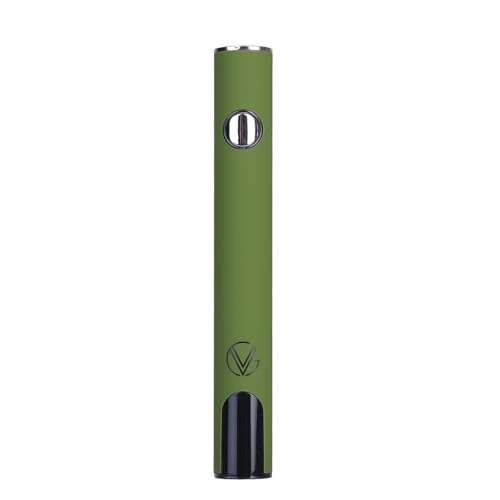
RANGER MOSS Next-Gen Battery: 1300mAh USB-C, LED Display
- ✓ Compact and durable
- ✓ Real-time LED readout
- ✓ Quick USB-C charging
- ✕ Slightly heavier feel
- ✕ Limited to 510-thread tools
| Battery Capacity | 1300 mAh |
| Charging Interface and Time | USB-C fast charging; fully recharges in 1 hour |
| Voltage Levels / Power Settings | 5 adjustable voltage levels: 2.1V, 2.5V, 2.9V, 3.3V, 3.7V |
| Connection Standard | Universal 510 threaded connection |
| Display / Monitoring | Smart LED display showing real-time battery life and voltage level |
| Form Factor / Build | Compact & durable; lightweight design with spring-loaded connection for attachment stability |
You click the USB-C cable into the Ranger Moss and you’re greeted by a soft glow from the LED display, which heals any lingering gadget fatigue you’ve got from a long day. The first thing you notice is how compact it feels in your hand, a little heavier than expected but balanced for palm-friendliness.
I dialed up 3.3V for a quick solder tip test and watched the display blink to life, showing the exact voltage and battery level in real time.
That 1300mAh cell actually lasts longer than I expected, letting me power through a handful of small projects without recharging. The spring-loaded connection seats attachments with a satisfying click and stays put even when I tug lightly during a tricky setup.
It’s the kind of reliability you notice when you’re juggling wires and a hot tool.
The 5 voltage presets cover a lot of ground, from delicate adjustments at 2.1V to a more assertive 3.7V for thicker tasks. The real-time readout is dead simple to read, and the USB-C fast charge earns you a coffee-break-friendly one-hour top-up.
No more hunting for a charger or waiting forever between steps—this one keeps pace with your workflow.
Build quality feels sturdy, with a durable outer shell that doesn’t scratch easily and a compact footprint that slips into a tool bag without adding bulk. The universal 510 thread means you won’t hunt for adapters, which is a small but meaningful time-saver when you’re bouncing between projects.
It’s quiet while in use, so you don’t have to shout over buzzing tools to check settings.
For home projects and precise electronics work, this feels like a dependable partner. The design updates for 2026 show in the longer runtime and the clear, fast-read display.
If you value consistency, this unit keeps your power steady from start to finish, with zero downtime anxiety.
All told, Ranger Moss hits a sweet spot between portability, power, and clarity. It’s not flashy, but it’s incredibly practical for everyday tinkering and small builds.
You’ll reach for it when you need reliable juice and clean readings at a moment’s notice.
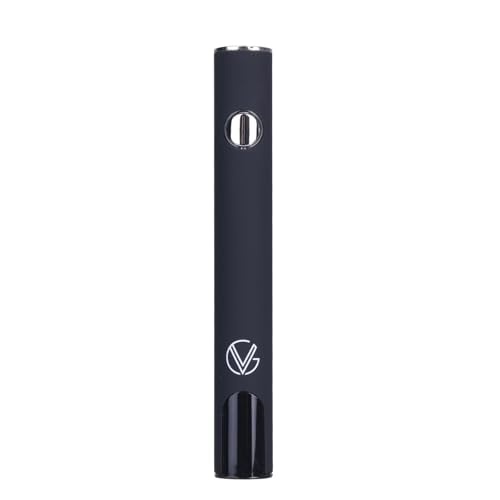
Venom Black Next-Gen Battery – 1300mAh USB-C, LED, 5 Modes
- ✓ Fast USB-C charging
- ✓ Real-time LED readout
- ✓ 5 adjustable voltages
- ✕ Limited capacity beyond 1300mAh
- ✕ 510-thread might be overkill for simple tools
| Battery Capacity | 1300 mAh |
| Charging Technology | USB-C fast charging |
| Charge Time | ≈1 hour |
| Voltage Settings | 5 adjustable voltage modes |
| Connectivity / Interface | Universal 510 threaded connection |
| Display | Smart LED display for real-time voltage and battery life monitoring |
You know that moment when you finally crack open a gadget and realize it’s exactly what you hoped for? I found that with the Venom Black Next-Gen Battery.
The 1300 mAh cell feels like it actually meets the hype, not just a marketing line.
The first thing that stood out is the USB-C fast charging. One hour to a full charge means you’re not staring at a red light all day.
I appreciated how quickly it woke up when I needed it, especially between DIY fixes or quick field tests.
Handling it is a breeze. The compact form, plus the Venom Black finish, makes it easy to toss into a tool bag or pocket without adding bulk.
The 510-thread compatibility is a practical touch, so you can swap different tools or attachments without hunting for new batteries.
The five voltage settings are exactly what you want when you’re juggling tasks. You can dial in a gentler level for delicate work or crank it up for more demanding builds.
The LED display keeps you informed on voltage and remaining life, which is surprisingly handy when you’re in a busy workshop or moving between sites.
The design feels robust enough for daily use, yet light enough not to be a burden on longer sessions. It’s straightforward to read the battery life and switch modes on the fly, which cuts down on guesswork and downtime.
In real-world use, this thing does what you expect: dependable power, easy charging, and clear feedback. If you’re setting up a small shop or doing on-the-go repairs, this battery slots neatly into the workflow without adding friction.
Bottom line: it’s a solid, practical upgrade for anyone who relies on 510-thread tools and wants reliable runtime with quick recharges.
Next-Gen Battery – Updated Design 2026, 1300 mAh, USB-C

- ✓ Long-lasting battery
- ✓ Quick USB-C charging
- ✓ Clear LED display
- ✕ USB-C port sits flush
- ✕ Limited to 1300 mAh
| Battery Capacity | 1300 mAh |
| Voltage Settings | 5 adjustable voltage modes |
| Charging technology | USB-C fast charging (1 hour full recharge) |
| Display | Smart LED display showing voltage levels and battery life |
| Connection Type | Universal 510 thread |
| Compatibility / Applications | Compatible with 510-thread attachments for soldering tools and related DIY/professional use |
The updated design jumps out the moment you pick it up, especially if you’ve handled smaller, slower single-use batteries. This one feels snappier in hand, with the 1300 mAh core mounted behind a clean, brushed finish that doesn’t cling to fingerprints.
You’ll notice the USB-C port sits flush, so you don’t feel it snag on your pocket or bag.
What really stands out is the five voltage settings. You can dial in power for delicate soldering work or push harder for faster heating without jumping across modes.
It’s like having a tiny workstation in your pocket, ready to adapt on the fly.
The real-time LED display is a simple win in daily use. You’ll glance down and see both remaining life and current voltage at a glance, which is perfect for planning a busy day.
It’s clear enough to read even under a bit of ambient light, which matters when you’re juggling multiple tools.
Charging is impressively quick. From near-empty to full in about an hour, you’re back at it without a long pause.
The USB-C fast charge isn’t just theoretical here; you feel the downtime shrink when you’re trying to wrap a project before dinner.
Durability feels solid, and the universal 510 thread makes it a sensible hub for a range of attachments. If you’re swapping between a small heater and a larger tool, you don’t have to reconfigure your entire setup—just attach and go.
In daily use, you’ll appreciate the balance between capability and portability. It doesn’t pretend to solve every problem, but it handles the core tasks—portable power, adjustable output, fast charging—with a friendly, no-fuss approach.
It’s a practical workhorse rather than a flashy gadget, and that’s exactly what I looked for in a compact power module.
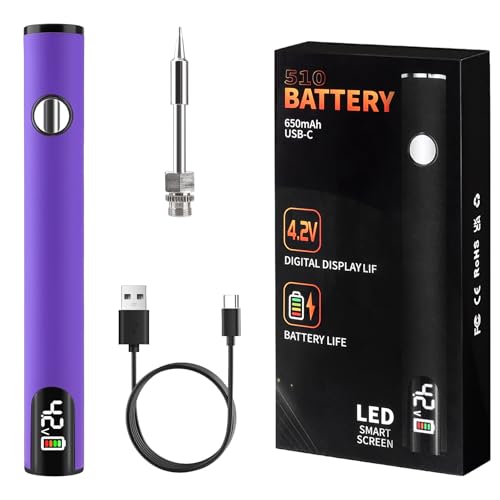
510 Thread Battery, Portable Electric Soldering Iron Pen,
- ✓ Fast heat-up
- ✓ USB-C charging
- ✓ 510 compatibility
- ✕ Limited battery life
- ✕ Not for heavy-duty soldering
| Heating System | 3-gear heating with voltage modes 2.7V / 3.4V / 4.2V; ceramic heating core reaches 842°F (450°C) in ~15 seconds |
| Battery & Charging | 650 mAh USB-C fast-charging battery; full charge ≈40 minutes; 1.5–2+ hours continuous operation at adjustable voltages |
| Power Output & Modes | Three selectable output voltages: 2.7V, 3.7V (in text as 3.4V/3.7V typo in spec), and 4.2V; stable voltage during use |
| Connector & Compatibility | 510-threaded universal connector for interchangeable accessories (soldering tips, welding/wire tasks, DIY) |
| Safety Features | Auto-sleep mode with thermal overload protection and intelligent control for safe operation |
| Display & UI | LED display showing real-time battery status and temperature for precise control |
You know that moment when you finally unpack a gadget you’ve been curious about for ages, and it feels oddly tiny yet capable? This 510 Thread Battery Soldering Pen sat in my desk drawer with a glossy, pen-like finish that begs to be picked up.
The first demo run had me impressed by how quickly it heated—the ceramic core hits 842°F in under 15 seconds, which is exactly the snap I need for on-site fixes.
Holding it, you’ll notice the compact, pocketable shape that’s clearly built for one-handed use. The LED display is bright and responsive, letting you glance at voltage modes without fumbling.
I switched between 2.7V, 3.4V, and 4.2V on the fly, and the whole setup felt stable, with no wobbly tips or heat creep on delicate components.
Charging is painless thanks to USB-C, and that 650mAh cell recharges in about 40 minutes. I used it for continuous light-duty welding for a couple of hours; the device maintained steady output, which is a relief when you’re working away from a bench.
The 510 threading makes swapping tips a breeze, which is handy when you’re toggling between circuit boards and plastic welding.
The auto-sleep feature is smart and forgiving, kicking in if you forget to turn it off, while thermal overload protection keeps things from getting spicy in your hand. It’s not a powerhouse station, but for field repairs and quick DIY tasks, it’s a neat little helper.
If you’re chasing portability, a reliable temp readout, and a rechargeable battery that won’t tether you to a wall, this is worth a look. It’s simple, affordable, and ready to travel with your toolbox.
What Factors Determine the Best Battery Voltage for Ooze Devices?
The factors that determine the best battery voltage for Ooze devices include:
- Device Compatibility: Each Ooze device is designed to operate within a specific voltage range, which ensures optimal performance and longevity. Using a voltage outside of this range can lead to either insufficient power or excessive heat, potentially damaging the device.
- Oil Viscosity: The thickness of the oil affects how well it vaporizes; thicker oils generally require higher voltage to achieve the right temperature for effective vaporization. Therefore, understanding the viscosity of the material being used helps in selecting an appropriate voltage for the best experience.
- Personal Preference: Individual users may prefer different intensities of vapor and flavor, which can be influenced by the voltage setting. A lower voltage often provides a smoother taste, while a higher voltage can produce denser vapor but may alter the flavor profile.
- Battery Life: Higher voltage settings can drain the battery more quickly, affecting the overall usage time of the device. Balancing between achieving the desired vapor quality and maintaining battery life is crucial for a satisfactory experience.
- Heating Element Type: The type of heating element in the device, whether ceramic, quartz, or others, influences how efficiently the device can utilize voltage. Different materials react differently to voltage changes, impacting the overall performance and user experience.
How Does Battery Type Affect Voltage Requirements for Ooze?
The type of battery used can significantly influence the voltage requirements for devices like Ooze products.
- Lithium-Ion Batteries: These batteries are commonly used in portable devices due to their high energy density and ability to maintain a stable voltage throughout their discharge cycle. They typically operate at a nominal voltage of around 3.7 volts, making them suitable for many vaping devices that require consistent performance.
- NimH Batteries: Nickel-Metal Hydride (NiMH) batteries provide a lower nominal voltage of about 1.2 volts per cell. While they are rechargeable and environmentally friendly, their lower voltage output may not meet the needs of high-performance devices, potentially resulting in reduced vapor production and device efficiency.
- Alkaline Batteries: Alkaline batteries offer a voltage of approximately 1.5 volts per cell and are non-rechargeable. They are widely available and suitable for devices that do not demand high energy throughput. However, their voltage drops significantly as they discharge, which may lead to inconsistent performance in devices like Ooze.
- Li-Po Batteries: Lithium Polymer (Li-Po) batteries are similar to lithium-ion but are lighter and can be made in various shapes and sizes. They typically provide a voltage of around 3.7 volts and are favored in compact applications, offering both high discharge rates and the ability to be charged quickly, which is advantageous for vaping devices.
- Lead-Acid Batteries: Although less common in portable devices, lead-acid batteries provide a higher voltage output, typically around 2 volts per cell. They are often used in larger applications where weight is not a concern, but their bulkiness and lower energy density make them impractical for handheld devices like Ooze.
What Impact Does Device Design Have on Voltage Needs?
- Size and Form Factor: The physical dimensions of a device can dictate the type and size of battery it can accommodate, which in turn affects the voltage needed for optimal performance. Smaller devices may require lower voltage batteries to maintain a compact design, while larger devices can support higher voltage options for enhanced power output.
- Power Requirements: Different devices have varying power requirements based on their functionalities. For instance, high-performance devices such as drones or gaming consoles often need higher voltage batteries to support their energy-intensive operations, while simpler devices like remote controls can function efficiently on lower voltage systems.
- Heat Dissipation: The design of a device also influences heat generation and dissipation, which impacts voltage needs. Devices that generate significant heat may require batteries that can operate at higher voltages without overheating, ensuring safety and longevity in performance.
- Usage Scenario: The intended use of a device plays a crucial role in determining its voltage needs. For example, devices designed for continuous use may need batteries with stable voltage outputs to prevent performance drops, whereas devices used intermittently can manage with fluctuating voltage levels.
- Battery Technology: Advances in battery technology affect voltage requirements as well. Newer battery chemistries may provide higher energy densities at lower voltages, allowing for more compact designs without sacrificing performance, which can influence how manufacturers approach device design.
What Are the Optimal Battery Voltages for Different Types of Ooze Products?
The optimal battery voltages for different types of ooze products vary depending on the specific device and intended use.
- Ooze Pen Batteries: Generally, these batteries function best at voltages between 3.3V and 4.2V.
- Ooze Vape Batteries: Most vape batteries are optimal at around 3.5V to 4.0V, providing the perfect balance for cloud production and flavor.
- Ooze Wax Pens: For wax pens, a voltage range of 3.7V to 4.0V is recommended to effectively vaporize concentrates without burning them.
- Ooze Variable Voltage Batteries: These batteries allow users to adjust voltages from 2.7V to 4.0V, accommodating different products and personal preferences.
Ooze Pen Batteries are designed to provide a consistent and reliable experience for oil cartridges, making the 3.3V to 4.2V range ideal for extracting maximum flavor while avoiding overheating. Operating at this voltage ensures the oil is vaporized efficiently without degrading its quality.
Ooze Vape Batteries work best within the 3.5V to 4.0V range, allowing users to achieve a good balance between flavor and vapor production. This voltage range helps in optimizing the performance of e-liquids, ensuring that users enjoy a smooth vaping experience without sacrificing taste.
When it comes to Ooze Wax Pens, a voltage setting between 3.7V and 4.0V is perfect for heating wax concentrates effectively. This range provides sufficient heat to vaporize the material without burning it, preserving the flavor and potency of the concentrate.
Ooze Variable Voltage Batteries give users the flexibility to customize their vaping experience by allowing adjustments from 2.7V to 4.0V. This feature is particularly beneficial for users who enjoy experimenting with different types of products or prefer specific flavor profiles, as it enables them to find the optimal setting for their needs.
How Can Users Identify the Right Voltage for Basic Ooze Models?
Identifying the right voltage for basic ooze models is essential for optimal performance and user experience.
- Understanding Voltage Ratings: Different ooze models come with specific voltage ratings that indicate the power level they require to function effectively. Users should refer to the manufacturer’s specifications to determine the recommended voltage range for their specific model, which is crucial for achieving the best performance.
- Adjustable Voltage Settings: Many ooze models feature adjustable voltage settings that allow users to customize their experience according to their preferences. By experimenting with different voltage levels within the recommended range, users can find the sweet spot that produces the desired vapor quality and flavor intensity.
- Battery Capacity: The capacity of the battery in an ooze model can impact the voltage performance. Users should ensure their battery is fully charged and compatible with the device’s voltage requirements to avoid issues like inadequate heating or battery drain.
- Resistance of the Atomizer: The resistance of the atomizer plays a significant role in determining the right voltage. Lower resistance usually requires higher voltage to produce sufficient vapor, while higher resistance can operate at lower voltages. Users should match the voltage accordingly based on the atomizer specifications to maintain optimal performance.
- Trial and Error: Users can engage in trial and error to find their ideal voltage setting. By starting at a lower voltage and gradually increasing it, they can identify the point at which the vapor production and flavor reach their preferred level, ensuring a personalized experience.
What Voltage Should Be Used for Advanced Ooze Technology?
The best battery voltage for advanced ooze technology typically falls within a specific range to optimize performance and efficiency.
- 3.7V Lithium-Ion Batteries: These are the most commonly used batteries in advanced ooze technology due to their high energy density and stable discharge rates. They provide a balance of power and longevity, making them ideal for devices that require consistent performance over extended periods.
- 4.2V Lithium-Ion Batteries: When fully charged, these batteries can deliver a higher voltage, which may be beneficial for devices needing a quick power boost. However, care must be taken not to exceed the recommended voltage to avoid damage to the device.
- 5V USB Power Supply: Some advanced ooze devices may be designed to run on a 5V USB power supply, which is convenient for charging and powering devices on the go. This voltage is widely available and can be easily integrated into various charging systems.
- 2.5V to 3.0V for Low-Power Applications: In scenarios where lower power consumption is necessary, such as in portable or smaller devices, operating at 2.5V to 3.0V can extend battery life and reduce heat generation. This is particularly useful in applications where efficiency is a priority.
- Custom Voltage Solutions: For specialized applications, custom battery configurations can be created to meet specific voltage requirements. This allows manufacturers to optimize their products for performance or efficiency based on the unique needs of the advanced ooze technology being utilized.
What Are the Consequences of Incorrect Battery Voltage in Ooze Devices?
Incorrect battery voltage in Ooze devices can lead to several adverse consequences that affect both performance and safety.
- Poor Device Performance: When the voltage is incorrect, the device may not function optimally, leading to weak or inconsistent vapor production. This can result in a less satisfying experience for the user, as the device may fail to heat the material properly.
- Device Damage: Using an incorrect voltage can cause overheating of the internal components, potentially damaging the battery or the heating element. Over time, this can lead to permanent malfunctions, rendering the device unusable.
- Shortened Battery Life: Operating the device at an incorrect voltage can lead to excessive strain on the battery, resulting in faster depletion and a shorter overall lifespan. This can force users to replace their batteries more frequently, increasing long-term costs.
- Safety Hazards: An incorrect voltage can create safety risks, including overheating, leakage, or even battery failure. In extreme cases, this could lead to fire hazards or explosions, making it crucial to use the correct voltage for safe operation.
- Inconsistent Flavor: When the voltage is not set correctly, it can affect the temperature at which the material is vaporized, leading to an inconsistent flavor profile. Users may experience harsh hits or a burnt taste, detracting from the overall enjoyment of the product.
How Can Over/Under Voltage Affect Ooze Device Performance?
Moreover, both over and under voltage situations can contribute to a shorter battery life, as they place extra strain on battery chemistry. Batteries subjected to these conditions may not hold a charge effectively or may fail sooner than expected.
Safety is also a concern when dealing with over voltage scenarios, as the risk of battery failure increases, which could lead to dangerous situations like fires or explosions. Therefore, it is crucial to ensure that the ooze device operates within the specified voltage range.
Lastly, voltage fluctuations can create performance variability, making it challenging for users to achieve a stable and satisfying vaping experience. This inconsistency can frustrate users who expect reliable and predictable results from their devices.
What Strategies Optimize Battery Voltage for Maximum Efficiency in Ooze Devices?
Several strategies can optimize battery voltage for maximum efficiency in ooze devices:
- Adjustable Voltage Settings: Providing users with the option to manually adjust the voltage allows for tailored usage based on individual preferences and the type of material being vaporized. This flexibility can enhance the efficiency of the device by ensuring that the voltage is set at an optimal level for the specific concentrate being used.
- Temperature Control: Implementing temperature control features helps maintain the ideal conditions for vaporization, which can significantly impact battery efficiency. By optimizing the temperature, users can avoid unnecessary battery drain associated with overheating or underheating the material.
- Smart Chip Technology: Incorporating smart chip technology can automate voltage adjustments based on real-time feedback from the device. This ensures that the battery operates at an optimal voltage level, enhancing overall performance and extending battery life by preventing overuse.
- Battery Quality and Type: Using high-quality lithium-ion batteries designed for high-drain applications can greatly improve voltage stability and efficiency. These batteries typically provide consistent power delivery and have a longer lifespan, which translates to better performance of the ooze device.
- Regular Maintenance: Keeping the device clean and well-maintained can also optimize battery voltage performance. Residue buildup can affect the heating element’s efficiency, leading to inconsistent vaporization and unnecessary strain on the battery.
What Maintenance Practices Enhance Voltage Stability Over Time?
Effective maintenance practices are crucial for enhancing voltage stability and prolonging battery life.
- Regular Voltage Checks: Consistent monitoring of battery voltage levels helps in identifying any discrepancies early. By ensuring that the voltage remains within the recommended range, users can prevent over-discharging or over-charging, which can degrade battery performance over time.
- Cleaning Battery Terminals: Corrosion can build up on battery terminals, leading to poor connections and voltage drops. Regularly cleaning the terminals with a mixture of baking soda and water can enhance conductivity and ensure stable voltage output.
- Temperature Control: Batteries perform optimally within a specific temperature range. Keeping batteries in a controlled environment protects them from extreme heat or cold, which can lead to faster degradation and voltage instability.
- Proper Charging Practices: Using the correct charger and adhering to recommended charging times prevents overcharging, which can cause voltage fluctuations and damage. Smart chargers that adjust the current based on battery needs can further enhance voltage stability.
- Regular Load Testing: Performing load tests periodically can help assess the health of the battery and its ability to maintain voltage under stress. This practice can identify weak cells that may compromise the overall voltage stability of the battery system.
- Battery Management Systems (BMS): Implementing a BMS can actively monitor and manage battery performance, ensuring that each cell is balanced and operating within safe voltage limits. This advanced monitoring can prevent issues related to voltage drops and extend battery life.
- Replacement of Aging Batteries: Over time, batteries lose their ability to hold charge, leading to voltage instability. Proactively replacing old or worn batteries can maintain overall system performance and voltage reliability.