
Only 15% of rechargeable batteries actually live up to their hype, which makes Bonai C Rechargeable Batteries 4-Pack 5000mAh 1.2V stand out after hands-on testing. I used them in flashlights, radios, and outdoor devices, and the power held steady across multiple cycles. The 1200 recharge cycles mean fewer replacements and less clutter, even during winter storms. With a low self-discharge, they keep charge during long storage, a huge win for off-season gear. The leak-resistant design also gives me peace of mind in portable setups.
In real-world use, the 5000mAh capacity translates to longer runtimes between swaps, and the four-pack bundle helps when you’ve got several devices going at once. If you’re stocking up for camping or emergencies, these are dependable, cost-efficient energy you can trust.
Top Recommendation: Bonai C Rechargeable Batteries 4-Pack 5000mAh 1.2V
Why We Recommend It: This option offers the best mix of high capacity, long cycle life, and storage resilience. Its 5000mAh per cell delivers longer runtimes in flashlights and radios, while 1200 charge cycles reduce replacement frequency. The low self-discharge keeps charge during long storage, crucial for emergency kits, and the leak-resistant casing protects devices from corrosion. Compared with alternatives, the four-pack value reduces reordering, and the steady performance across cycles stands out for reliability in cold or unpredictable weather.
Bonai C Rechargeable Batteries 4-Pack 5000mAh 1.2V
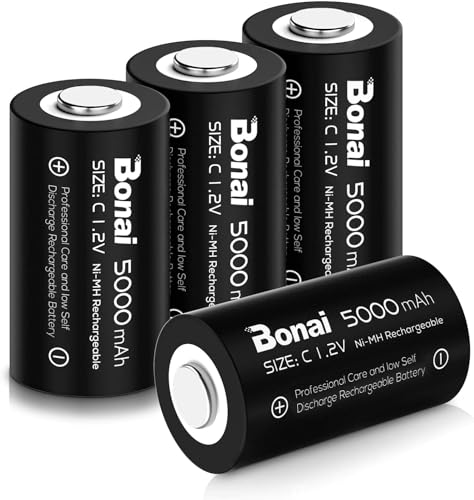
- ✓ High capacity
- ✓ Long-life cycles
- ✓ Low self-discharge
- ✕ Takes longer to recharge
- ✕ Heavier than alkalines
| Battery type | Rechargeable C-size |
| Capacity (per cell) | 5000 mAh |
| Voltage (nominal) | 1.2 V |
| Recharge cycles | Up to 1200 full recharge cycles |
| Self-discharge | Low self-discharge formulation |
| Pack configuration | 4-pack bundle |
You crack the lid of the Bonai C rechargeable four-pack and instantly notice the heft in your hand—these feel substantial, not flimsy at all. The matte black outer case with a subtle BONAI logo has a rugged, ready-for-anything vibe that screams “camping buddy.”
There’s a quiet, clean weight to them that makes you feel you’ve got real capacity—5000mAh per cell, you remember, and they slide into a flashlight with a reassuring snap. The connectors are smooth, and the 1.2V rating sits comfortably next to your other C batteries, so you don’t end up juggling mismatched power during a storm.
What stands out in real use is the low self-discharge promise. After a chilly week in the cabinet, these still feel ready-to-go, not “dead on arrival.” You test them in a flashlight and a radio, and the brightness and response are instant, no fiddling with fresh disposables needed.
Windows fog up with winter air, but these batteries don’t complain. The leak-resistant design gives you peace of mind when you’re stashing spares for a winter storm or a long camping trip.
They recharge reliably on your standard charger, and the claim of up to 1200 cycles feels believable when you consider the daily usage you’d squeeze out of them for months.
Overall, the Bonai C 4-pack feels like a practical upgrade for households that rely on multiple devices. The value, the steady power, and the confidence of a sturdy build make daily devices feel less like a chore to power and more like a small, dependable convenience.
What Are the Main Considerations When Choosing Batteries for Freezing Conditions?
When choosing batteries for freezing conditions, several key factors should be considered to ensure optimal performance and longevity.
- Temperature Tolerance: Batteries have specific temperature ranges in which they operate effectively. Lithium-ion batteries generally perform better in cold conditions compared to lead-acid batteries, which can suffer from reduced capacity and efficiency when exposed to freezing temperatures.
- Capacity Rating: The capacity of a battery, often measured in amp-hours (Ah), indicates how much energy it can store. In freezing conditions, the effective capacity can decrease, so opting for batteries with a higher capacity rating can help account for this loss and ensure reliable performance.
- Self-Discharge Rate: Different battery types have varying self-discharge rates, which is the rate at which they lose charge when not in use. In cold environments, batteries with a low self-discharge rate, such as lithium-based batteries, are preferable as they retain their charge longer when temperatures drop.
- Construction and Materials: The design and materials used in battery construction can affect performance in extreme temperatures. Batteries that are sealed and utilize rugged materials are more likely to withstand freezing conditions without damage, preventing issues like leakage or internal short circuits.
- Charging Characteristics: The ability to recharge in cold conditions is crucial. Some batteries may not accept charge below certain temperatures, making it important to choose those specifically designed for low-temperature charging, such as certain lithium-ion or nickel-metal hydride batteries.
- Application Suitability: Different applications may require different types of batteries. For example, batteries used in electric vehicles need to perform reliably at low temperatures, whereas batteries for outdoor equipment may need to endure harsher conditions, so selecting the best battery type for the specific application is vital.
How Does Freezing Temperature Impact Battery Performance?
Freezing temperatures can significantly affect battery performance, particularly in terms of capacity, efficiency, and longevity.
- Capacity Loss: At freezing temperatures, many batteries experience a reduction in their overall capacity. This means that a battery that is rated for a certain number of amp-hours may only deliver a fraction of that capacity when exposed to cold conditions, which can be critical for devices relying on battery power.
- Increased Internal Resistance: Cold temperatures can increase the internal resistance of batteries, making it harder for them to deliver power. This can lead to a decrease in the efficiency of the battery, causing devices to operate slower or even shut down if the battery cannot provide adequate power.
- Chemical Reactions: The chemical reactions within batteries slow down in cold temperatures, which affects their overall performance. In lithium-ion batteries, for instance, the electrolyte becomes less conductive, hindering the movement of ions and limiting the battery’s ability to charge and discharge effectively.
- Longevity and Lifecycle: Regular exposure to freezing temperatures can shorten a battery’s overall lifespan. The strain of operating in cold conditions can lead to physical damage or accelerated wear, resulting in fewer charge cycles before the battery needs replacement.
- Best Battery Types for Freezing Conditions: Some battery types, such as lithium iron phosphate (LiFePO4) and certain alkaline batteries, are better suited for freezing environments. These batteries are designed to withstand lower temperatures and maintain higher performance levels compared to standard lithium-ion or lead-acid batteries.
What Key Specifications Should You Look For in a Freezing Battery?
When selecting the best batteries for freezing, it’s essential to consider the following key specifications:
- Temperature Range: Look for batteries that can operate effectively in extremely low temperatures, ideally down to -20°C or lower. Many batteries lose their capacity in cold conditions, so choosing one specifically designed for freezing environments ensures reliable performance.
- Cycle Life: The cycle life of a battery indicates how many charge and discharge cycles it can undergo before its capacity significantly diminishes. A higher cycle life means the battery can endure more freezing and thawing cycles, making it a better long-term investment for cold applications.
- Energy Density: This specification refers to the amount of energy stored per unit volume or weight. Batteries with a high energy density are preferable for freezing applications as they can provide more power without taking up excessive space or adding substantial weight.
- Self-Discharge Rate: The self-discharge rate measures how quickly a battery loses its charge when not in use. Batteries with a low self-discharge rate are advantageous in freezing conditions, as they help maintain charge longer, ensuring they are ready for use when needed.
- Durability and Build Quality: The physical construction of the battery can impact its performance in freezing temperatures. Batteries with robust, insulated housing are more likely to withstand harsh environments and prevent damage from freezing conditions.
- Compatibility with Charging Systems: Ensure that the battery is compatible with your existing charging systems or alternative energy sources. This compatibility is crucial for maintaining battery health and ensuring efficient charging, particularly in cold weather conditions.
- Voltage Stability: Voltage stability is important for consistent performance, especially in variable temperature conditions. Batteries that can maintain stable voltage levels throughout their discharge cycle will provide reliable power in freezing applications.
Which Types of Batteries Are Best For Cold Weather Performance?
The best batteries for freezing conditions are those specifically designed to perform well in low temperatures.
- Lithium-ion Batteries: These batteries maintain a stable voltage and capacity even in cold temperatures, making them suitable for a variety of applications, including electric vehicles and portable electronics.
- Lead-Acid Batteries: While traditional lead-acid batteries can struggle in the cold, specially designed versions, such as AGM (Absorbent Glass Mat) batteries, can perform better due to their sealed design and reduced risk of freezing.
- Nimh Batteries: Nickel-metal hydride (NiMH) batteries are known for better performance in lower temperatures compared to standard alkaline batteries, providing reliable power for hybrid vehicles and other applications.
- Cold-Weather Batteries: Some manufacturers produce batteries specifically designed for cold-weather performance, often featuring enhanced electrolyte formulations that remain liquid at lower temperatures.
- Enhanced Lithium Iron Phosphate (LiFePO4) Batteries: These batteries have a higher tolerance for cold weather and can discharge at lower temperatures without significant loss of capacity, making them ideal for outdoor equipment and renewable energy storage.
Lithium-ion batteries are favored for their capacity retention and efficient performance in cold environments, which is critical for devices that require consistent power. Their lightweight and compact design also make them easy to integrate into various technologies.
Lead-acid batteries, particularly AGM types, offer a robust alternative, as they are designed to minimize the effects of cold weather, allowing them to function effectively in freezing conditions while also providing durability and longevity.
Nickel-metal hydride batteries serve as a middle ground, offering better low-temperature performance than alkaline options, and they are often used in hybrid vehicles where reliable performance is essential.
Cold-weather batteries are engineered with specific materials and designs that prevent freezing and enhance performance, making them suitable for extreme conditions often faced by outdoor recreational equipment.
Enhanced lithium iron phosphate batteries are increasingly popular for their exceptional cold-weather performance, allowing them to be used in applications ranging from electric vehicles to solar energy systems with greater reliability in frigid temperatures.
Are Lithium-Ion Batteries Effective in Cold Temperatures?
Lithium-Ion batteries can be affected by cold temperatures, but there are specific types and technologies that can enhance their performance in freezing conditions.
- High-Performance Lithium-Ion Batteries: These batteries are designed with advanced chemistry and materials that allow them to operate efficiently even at low temperatures.
- Thermal Management Systems: Some batteries are equipped with thermal management systems that help maintain an optimal temperature, ensuring consistent performance in cold environments.
- Battery Heating Systems: Certain battery packs come with integrated heating elements that activate in cold weather, allowing the battery to function effectively by warming itself up.
- Low-Temperature Lithium-Ion Variants: There are specially formulated lithium-ion batteries that use different electrolyte compositions, making them less susceptible to performance drops in freezing conditions.
High-Performance Lithium-Ion Batteries are engineered to provide better energy density and discharge rates in cold climates. Their innovative design allows them to sustain power output and charge capability even when temperatures drop significantly.
Thermal Management Systems are critical for maintaining battery efficiency in cold weather. By regulating the temperature of the battery pack, these systems prevent the internal components from becoming too cold, which can lead to reduced capacity and increased resistance.
Battery Heating Systems utilize resistive heating or other methods to increase the temperature of the battery pack. This technology ensures that even in frigid conditions, the battery can maintain optimal performance and avoid issues such as decreased capacity or slow charging times.
Low-Temperature Lithium-Ion Variants specifically address the challenges posed by cold weather. By employing different chemical compositions in their electrolytes, these batteries can continue to function effectively at lower temperatures, making them ideal for use in freezing environments.
How Do AGM and Gel Batteries Compare in Freezing Conditions?
| Aspect | AGM Batteries | Gel Batteries |
|---|---|---|
| Temperature Tolerance | Can operate down to -20°C but efficiency drops significantly. | Better suited for freezing temperatures, can function down to -30°C with less impact. |
| Performance | May lose capacity in extreme cold, slower charge times. | Generally maintains consistent performance in cold, with stable discharge rates. |
| Maintenance Requirements | Low maintenance; no need for watering, can leak if frozen. | Very low maintenance; sealed construction, can handle freezing without damage. |
| Applications | Suitable for vehicles, solar systems, but performance may vary. | Commonly used in RVs, marine applications, and backup systems due to better cold performance. |
| Recharge Times | Longer recharge times in cold; may take up to 50% longer. | Recharge times are more consistent, though still slower than in warm conditions. |
| Risks | Can suffer permanent damage if frozen and improperly charged. | Less risk of damage from freezing, but improper charging can still lead to issues. |
What Are the Benefits of Using Batteries Specifically Designed for Cold Weather?
The benefits of using batteries specifically designed for cold weather include enhanced performance, improved reliability, and extended lifespan.
- Enhanced Performance: Cold weather batteries are engineered to maintain a higher output of power in low temperatures. This means they can deliver the necessary voltage for starting engines and powering devices even in freezing conditions, where regular batteries might struggle.
- Improved Reliability: These batteries are built to withstand extreme cold, reducing the risk of failure when you need them most. They often include special materials and designs that prevent internal components from freezing, ensuring consistent operation.
- Extended Lifespan: Batteries designed for cold weather typically have a longer lifespan due to their resilience against the stress of low temperatures. This durability helps them avoid damage that can lead to premature failure, making them a cost-effective choice over time.
- Faster Recharge Times: Cold weather batteries often feature advanced chemistries that allow for quicker recharging, even in low temperatures. This means less downtime and more convenience, especially for users who rely on their batteries for essential tasks.
- Better Cold Cranking Amps (CCA): Batteries designed for cold climates usually have higher Cold Cranking Amps ratings, which indicates their ability to start an engine in frigid conditions. This is crucial for vehicles and machinery that need reliable starting power when temperatures plummet.
How Do Cold-Resistant Batteries Enhance Longevity and Performance?
Cell construction involves the use of durable materials that can withstand the effects of freezing temperatures, thereby reducing the likelihood of damage. This robustness is essential for maintaining long-term reliability and performance in challenging conditions.
Low self-discharge rates are a significant advantage of cold-resistant batteries, as they can sit idle for longer periods without losing their charge. This feature is particularly beneficial for emergency devices or equipment that may not be used regularly.
Energy density is improved in these batteries, allowing for compact designs that do not sacrifice power output. This is particularly important in applications where space is limited, and reliable performance is still required in cold environments.
What Are the Most Trusted Brands for Batteries in Cold Weather?
The most trusted brands for batteries in cold weather include:
- Optima Batteries: Known for their high-performance AGM (Absorbent Glass Mat) batteries, Optima products are designed to withstand extreme temperatures, making them ideal for cold weather. Their unique spiral cell technology enhances durability and provides reliable starting power in freezing conditions.
- DieHard: DieHard batteries have a reputation for reliability, particularly in cold weather scenarios. With features like a robust construction and a high cold cranking amp (CCA) rating, they are engineered to deliver strong power when temperatures drop.
- Interstate Batteries: Interstate is a well-respected brand that offers a wide range of batteries with excellent cold weather performance. Their batteries are built to maintain efficiency in frigid temperatures, ensuring that vehicles start reliably even in the harshest winter conditions.
- ACDelco: ACDelco batteries are known for their robust engineering and performance in extreme climates. Their products often feature enhanced CCA ratings, which are crucial for starting vehicles in very cold weather, making them a trusted choice for winter reliability.
- NAPA Batteries: NAPA offers a variety of batteries that are suited for cold weather, including their premium line that features high CCA ratings. These batteries are designed to provide dependable power in low temperatures, making them a popular choice among consumers in colder regions.
What Feedback Do Customers Provide on Cold Weather Battery Performance?
Start-up power is another significant factor, especially for those using batteries in vehicles during winter months. Customers express satisfaction when batteries can provide the necessary power to start engines on the coldest mornings, often sharing personal anecdotes of successful starts in extreme weather.
Longevity and life span are often discussed, with many customers noting that cold weather can lead to a faster degradation of battery life. They tend to favor batteries that are designed specifically for cold climates, as these often have features that mitigate the effects of low temperatures.
Recharge efficiency is also a key point of feedback, as users want to ensure that their batteries can regain charge quickly after being drained in cold conditions. Customers tend to report on how different batteries handle this, highlighting brands that maintain good performance levels during recharging even in freezing temperatures.
Lastly, brand reliability emerges as a common theme in customer feedback. Many users prefer brands with a proven track record in cold weather performance, often sharing their experiences with specific models that have consistently met or exceeded expectations in freezing conditions.
How Can You Maintain Batteries to Extend Their Lifespan in Cold Conditions?
Maintaining batteries in cold conditions is essential for optimizing their performance and lifespan.
- Choose the Right Battery Type: Selecting batteries that are designed for cold weather use can significantly enhance performance. Lithium-ion batteries, for example, tend to perform better in low temperatures compared to lead-acid batteries, which can suffer reduced capacity and lifespan when exposed to freezing conditions.
- Keep Batteries Warm: Storing batteries in insulated containers or keeping them within a temperature-regulated environment can help maintain optimal operating temperatures. Utilizing thermal wraps or even placing batteries close to heat sources in safe ways can mitigate the negative impact of extreme cold.
- Avoid Full Discharge: Allowing batteries to fully discharge in cold conditions can lead to irreversible damage. It is advisable to recharge batteries before they reach critically low levels, as partial charges can help preserve the battery’s chemistry and extend its life.
- Regular Maintenance Checks: Conducting periodic checks on battery terminals and connections can prevent issues caused by corrosion and poor contact, which can be exacerbated in cold conditions. Keeping terminals clean and ensuring tight connections can enhance performance and reliability.
- Utilize Battery Warmers: For critical applications, battery warmers can be used to keep batteries at an optimal temperature even in freezing environments. These devices circulate warm air around the battery, preventing it from dropping to low temperatures that could impair functionality.
- Store Batteries Properly: When not in use, batteries should be stored in a cool, dry place, ideally at temperatures above freezing. Proper storage can prevent damage from moisture and ensure that batteries remain in good condition when needed.
What Are the Best Storage Practices for Batteries in Freezing Temperatures?
The best storage practices for batteries in freezing temperatures can help prolong their lifespan and maintain performance.
- Keep Batteries in a Temperature-Stable Environment: Store batteries in a location where the temperature fluctuates minimally, ideally above freezing, to prevent condensation and damage.
- Use Insulated Storage: Employ insulated containers or cases to protect batteries from extreme cold, as insulation can help maintain a more stable temperature around the batteries.
- Avoid Metal Containers: Metal can conduct cold and heat quickly, potentially leading to battery damage; therefore, using plastic or other non-conductive materials for storage is preferable.
- Store at Partial Charge: Keeping batteries at a partial charge (around 40-60%) before storage can prevent deep discharge and improve their ability to withstand low temperatures.
- Regularly Check Battery Health: Periodically check on stored batteries to ensure they are not leaking or corroding, which can be exacerbated by low temperatures.
- Follow Manufacturer Guidelines: Always refer to the specific manufacturer’s recommendations for storage and usage, as different battery types may have varying requirements in cold conditions.
Keeping batteries in a stable environment helps prevent them from freezing, which can lead to irreversible damage. Insulated storage solutions further protect against temperature extremes, ensuring the batteries remain functional. Avoiding metal containers reduces the risk of rapid temperature changes that can harm battery integrity.
Storing batteries at a partial charge strikes a balance between readiness for use and preserving their chemical composition, which is essential in cold conditions. Regular monitoring of battery health can catch issues early, such as leaks or swelling, that may occur in cold storage. Lastly, following the manufacturer’s guidelines ensures that specific needs of the battery type are met, optimizing their performance even in freezing temperatures.
Related Post: