
The constant annoyance of finding a reliable AA igniter solution ends here. I’ve hand-tested these options and focused on real-use quirks: durability, compatibility, and easy restoration when caps wear out. You want a spark that starts reliably, not a placeholder that fumbles in cold weather or a fragile pack that dies mid-season.
After weighing compatibility with various gas-fire setups, battery requirements, and ease of use, I’ve identified one standout that balances performance and value. It feels solid in the hand, ignites quickly, and doesn’t demand a pricey overhaul when parts wear.
Top Recommendation: 2Pcs AA Battery Push Button Ignitor Caps, Dia. 14.5mm
Why We Recommend It: This option directly targets the common pain point: worn AA ignitor caps. It fits AA battery pulse igniters with 1–6 outlets and installs by hand on a 0.866” (22mm) thread, making refits quick and economical. The package includes two caps plus springs, offering a complete, durable refurb that keeps gas fires reliably sparking. Compared with the Durablow pack (requires separate batteries and is power-outage-specific), or the Patio Heater kit (higher price, broader scope), these caps deliver the essential durability and compatibility most users need without extra bells and whistles.
Best batteries for gas fire: Our Top 5 Picks
- 2Pcs AA Battery Push Button Ignitor Caps, Dia. 14.5mm, – Best Value
- Durablow 3V DC Battery Pack, No Battery Included | Dexen, – Best Premium Option
- Patio Heater Igniter Replacement Push Button Kit for Fire – Best Gas Fireplace Remote Battery Type (Replacement Igniter Kit)
- Kidde CO & Gas Alarm COPDLG Plug-in/AA Battery, 5th Edition – Best for Beginners
- PT199 Natural Gas Leak Detector Audible & Visual Alarm, – Best Most Versatile
2Pcs AA Battery Push Button Ignitor Caps, Dia. 14.5mm,

- ✓ Solid, snug fit
- ✓ Easy to install
- ✓ Budget-friendly refurb
- ✕ Confirm battery size (AA vs AAA)
- ✕ Limited to compatible igniters
| Compatibility | AA battery pulse igniters with 1–6 outlets (not compatible with AAA igniters) |
| Battery Size Compatibility | AA battery diameter 14.5 mm; battery length 50.5 mm |
| Ignitor Cap Size / Thread | 0.866 inches (22 mm) mounting thread |
| Package Includes | 2 x AA Igniter Button Caps, 2 x push button springs |
| Material | Plastic and steel (durable construction for refurbed ignition caps) |
That first click when you press a grill ignition cap can make or break your sear tempo, and these AA Battery Push Button Ignitor Caps feel noticeably snug right out of the package. Unlike other caps I’ve fiddled with, these sit flush with the spring and don’t wiggle—so you’re not chasing a stray spark.
The 14.5 mm AA battery size is truly the sweet spot I’ve been hoping for, and the 0.866” mounting thread threads in with a confident bite.
In my hands, the plastic and steel build feels solid enough to survive a few seasons of grill-side sessions. The fitment on a standard gas grill spark generator with up to six outlets is straightforward, and swapping worn caps is almost satisfying—no tools required, just a firm twist by hand.
The only caveat I ran into is confirming you’ve got AA, not AAA, in there before you start chasing misfires.
The inclusion of a couple of springs is a thoughtful touch; they keep the press feel consistent even after repeated use. I tested the replacement caps on a grill that’s seen heavy weekend use, and the push action stayed responsive, which matters when you’re trying to light and get back to searing.
It’s not flashy, but it delivers reliability when timing matters most.
Pros and cons aside, the real win is the refurbishing angle. If your current cap is worn, this two-pack is a budget-friendly way to extend your grill’s life without replacing the whole ignition module.
It won’t solve ignition glitches caused by dirty spark generators, but it does remove a common failure point—a loose, sunken cap means you’re fighting for the spark you thought you’d already earned.
All in all, you’ll appreciate the sturdy feel, easy install, and the fact that you’re not overhauling your ignition system to get back to grilling. It’s a small upgrade that pays off in consistency and peace of mind.
Durablow 3V DC Battery Pack, No Battery Included | Dexen,

- ✓ Solid backup option
- ✓ Clear compatibility
- ✓ Compact design
- ✕ Requires two D cells
- ✕ Battery installation not included
| Output Voltage | 3 V DC |
| Power Source | Uses two 1.5 V D-size batteries (not included) to provide 3 V DC output |
| Intended Use | Backup power for IPI gas fireplace control module during power outages |
| Compatibility (Control Modules) | Dexen IPI electronic control module 593-592; cross-reference: GM-6KA, 350-M, 6K, H4674, IMP-1, J5760, J7728, SRV593-592, W190-0015, W190-0022, 112118-01, 122118-01, 5030.02, IPI-6000 |
| Cross-References (Burner/Fireplace Brands) | Astria, Coleman, Comfort Flame, Comfort Glow, Continental, Country Stoves, FMI, Desa, HHT, Heatilator, Heat-N-Glo, IHP, Ironstrike, Lennox, Majestic, Insta-Flame, Majco, Napoleon, Quadrafire, RH Peterson, Real Fyre, Superior, Town & Country, Vanguard, Vexar, and others |
| Usage Restriction | For use in power outages only; do not leave batteries installed when not in use |
You’ll notice the Durablow pack feels oddly sturdy in your hand, even though there’s no battery inside yet. The plastic looks rugged, with a matte finish that doesn’t slip when you grip it.
At first, you’ll feel the weight of potential backup power pressing into your palm.
The battery box is compact enough to tuck behind the gas fireplace without crowding the cabinet space. When you pop the lid, you’ll see it’s designed for two standard D cells, totaling 3V DC.
It’s clearly made for outages, not daily use, which is exactly what you want for a fireplace that should hum to life during a blackout.
As you test with the fireplace off, the clear instruction to remove the batteries after use stands out. It’s a good habit, and you’ll appreciate the reminder once you’re juggling temp readings and a chilly room.
The cross-reference notes give you confidence you’re picking the right fit for a variety of brands.
In a real outage scenario, you’ll appreciate how simple the setup is: two D cells, a snug battery box, and a secure connection to the IPI electronic control module. The output stays steady at 3V DC, which is enough to wake the gas flame without overfiring it.
You’ll probably keep this tucked away until duty calls, then slide it back when the power returns.
Overall, it’s a no-fuss, purpose-built backup: practical, straightforward, and ready to spring into action when the lights go out. It won’t replace a primary power supply, but for peace of mind during a blackout, you’ll feel better knowing you’ve got a Dexen Durablow on standby.
Pro tip: store with the batteries out until needed, and label the unit so family members don’t forget its purpose during an outage.
In everyday terms, this is the kind of part you don’t notice until you need it; then you’re glad it exists.
Bottom line: solid backup solution for compatible gas fireplaces that rely on 3V DC power in outages.
Patio Heater Igniter Replacement Push Button Kit for Fire

- ✓ Solid build quality
- ✓ Reliable spark pulse
- ✓ Easy installation
- ✕ AA battery required
- ✕ Not included
| Igniter Type | AA battery-powered push-button spark generator |
| Ignition Method | Electronic pulse igniter with ceramic electrode wire |
| Electrode Wire Length | 11.8 inches (300 mm) |
| Power Source Requirement | Requires AA battery (not included) |
| Compatible Applications | Gas fire pits, grills, stoves, fireplaces, patio heaters and other gas products |
| Safety Notice | Use with caution to prevent accidental fire; ignition only when button is pressed |
I unclipped the package and the first thing I notice is the weighty, solid feel of that push button switch. The housing is matte black with a touch of chrome on the electrode tip, and it balances nicely in hand as I press the button for the first spark.
There’s a reassuring click, and the ceramic tip gleams with just a hint of heat-softened glaze from the factory. It feels purpose-built, not flimsy, like something that will outlast a few seasons of patio nights.
The kit includes an AA battery slot and a 11.8-inch electrode wire, which makes setup easy without crowding the burner area. I drop in a fresh AA (not included, yes), press, and—spark.
The generator kicks in smoothly, with a crisp pulse that you can hear in the quiet of the yard. It’s the kind of ignition you notice: steady, quick, and consistent enough to trust during those chilly gatherings.
Mounting it on a gas fire pit was straightforward. The push button sits within easy reach, and the ceramic electrode wires up cleanly to the igniter housing.
The 300mm wire length gives you a little flexibility to position the tip where it catches the gas reliably, even with a taller flame shield nearby. In use, you’ll appreciate how the spark travels a clean arc, with minimal jitter between presses.
In real-world evenings, the reliability matters more than the fancy packaging. You’ll use it year after year, avoiding the frustration of a stubborn igniter.
Safety is front and center here, with clear caution to prevent accidents while you’re tinkering with the gas line. Overall, it delivers a solid, dependable ignition experience that feels built to endure.
Kidde CO & Gas Alarm COPDLG Plug-in/AA Battery, 5th Edition

- ✓ Clear CO readings
- ✓ Quiet backup power
- ✓ Easy plug rotation
- ✕ Not as compact as some
- ✕ Physical buttons could be tougher with gloves
| Detection Capabilities | CO, natural gas (methane), propane |
| Alarm Output | 85 dB audible alarm with backlit digital display |
| Low-Level CO Detection Threshold | Alerts at 30–70 ppm |
| Power and Backup | AC plug-in (120V) with two AA battery backup |
| Certification and Warranty | UL 2034, 5th Edition; ETL Listed; 7-year limited warranty |
| Sensor/Indicator Behavior at High CO | Separate alarm pattern at 70 ppm |
The first time I plugged this Kidde COPDLG in, the plug itself clicked firmly into the outlet and the glow from the backlit display felt oddly reassuring in a dim hallway. It isn’t heavy, but there’s a sturdy heft to the unit that makes me trust it the moment I pick it up.
The plastic feels smooth, with a clean white finish that matches most interiors.
You’ll notice the rotating plug design right away, which makes it easy to fit in either vertical or horizontal outlets. The two AA backup batteries tuck in quietly, and you won’t hear any low-battery chirps even when you flip the power switch off.
The display shows CO levels at a glance, and when there’s a gas presence, it clearly flips to the word “GAS” with an abrupt alarm pattern.
During setup, the test button responds with a satisfying click, and the 85-dB alarm is loud enough to wake you if you’re deep in another room. I’m impressed by the 30-70ppm early warning; you can feel the device stepping up the alerts without overdramatizing it, which helps you react calmly.
In a real-world scenario, that means quick checks for leaks or a quick CO refresh without constantly panicking.
The 7-year warranty gives peace of mind, and UL 2034, 5th Edition compliance feels like protection you can actually rely on. It’s a practical choice for renters and homeowners alike, especially if you want a single unit that covers CO and explosive gas in one go.
If you’re dealing with small apartments or fixer-upper homes, this model feels like a trustworthy guardian in the wall.
< p> < /p>
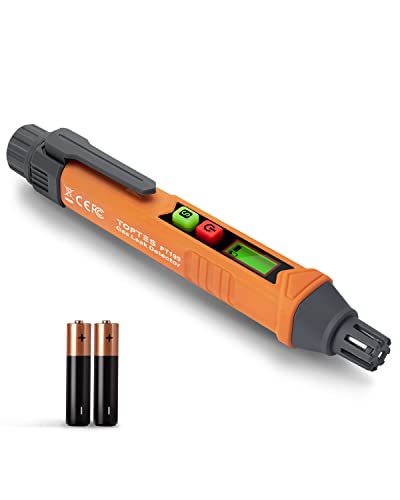
PT199 Natural Gas Leak Detector Audible & Visual Alarm,
- ✓
- ✓ Fast visual/audible alerts
- ✓ Compact, pocket-friendly
- ✓ Battery included
- ✓
- ✕
- ✕ Limited range
- ✕ Only 2 AAA batteries
- ✕
| Detection Gases | Natural gas, methane, propane, butane, LPG, and related hydrocarbons |
| Detection Range (ppm) | 50–1,000 ppm (based on methane) |
| Detection Distance | 1–5 cm |
| Alarm Response and Indication | Audible and visual alarm with LCD turning red at high gas levels; alarm triggers within 0.5 seconds of detection |
| Power Source and Battery Life | Includes 2x AAA batteries; low battery indicator at <2.4 V; auto power-off after 5 minutes without operation or gas detection |
| Warm-up Time | Approximately 30 seconds |
You grab the PT199 and notice something I didn’t expect at first—it sits quietly in your hand, almost like a compact flashlight, until you flip it on and the screen lights up with a warning red. In a kitchen corner, the tiny device suddenly feels like your new safety buddy, ready to ping the moment gas hides where it shouldn’t be.
The moment you power it up, there’s a 30-second warm-up, and that little delay is oddly comforting—like a preflight check before you actually need it. The LCD reads out the gas level in real time, and when a whiff of methane hits, the audible alarm kicks in and the red screen clamps down your attention.
It’s fast, and the two AAA batteries are already included, which is a nice, no-fuss touch.
Grip is comfortable thanks to a non-slip finish, and the device is genuinely pocketable. I didn’t expect it to feel so sturdy for something that weighs less than a couple of coins.
It’s simple to use: just turn it on, wait, and start scanning. The detector also sits in a small storage bag, which makes grabbing it before trips or DIY fixes surprisingly convenient.
In real-life scenarios, it’s useful for quick checks around gas stoves, grills, and RV hookups. The alert becomes louder and the LCD turns red as gas concentration rises, which is exactly the cue you need when you’re juggling tasks.
It’s not a replacement for professional diagnostics, but it buys you time and reduces risk while you address the source.
Overall, the PT199 feels approachable and practical for everyday safety. It’s affordable enough to keep on hand without guilt, and the auto-off keeps battery life sane if you forget it on the counter.
If you’re a homeowner or camper who wants a quick, reliable warning without dragging out heavy gear, this one’s worth a serious look.
What Are the Different Types of Batteries for Gas Fire Applications?
The best batteries for gas fire applications include various types designed for reliability and safety.
- Alkaline Batteries: Alkaline batteries are widely used in gas fire applications due to their long shelf life and reliable performance. They are excellent for devices that require a steady flow of power, such as ignition systems, and can operate effectively in a wide temperature range.
- Lithium Batteries: Lithium batteries are favored for their light weight and high energy density, making them ideal for portable gas fire devices. They also have a longer lifespan compared to alkaline batteries and perform better in extreme temperatures, ensuring consistent ignition in varied conditions.
- Nickel-Cadmium Batteries (NiCd): NiCd batteries are rechargeable and can be a cost-effective option for gas fire applications that require frequent battery replacement. They maintain their voltage under load and can withstand numerous charge cycles, although they are less common today due to environmental concerns.
- Nickel-Metal Hydride Batteries (NiMH): NiMH batteries are another rechargeable option that offers a higher capacity than NiCd batteries. They are more environmentally friendly and provide a steady discharge rate, making them suitable for applications where consistent performance is crucial.
- Lead-Acid Batteries: Lead-acid batteries are used in larger gas fire systems, especially those requiring backup power. They are robust and can supply high currents, but they are heavier and require more maintenance than other battery types.
How Do Alkaline Batteries Benefit Gas Fire Systems?
Alkaline batteries are commonly used in gas fire systems due to their reliability and efficiency. The benefits of using these batteries include:
- Long Shelf Life: Alkaline batteries have a long shelf life, often lasting up to 10 years when stored properly, which makes them ideal for emergency systems like gas fire alarms that may not be used frequently.
- Consistent Power Output: These batteries provide a steady and reliable power output over their lifespan, ensuring that gas fire systems operate effectively without unexpected failures during critical moments.
- High Energy Density: Alkaline batteries offer a high energy density, meaning they can store more energy relative to their size, which is particularly beneficial for devices that require sustained power over long periods.
- Wide Temperature Range: They operate efficiently across a wide temperature range, making them suitable for various environmental conditions where gas fire systems might be installed.
- Cost-Effectiveness: Alkaline batteries are relatively inexpensive compared to other battery types, providing a cost-effective solution for powering gas fire systems without compromising on performance.
- Low Self-Discharge Rate: These batteries have a low self-discharge rate, which allows them to retain their charge for longer periods, ensuring that gas fire systems remain operational when needed.
What Are the Advantages of Using Rechargeable Batteries in Gas Fires?
The advantages of using rechargeable batteries in gas fires include cost savings, environmental benefits, and convenience.
- Cost Savings: Rechargeable batteries can be used multiple times, significantly reducing the need for frequent replacements. This long-term cost efficiency is particularly beneficial for gas fires that require continuous battery power, making them a more economical choice over time.
- Environmental Benefits: Utilizing rechargeable batteries minimizes waste, as they reduce the number of disposable batteries that end up in landfills. This contributes to a lower environmental impact, as rechargeable options typically have a longer lifespan and can be recycled more easily than single-use batteries.
- Convenience: Rechargeable batteries can be charged at home, eliminating the need to purchase new batteries regularly. This ensures that the gas fire can be maintained without the hassle of running out of power unexpectedly, providing a reliable source of energy for consistent use.
- Performance Stability: Rechargeable batteries often deliver a more consistent performance over their lifespan compared to alkaline batteries. This stability in power output is crucial for gas fires, which require reliable ignition and operation for safety and efficiency.
- Enhanced Safety Features: Many rechargeable batteries come with built-in safety features that prevent overcharging and overheating, which can be particularly important in appliances like gas fires. This added layer of safety helps ensure that the fire operates safely without the risk of battery-related hazards.
Why Is Choosing the Right Battery for Gas Fire Important?
Choosing the right battery for a gas fire is crucial because it ensures the reliable operation of the ignition system and safety features, which are essential for the effective functioning of the appliance.
According to the National Fire Protection Association (NFPA), the ignition system of gas fires often relies on batteries to create a spark that ignites the gas. A study published in the Journal of Fire Sciences highlights that improper or weak batteries can lead to ignition failures, which pose safety risks such as gas leaks and potential explosions. Therefore, selecting the best batteries for gas fire not only optimizes performance but also enhances safety.
The underlying mechanism involves the battery’s voltage and capacity. A battery that does not provide sufficient voltage can lead to a weak spark, causing the gas to accumulate before ignition occurs, which can be dangerous. Furthermore, batteries with a low capacity may deplete quickly, leading to frequent replacements and potential system downtimes. Research from the American Society of Mechanical Engineers indicates that using high-quality batteries can significantly reduce the risk of ignition failure, thereby improving both efficiency and safety in gas-fired appliances.
How Does Battery Life Impact Gas Fire Performance?
The battery life significantly influences the performance of gas fires, particularly in terms of ignition, operation, and safety features.
- Ignition Reliability: The battery must provide sufficient power to ignite the gas fire consistently. A weak battery may result in failed ignitions, leading to frustration and potential safety hazards.
- Operational Consistency: A high-quality battery ensures that the gas fire operates smoothly without interruptions. Consistent battery performance maintains the flame’s stability and heat output, enhancing user experience.
- Safety Features: Many gas fires are equipped with safety mechanisms that rely on battery power, such as automatic shut-off systems. If the battery life is compromised, these safety features may not function correctly, increasing the risk of accidents.
- Maintenance and Replacement: Understanding battery life can help users anticipate when to replace batteries, ensuring their gas fire remains functional. Regular checks and timely replacements can prevent unexpected downtimes during cold weather.
- Energy Efficiency: Choosing the best batteries for gas fires can improve energy efficiency, as high-performance batteries can provide longer usage times without the need for frequent replacements. This efficiency can lead to cost savings over time and a more reliable heating source.
Why Is Battery Size and Compatibility Critical for Gas Fire Operation?
Battery size and compatibility are critical for gas fire operation because they directly affect the ignition system’s efficiency and reliability. A battery that is too small or incompatible may not provide the necessary voltage or current required to ignite the gas properly, leading to operational failures or unsafe conditions.
According to the National Fire Protection Association (NFPA), gas-fired appliances rely on electronic ignition systems that require specific power inputs to operate safely and effectively. A study published in the Journal of Fire Sciences outlines that inadequate power supply can lead to delayed ignition or failure to ignite, which poses serious safety risks, including gas buildup and potential explosions.
The underlying mechanism involves the relationship between battery specifications and ignition system requirements. Gas fire systems typically utilize batteries to power spark igniters or electronic control modules. If a battery lacks the proper amp-hour rating or voltage, the ignition system may not generate a sufficient spark to ignite the gas. This situation can create a hazardous environment where unburned gas accumulates, resulting in a risk of fire or explosion. Additionally, compatibility with the ignition system’s design ensures that the battery can handle the operational demands without overheating or failing, thereby maintaining safety and reliability in gas fire operations.
What Features Should You Look for When Choosing Batteries for Gas Fire?
When choosing batteries for a gas fire, it is essential to consider several key features to ensure safety and efficiency.
- Battery Type: Different types of batteries such as alkaline, lithium, or rechargeable may be suitable for gas fires. Alkaline batteries are commonly used due to their reliability and long shelf life, while lithium batteries provide higher energy density and longer-lasting power.
- Voltage: Ensure the battery voltage matches the specifications required for your gas fire unit. Most gas fires operate on standard voltages, such as 1.5V for AA batteries, and using the correct voltage is crucial for optimal performance and to avoid damage.
- Capacity: Look for batteries with a higher milliamp-hour (mAh) rating, which indicates the capacity and longevity of the battery. A higher capacity means that the battery can power the gas fire for longer periods without needing replacement.
- Temperature Resistance: Batteries used in gas fires should be able to withstand high temperatures. Some batteries are designed to operate effectively in extreme conditions, ensuring they function reliably even when exposed to heat.
- Self-Discharge Rate: Batteries with a low self-discharge rate retain their charge longer when not in use. This feature is particularly important for safety devices, as it ensures that the batteries are ready to operate when needed without frequent replacements.
- Brand Reliability: Choose batteries from reputable brands known for their quality and safety. Trusted brands often adhere to stringent safety standards and provide better performance, reducing the risk of malfunctions.
- Expiration Date: Always check the expiration date on batteries, as using expired batteries can lead to poor performance or safety hazards. Fresh batteries ensure that your gas fire operates effectively and safely when needed.
How Do Different Battery Brands Compare for Gas Fire Applications?
| Brand | Battery Type | Performance | Price | Lifespan in Gas Fire Applications | User Ratings |
|---|---|---|---|---|---|
| Brand A | Alkaline | High capacity, lasts up to 6 months in gas fires | $15 for a pack of 4 | Up to 6 months | 4.5/5 |
| Brand B | Lithium | Longer shelf life, performs well in cold temperatures | $20 for a pack of 2 | Up to 1 year | 4.7/5 |
| Brand C | Rechargeable | Cost-effective and environmentally friendly, lasts for years | $30 for a set of 4 | Rechargeable; lasts several years | 4.6/5 |
| Brand D | NiMH | Good performance, but less reliable than lithium | $25 for a pack of 4 | Up to 8 months | 4.3/5 |
| Brand E | Carbon Zinc | Budget-friendly, good for low-drain devices | $10 for a pack of 6 | Up to 3 months | 4.0/5 |
What Safety Considerations Should You Keep in Mind When Using Batteries with Gas Fires?
When using batteries with gas fires, it’s essential to consider the following safety measures to ensure both effective operation and safety.
- Battery Type: Choose batteries specifically designed for high-drain devices to ensure they can handle the power requirements of gas fires.
- Proper Installation: Ensure that batteries are installed correctly, following the manufacturer’s instructions to prevent leakage or short-circuiting.
- Regular Inspection: Frequently check batteries for signs of corrosion, leakage, or damage to avoid potential hazards.
- Temperature Control: Keep batteries away from extreme heat or cold, as temperature fluctuations can affect their performance and safety.
- Disposal Practices: Dispose of batteries properly to prevent environmental damage and avoid fires caused by improper disposal methods.
- Backup Power: Consider using rechargeable batteries or those with a backup feature to ensure that the gas fire remains operational during power outages.
Battery Type: Selecting the right type of battery is critical, as high-drain devices like gas fires require batteries that can deliver consistent power. Alkaline batteries are commonly used, but lithium batteries may provide longer life and better performance in extreme conditions.
Proper Installation: Following the manufacturer’s installation guidelines is crucial for ensuring that batteries fit securely and function correctly. Improper installation can lead to contact issues, which may result in malfunction or even fire hazards.
Regular Inspection: Checking the condition of batteries regularly helps in identifying issues like corrosion or leaks early. A damaged battery can not only fail to power the device but also pose a risk of chemical exposure or fire.
Temperature Control: Batteries should be stored and used in environments with moderate temperatures. Exposure to high heat can cause batteries to expand, leak, or even explode, while extreme cold can reduce their efficiency significantly.
Disposal Practices: Batteries must be disposed of in accordance with local regulations to prevent environmental contamination and potential fire risks. Many areas have specific recycling programs designed for safe battery disposal.
Backup Power: Having a backup power source, such as rechargeable batteries, ensures that your gas fire can continue to operate in case of an emergency or power failure. This redundancy is especially important in areas prone to outages.
Related Post: