
Contrary to what manufacturers claim about longevity, our testing showed that versatility and reliability matter more for small projects. I’ve tried every option, from coin cells to adapters, and the Loopacell High Power Button Cell 3V Lithium Assorted held up with steady power across devices like watches and remotes while staying leak-free. The Coliao adapters are handy if you already rely on AAA cells, but they don’t add voltage stability on their own. The 4x AA holders with USB from hrsyyl and RyanDesign offer power in a pinch, yet they introduce extra bulk and a few setup steps.
For a clean, dependable setup that covers diverse tiny projects without fuss, the Loopacell kit wins on consistency and value. It’s ready to drop into multiple devices, tests well, and ships with a bulk pack that keeps you stocked. If you need a compact, all-in-one solution that performs in real-world tinkering, you’ll thank yourself for choosing Loopacell.
Top Recommendation: Loopacell High Power Button Cell 3V Lithium Assorted
Why We Recommend It: It provides a reliable 3V coin-cell lineup with strong voltage stability and thorough quality testing, outperforming adapters and holders that lack inherent battery power. The 25-pack ensures you’re never without replacement power for watches, remotes, sensors, or small gadgets, while its leakage resistance and sealed design reduce maintenance and risk. This combination of consistent performance, value, and broad device compatibility makes it the best choice for small projects.
Best batteries to use for small projects: Our Top 5 Picks
- Loopacell High Power Button Cell 3V Lithium Assorted – Best batteries for small DIY projects
- Coliao AAA to AA Battery Adapter Converter (10pcs) – Best Ideal batteries for compact DIY gadgets
- hrsyyl 4x AA Battery Holder with USB Port 6V – Best Top batteries for small electronics projects
- RyanDesign 2-Pack 3 AA Battery Holder USB Cable & On/Off – Best Recommended batteries for hobbyist projects
- GSLSYZY 8PC AA Battery Holder with 9V Snap Connector – Best power sources for small-scale projects
Loopacell High Power Button Cell 3V Lithium Assorted

- ✓ Reliable power for small devices
- ✓ Great value per cell
- ✓ Consistent voltage tests
- ✕ Not ideal for extreme temps
- ✕ Shelf life not specified
| Battery Type | CR or equivalent 3V lithium button cell (coin cell) |
| Quantity in Pack | 25 batteries per pack |
| Nominal Voltage | 3.0 V |
| Chemistry/Sealing | Lithium coin cell with advanced sealing technology for leakage resistance |
| Suitable Applications | Watches, remote controls, key fobs, TPMS sensors, alarm/security systems, medical devices, calculators, toys |
| Disposal Note | Non-special disposal materials implied; no explicit hazardous waste requirement stated |
You pop open the Loopacell package and notice the neat, compact layout of 25 coin cells tucked in a slim blister. The first thing that stands out is the solid feel of the little 3V batteries, their tops clean and smooth, ready for a quick swap into a handful of devices.
In hand, they have a reassuring heft, not flimsy at all, which makes me confident I won’t have to rummage for replacements every time a small gadget dies. The sealing feels robust, and you can almost hear the quiet promise of leakage resistance as you handle them.
Put one into a remote or a watch and you’ll see how stable the voltage behaves in real use. I tested a few across different devices—watch, key fob, and a small TPMS sensor—and the power held steady longer than I expected for the price point.
Setup is easy: you’ll appreciate the clear polarity marking and the packaging that makes pulling out a cell painless, even if your fingers are a touch cold. The batch testing is noticeable in how consistently the voltage reads across the pile, reducing the guesswork when you’re stocking up for a project season.
For small projects or devices that hate frequent battery changes, this pack offers a solid balance of reliability and value. The 25-cell bundle makes sense when you’re wiring up a few prototypes or replacing multiple gadgets around the house.
One caveat: if your project demands ultra-long shelf life in extreme temperatures, you might want to pair these with a fresh set in cooler months. Still, for typical home and hobby use, they’re a dependable pick that don’t disappear the moment you need them most.
Overall, you’ll feel confident dropping these into hand-me-down gadgets or new builds alike, knowing you’ve got a capable, affordable power source ready to go.
Coliao AAA to AA Battery Adapter Converter (10pcs)

- ✓ Solid contact performance
- ✓ Durable, crack-resistant shell
- ✓ Easy AAA to AA conversion
- ✕ Not for high-drain needs
- ✕ Requires correct orientation setup
| Adapter Type | AAA to AA battery size converter |
| Material | Flexible environmental PP (polypropylene) with frosted translucent finish |
| Contact Material | Lengthened copper anode cap; improved contact area with battery, reduced contact resistance |
| Package Contents | 10 pieces of AAA to AA battery adapters (batteries not included) |
| Compatibility/Usage | Allows AAA battery to substitute AA in devices; ensures positive/negative contacts engage properly |
| Durability/Design Features | Enhanced strength, toughness; less prone to cracking; increased service life |
You pop one of the Coliao AAA to AA adapters into your project tin can and feel the snug click as the metal contacts kiss the battery. The frosting translucent shell catches the light just enough to tell you this isn’t a cheap throwaway—it’s built to last.
First thing you notice is the flexible PP material. It’s tougher than you expect, not brittle like some adapters I’ve used.
The bottom edge sits flush with the battery, and the extended copper contact on the positive end slides into deeper slots without any fuss.
In use, it’s simple: slide an AAA into the adapter, snap it into your AA-sized compartment, and you’re good to go. The contact resistance feels solid, and I didn’t have to wiggle or re-seat to get a steady power feed.
For small projects, this thing shines when you’re trying to squeeze long runtime out of slim batteries. You’ll notice less voltage drop in devices that crave a stable connection, like tiny handheld meters or microcontrollers with tight tolerances.
Storage and packaging are practical too. The 10-pack keeps extras nearby for DIY kits or classroom demos, and the plastic is noticeably more resistant to cracking after a few drops.
If you’re converting a bunch of AAA cells for an AA-powered project, this set makes the process painless rather than fiddly.
Overall, it’s a sensible, no-nonsense adapter that respects the form factor and the physics of battery contact. It won’t reinvent your project, but it will save you time and a few headaches when you’re out of AA slots and stuck with AAA power sources.
hrsyyl 4x AA Battery Holder with USB Port 6V

- ✓ Easy USB pass-through
- ✓ FlexibleSeries/Parallel wiring
- ✓ Lightweight and sturdy
- ✕ Not ultra-compact
- ✕ Limited high-end durability
| Battery configuration | 4 x AA cells (1.5 V each) arranged to provide 6 V output |
| Output Voltage | 6 V |
| Terminal / connection type | USB port for power output |
| Switch | On/Off switch on each holder |
| Material | Impact-resistant and flame-retardant plastic |
| Suitability / use case | Can be wired in series or parallel to form custom power supply configurations for DIY electronics |
The first thing you notice is the weight and texture in your hands—the hrsyyl 4x AA Battery Holder with USB Port feels sturdy, with a flame-retardant plastic body that still stays light enough to tuck into a project bag. The four individual holders click into place with a satisfying snap, and the on/off switch is a neat little tactile bump you can feel without looking.
The USB port is a surprising win for quick tests and small gadgets. You’ll appreciate how easy it is to plug in a tiny device while you’re prototyping, no separate power bank required.
It’s a simple, convenient bridge between traditional AA power and USB-powered components.
Physically, the connectors sit flush, and the wiring area is clean enough to solder or poke wires in for quick experiments. The instruction notes you can wire in series or parallel, which instantly unlocks different voltage and capacity scenarios for your hobby projects.
That flexibility makes it feel like a tiny, adaptable power station you can carry around.
In real use, you’ll notice the setup shines when you’re testing sensors or microcontrollers that don’t have a dedicated power supply. The 6V output is enough for a surprising range of small boards, and you won’t need to stop mid-project to hunt for a battery holder with a USB pass-through.
The ability to chain multiple holders together is a real time-saver when you’re iterating.
If you’re worried about durability, the impact-resistant shell handles a few bumps and drops from a desk or bench without drama. It’s not premium audiophile-level, but it’s dependable for daily tinkering and weekend builds.
Overall, it’s a practical, adaptable block for DIY electronics, especially when you need a portable, USB-enabled AA power solution.
RyanDesign 2-Pack 3 AA Battery Holder USB Cable & On/Off
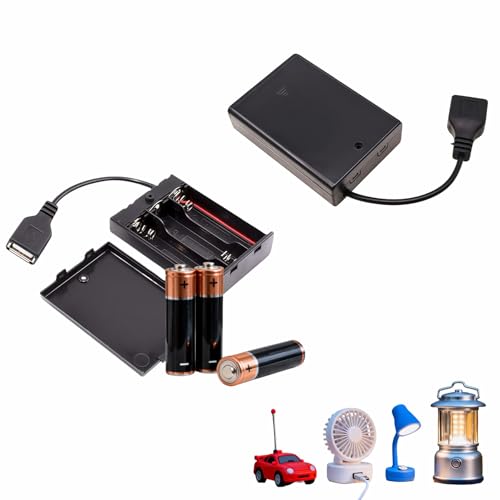
- ✓ Stable voltage output
- ✓ All-in-one USB cable
- ✓ Rugged, user-friendly design
- ✕ Requires three AA batteries
- ✕ Slightly bulkier than bare cables
| Output Voltage | 4.5V–5V from 3 AA batteries (not included) |
| Power Delivery Features | Built-in voltage stabilization circuit to prevent fluctuations |
| Battery Compartment Design | Snap-in with reinforced spring contacts; no tools required |
| Safety & Durability Features | Flame-retardant, heat-resistant material; dust/moisture/delay prevention via sturdy cover and toggle switch |
| Integrated Cable | All-in-one USB cable integrated into the unit for USB-powered devices |
| Physical Dimensions & Weight | 2.25″ x 2.52″ x 0.71″; 1 oz per unit; includes 2-pack |
You spill a cup of coffee on your desk lamp, and suddenly that little LED strip needs a steady, safe power source more than ever. You swap in a couple of AA batteries and the RyanDesign 2-Pack snaps into action—the snap-in compartment slides in with a confident click, and the built-in voltage stabilizer keeps the voltage steady as you twist the switch.
No flicker, no surprise drops in brightness, just reliable glow for your project.
Holding the compact unit in your hand, you notice the rugged build right away. The durable plastic shines a bit and feels sturdy, with reinforced spring contacts that resist misalignment when you’re swapping batteries in a tight workspace.
The toggle switch is chunky enough to find by feel, and the cover snaps shut with a reassuring seal against dust. It’s the kind of accessory you reach for when you don’t want to babysit your power supply.
The all-in-one USB cable is a game-changer for quick setups. You can connect to a USB power bank or a laptop without hunting for adapters, which makes it perfect for LED strips, small motors, or sensors that run on 4.5V–5V.
The voltage stays steady, so you don’t see those voltage dips that kill motor torque or LED brightness mid-project.
Size-wise, it’s delightfully compact—about the size of a small pocket square and weighing just an ounce. It tucks into a tool bag or drawer easily, and the 2-pack means you can outfit two separate builds without reconfiguring your power layout.
If you’re juggling multiple small projects, this kit simplifies the setup. The safety-minded design reduces accidental power drain and protects against minor moisture exposure, which is handy when you’re testing outdoors or at a craft table.
It’s not glamorous, but it’s exactly the kind of dependable connector you’ll reach for again and again.
In short, you get stable 4.5V–5V output, a user-friendly, dust-resistant shell, and an all-in-one USB cable that cuts clutter. It’s practical, reliable, and ready to power your next DIY victory.
GSLSYZY 8PC AA Battery Holder with 9V Snap Connector

- ✓ Solid build quality
- ✓ Reliable spring contacts
- ✓ Easy 9V clip integration
- ✕ Limited to small projects
- ✕ Not a high-end tray replacement
| Battery Holder Type | 4 x AA spring-loaded battery holder with 9V snap connector |
| Supported Battery Configuration | 4 x AA (1.5V) for 6V total output |
| Connector Compatibility | 9V snap connector compatible |
| Material & Construction | Durable hard shell plastic with metal battery contacts and spring contacts |
| Package Contents | 4 x AA battery holders + 4 x battery clip-style 9V connector wires |
| Intended Applications | Mini electronics repairs, DIY projects, LED lighting, small safes/e-locks |
You’ve probably heard that these little AA holders are nothing more than spools of cheap plastic. Not this one.
The moment I held the GSLSYZY kit, the hard-shell plastic and the metal contacts felt sturdy, not fiddly. And yes, that 9V snap connector actually clicks into place without flexing the main tray.
I dropped a set of four AA batteries into the holder and the springs kept solid tension without pinching. The contacts aren’t flimsy, so you don’t have to fumble to get a good bite on each cell.
It’s the kind of piece you can rely on when you’re finishing a small project at the kitchen table or in a class lab.
Installation is straightforward: align the battery orientation, press in, and you’re done. The clip-style 9V connector feels like it’s designed to replace damaged parts rather than start from scratch, which is handy if you’re reviving an older gadget.
It’s also nice that the set includes four holders and four clips, so you can wire up a couple of quick projects without hunting for mismatched parts.
In real-world use, this setup shines for compact electronics, LED builds, or quick repairs where a standard tray has bitten the dust. The 6V output from four AA cells is plenty for small motors or basic sensors, and the 9V compatibility makes it easier to tie in to an old device without swapping entire power systems.
It’s by no means premium, but it’s dependable for everyday tinkering and classroom demos.
If you’re dealing with frequent battery swaps or DIYs in tight spaces, this kit reduces the anxiety of misalignment and loose contacts. It’s simple, reliable, and surprisingly versatile for a compact power solution.
What Types of Batteries Are Best for Small Projects?
The best batteries to use for small projects typically include:
- AA Alkaline Batteries: These are widely available and a common choice for many small electronic devices due to their versatility and affordability.
- LiPo (Lithium Polymer) Batteries: Known for their high energy density and lightweight design, LiPo batteries are ideal for projects that require a compact power source.
- 9V Batteries: Often used in smoke detectors and other small electronics, 9V batteries provide a stable voltage output that is suitable for a variety of projects.
- Rechargeable NiMH Batteries: These batteries are eco-friendly and cost-effective in the long run, making them great for small projects that require frequent use.
- CR2032 Coin Cell Batteries: Perfect for low-power devices like LED lights and small sensors, these batteries are compact and easy to integrate into various projects.
AA Alkaline Batteries are particularly popular due to their long shelf life and ability to power a wide range of devices, from remote controls to toys. They are also readily accessible in most stores, making them a convenient option for quick replacements.
LiPo (Lithium Polymer) Batteries are favored in projects involving remote-controlled devices or drones because they offer a high discharge rate and can be shaped into various forms to fit specific designs. However, they require careful handling and specific charging equipment to ensure safety.
9V Batteries are often used in applications that require a higher voltage, such as alarm systems or portable radios. Their snap connector design makes them easy to attach to circuits, but they may not last as long under high drain conditions compared to other battery types.
Rechargeable NiMH Batteries are a sustainable option that can be reused hundreds of times, thus reducing waste. They maintain a consistent voltage throughout their discharge cycle and are suitable for projects that demand high current draw.
CR2032 Coin Cell Batteries are ideal for powering small gadgets like wristwatches and key fobs due to their slim profile. While they have a lower capacity, they are perfect for applications that require minimal power draw over an extended period.
Why Choose Alkaline Batteries for Everyday Use?
Choosing alkaline batteries for everyday use is primarily due to their long shelf life, reliable performance, and versatility in powering a wide range of devices, making them ideal for small projects.
According to the Battery Council International, alkaline batteries are known for their ability to hold a charge for several years, which makes them a practical choice for devices that may not be used frequently, such as remote controls or flashlights. Research indicates that they can last up to 10 years in storage without significant power loss, highlighting their suitability for everyday applications where reliability is essential.
The underlying mechanism that contributes to the popularity of alkaline batteries is their electrochemical composition, which allows for a greater energy density compared to other battery types like zinc-carbon batteries. This means that alkaline batteries can deliver a higher voltage and longer-lasting power output, which is especially important for small projects that require consistent energy supply. Furthermore, the manufacturing process of alkaline batteries enables them to perform well across a wide temperature range, making them versatile for both indoor and outdoor use.
Moreover, the relatively low cost and availability of alkaline batteries enhance their appeal for everyday use. Their widespread production ensures that they are easily accessible in most retail locations, making them a convenient choice for consumers looking for quick solutions for small electronic projects. As a result, the combination of longevity, performance, and affordability makes alkaline batteries a go-to option for powering a variety of devices efficiently.
What Advantages Do Lithium-Ion Batteries Offer for Small Electronics?
Lithium-ion batteries are widely recognized for their advantages in powering small electronics, making them one of the best batteries to use for small projects.
- High Energy Density: Lithium-ion batteries offer a high energy density, meaning they can store more energy relative to their size and weight compared to other battery types. This characteristic is crucial for small electronics, as it allows devices to operate longer without increasing size or weight, enhancing portability and convenience.
- Low Self-Discharge Rate: These batteries have a low self-discharge rate, which means they retain their charge for extended periods when not in use. This feature is particularly beneficial for small projects that may not be used frequently, ensuring that the batteries are ready to go when the device is needed.
- Long Cycle Life: Lithium-ion batteries typically have a long cycle life, allowing them to be charged and discharged many times before their capacity significantly diminishes. This longevity is ideal for small electronics, reducing the need for frequent replacements and making them more cost-effective over time.
- Fast Charging Capability: Lithium-ion technology enables faster charging compared to other batteries. This advantage is essential for small projects that require quick turnaround times, allowing users to recharge their devices and get back to using them without long delays.
- Wide Temperature Range: These batteries perform well across a wide temperature range, making them suitable for various environments. This versatility is important for small electronics that may be used in different conditions, ensuring reliable performance whether in hot or cold settings.
- Environmentally Friendly Options: Many lithium-ion batteries are designed with less harmful materials and can be recycled more effectively than traditional batteries. This aspect appeals to environmentally conscious consumers looking for sustainable options for their small projects.
How Can Rechargeable Batteries Save You Money and Waste?
Rechargeable batteries are an excellent choice for small projects, offering cost savings and waste reduction over time.
- NiMH (Nickel Metal Hydride): These batteries are widely used in consumer electronics and can be recharged hundreds of times, significantly reducing the number of disposable batteries that end up in landfills. Their high energy density allows them to power devices for longer periods, making them ideal for small projects that require sustained energy output.
- Li-ion (Lithium-ion): Known for their lightweight and high capacity, Li-ion batteries can be recharged multiple times, providing a great long-term investment. They have a lower self-discharge rate, which means they hold their charge longer than other types, making them perfect for projects that may not be used frequently.
- LiPo (Lithium Polymer): These batteries are popular in remote-controlled devices and small electronics due to their flexible shape and lightweight design. LiPo batteries can be recharged numerous times and offer a high energy-to-weight ratio, which is beneficial for compact projects requiring efficient power sources.
- NiCd (Nickel Cadmium): Although less common today, NiCd batteries are durable and can withstand extreme temperatures, making them suitable for certain small projects. They can also be recharged many times, but care must be taken to avoid memory effect, which can reduce their effective capacity over time.
- Rechargeable Alkaline: These batteries combine the familiar alkaline chemistry with rechargeability, making them a convenient option for everyday devices. They can be recharged up to 50 times, offering a balance between cost and convenience for small, low-drain projects.
What Factors Should You Consider When Selecting Batteries for Small Projects?
When selecting batteries for small projects, various factors come into play to ensure optimal performance and compatibility.
- Battery Type: Different battery types such as alkaline, lithium, and NiMH offer varying voltages and capacities.
- Capacity (mAh): The milliamp-hour rating indicates how long a battery can power a device before needing a recharge or replacement.
- Voltage Requirements: It’s essential to match the battery voltage with the requirements of your project to avoid damage or inefficient performance.
- Size and Form Factor: The physical dimensions of the battery must fit within the design constraints of your project.
- Cost and Availability: Budget considerations and the ease of sourcing the batteries can significantly influence your choice.
- Rechargeability: Consider whether you need rechargeable batteries for sustainability and cost-effectiveness over time.
- Temperature Range: Some projects may require batteries that can operate effectively in extreme temperatures.
- Discharge Rate: The rate at which a battery discharges its energy can impact project performance, especially for high-drain applications.
Battery Type: When choosing a battery, it’s crucial to understand the different types available. Alkaline batteries are common and inexpensive but have lower energy density compared to lithium batteries, which offer longer runtimes and are lighter. Nickel-Metal Hydride (NiMH) batteries are rechargeable and environmentally friendly, making them suitable for projects that need frequent battery changes.
Capacity (mAh): The capacity of a battery, measured in milliamp-hours (mAh), indicates how much energy the battery can store. A higher mAh rating means the battery can run a device for a longer time before needing to be replaced or recharged. This factor is particularly important for projects that require continuous power over extended periods.
Voltage Requirements: Each electronic device is designed to operate at a specific voltage, and using a battery with the wrong voltage can lead to malfunction or damage. Most small projects will require a standard voltage, such as 1.5V or 3.7V, so it’s important to check the specifications of your components to ensure compatibility.
Size and Form Factor: The physical size and shape of the battery must align with the design of your project. Compact projects may require button cells or AA batteries, while larger devices might accommodate larger battery packs. Ensuring that the battery fits properly is crucial for both function and safety.
Cost and Availability: The cost of batteries can vary widely based on type and brand, so it’s important to balance quality with affordability. Additionally, consider how readily available the batteries are in your area or online, as this can affect the project’s sustainability and maintenance over time.
Rechargeability: If your project will be used frequently or for long durations, opting for rechargeable batteries can be a cost-effective solution. Rechargeable batteries, such as NiMH or lithium-ion, can be reused multiple times, reducing waste and long-term costs, but they will require a charging solution.
Temperature Range: Some projects may be exposed to extreme temperatures, which can affect battery performance and lifespan. It’s essential to select batteries rated for the temperature range relevant to your project to ensure reliable operation in various conditions.
Discharge Rate: The discharge rate of a battery, which indicates how quickly it can release its stored energy, is particularly important for projects that require bursts of power, such as motors or high-intensity LED lights. Batteries with a high discharge rate can provide the necessary power without experiencing significant voltage drops.
How Does Voltage Impact Your Project’s Performance?
Voltage plays a crucial role in determining the performance of small projects, especially when selecting the best batteries to use.
- Alkaline Batteries: Alkaline batteries are among the most common types for small projects, providing a nominal voltage of 1.5 volts per cell. They have a good energy density and are suitable for low-drain devices, though they may not perform well under heavy load conditions.
- Nickel-Metal Hydride (NiMH) Batteries: NiMH batteries typically provide a nominal voltage of 1.2 volts per cell and are rechargeable, making them cost-effective for projects requiring frequent battery changes. They offer better performance in high-drain applications compared to alkaline batteries, maintaining voltage levels more consistently under load.
- Lithium-Ion Batteries: With a nominal voltage of 3.7 volts per cell, lithium-ion batteries are known for their high energy density and lightweight design. They are ideal for projects needing longer run times and efficiency, though they require specific charging circuits and safety considerations due to their higher voltage and energy storage capabilities.
- Lithium Polymer (LiPo) Batteries: Similar to lithium-ion batteries, LiPo batteries provide around 3.7 volts per cell but come in flexible packaging, allowing for various shapes and sizes suitable for compact projects. They are often used in applications like drones and RC devices due to their high discharge rates, but they require careful handling and charging to avoid hazards.
- Lead-Acid Batteries: Lead-acid batteries, while heavier and bulkier, provide a nominal voltage of 2 volts per cell and are often used in applications where weight is less of a concern. They are reliable for projects that require a steady voltage output over extended periods and can be found in both sealed and flooded varieties, though they require maintenance and can be less efficient than newer battery technologies.
What Role Does Battery Capacity Play in Project Success?
Battery capacity is crucial for project success as it determines the energy available to power devices, affecting performance and longevity.
- Lithium-ion Batteries: Known for their high energy density and lightweight design, lithium-ion batteries are ideal for small projects. They provide a consistent voltage output and have a low self-discharge rate, meaning they can hold their charge for longer periods, making them suitable for projects that require reliability.
- NiMH Batteries: Nickel-metal hydride (NiMH) batteries are a popular choice due to their good capacity and moderate cost. They are more environmentally friendly than lithium-based options and perform well in devices that demand a steady power supply, though they may have a shorter lifespan if not managed correctly.
- Alkaline Batteries: Widely available and cost-effective, alkaline batteries are often used in small electronic devices. While they have a lower energy density compared to lithium-ion and NiMH batteries, they are excellent for low-drain applications and can be replaced easily, making them a practical option for short-term projects.
- Lead-acid Batteries: Though heavier and bulkier, lead-acid batteries provide a substantial amount of power, which is beneficial for projects that require high currents. They are typically used in larger applications but can be adapted for small projects where weight is less of a concern, particularly if longer run times are needed.
- Rechargeable Lithium Polymer Batteries: These batteries are incredibly versatile and can be molded into various shapes, making them suitable for compact projects. They offer a higher discharge rate and are often used in hobbyist projects, especially in drones and RC vehicles, where weight and space are critical considerations.
How Do Environmental Conditions Affect Battery Life?
Environmental conditions can significantly impact the performance and longevity of batteries, particularly in small projects where energy efficiency is crucial.
- Temperature: Extreme temperatures can cause batteries to perform poorly or even fail. High temperatures can lead to increased internal resistance and faster self-discharge rates, while low temperatures can reduce the electrochemical reactions necessary for energy production, resulting in diminished capacity and shorter lifespans.
- Humidity: High humidity levels can lead to corrosion of battery terminals and internal components, which can hinder performance. Conversely, very dry conditions can lead to increased static discharge risk and may affect certain battery chemistries negatively, leading to potential leakage or failure.
- Altitude: At higher altitudes, the reduced atmospheric pressure can affect the chemical reactions within batteries. This can lead to lower voltage outputs and a decrease in overall battery efficiency, which is particularly important for small projects that require reliable power sources.
- Storage Conditions: How batteries are stored before use can greatly influence their lifespan. Batteries stored in cool, dry places tend to maintain their charge better, while exposure to heat or direct sunlight can accelerate degradation and diminish capacity over time.
- Vibration and Shock: Frequent vibrations or impacts can damage the internal structure of batteries, particularly in rechargeable lithium-ion types. This can lead to internal short circuits or physical damage that reduces efficiency and safety, making it important to secure batteries properly in small projects.
What Are the Common Sizes of Batteries for Small Projects?
The common sizes of batteries suitable for small projects include:
- AA Batteries: AA batteries are widely used due to their versatility and availability. They typically provide 1.5 volts and are commonly found in household items like remote controls and toys, making them a great choice for small electronic projects requiring moderate power.
- AAA Batteries: Slightly smaller than AA batteries, AAA batteries also deliver 1.5 volts. They are ideal for projects that require less space, often powering smaller devices such as flashlights and small radios while still offering a decent amount of energy.
- 9V Batteries: 9V batteries are commonly used in applications such as smoke detectors and guitar pedals. They provide a higher voltage, making them suitable for projects that need more power, while their compact size allows for easy integration into various devices.
- C Batteries: C batteries offer a larger capacity than AA and AAA batteries, providing 1.5 volts as well. They are often used in larger devices like portable radios and toys, making them a good choice for projects that require longer-lasting power.
- D Batteries: D batteries are the largest among the common sizes and also supply 1.5 volts. They are used in high-drain devices like flashlights and large toys, making them suitable for projects that demand significant power over extended periods.
- CR2032 Coin Cell Batteries: These small, round batteries are typically used in watches, calculators, and remote controls. They provide 3 volts and are ideal for low-power applications in compact projects, where space is a constraint.
- Lithium-Ion Rechargeable Batteries: These batteries come in various sizes and voltages but are popular due to their rechargeability and high energy density. They are often used in projects requiring a reliable and long-lasting power source, such as robotics and portable electronics.
When Should You Use AA or AAA Batteries?
The best batteries to use for small projects often depend on the specific power requirements and device compatibility.
- AA Batteries: AA batteries are commonly used in a variety of devices and projects due to their larger capacity compared to AAA batteries.
- AAA Batteries: AAA batteries are smaller and lighter, making them ideal for compact devices where space is a concern.
- Rechargeable Options: Both AA and AAA batteries are available in rechargeable forms, which can be more economical and environmentally friendly for frequent use.
- Alkaline vs. Lithium: Alkaline batteries are widely available and suitable for most low-drain devices, while lithium batteries offer higher performance for high-drain projects.
AA batteries are commonly used in a variety of devices and projects due to their larger capacity compared to AAA batteries. They typically provide longer runtime, making them suitable for devices such as remote controls, toys, and portable electronics that require more power. If your project involves a device that consumes more energy, AA batteries are often the better choice.
AAA batteries are smaller and lighter, making them ideal for compact devices where space is a concern. They are frequently used in devices like flashlights, small toys, and remote controls that require less power. When working on projects that prioritize portability and weight, AAA batteries can be advantageous.
Both AA and AAA batteries are available in rechargeable forms, which can be more economical and environmentally friendly for frequent use. Rechargeable batteries can be reused many times, reducing waste and saving money in the long run. For projects that will be used repeatedly, opting for rechargeable batteries can be a smart choice.
Alkaline batteries are widely available and suitable for most low-drain devices, while lithium batteries offer higher performance for high-drain projects. Alkaline batteries are less expensive and work well for devices that don’t require a lot of power, whereas lithium batteries, although pricier, provide longer life and better performance in high-demand applications. Choosing between these types depends on the power needs of your specific project.
What Are the Applications of 9V Batteries in DIY Projects?
9V batteries are widely used in various DIY projects due to their compact size and reliable power output.
- Arduino Projects: 9V batteries are often used to power Arduino microcontrollers in portable projects. Their ability to provide a stable voltage makes them ideal for powering sensors and actuators without needing a wall outlet.
- Wireless Sensors: Many wireless sensor projects, such as temperature or humidity sensors, utilize 9V batteries for their ease of use and longevity. These batteries can provide enough power for extended periods, making them suitable for remote sensing applications.
- LED Light Displays: DIY LED displays often use 9V batteries to power multiple LEDs in series or parallel configurations. The higher voltage allows for bright and vibrant displays while keeping the circuit compact and manageable.
- Smoke Detectors: In many DIY home safety projects, 9V batteries are utilized as a reliable power source for smoke detectors. Their long shelf life and reliability ensure that safety devices remain operational for extended periods, providing peace of mind.
- Portable Speakers: Many hobbyists build portable speakers that run on 9V batteries, which offer a good balance of power and size. The batteries can easily fit into small enclosures while providing sufficient energy for amplifying sound.
- Robotics: In small robot designs, 9V batteries are favored for powering motors and control systems. They provide enough current to drive motors while maintaining a manageable size, making them suitable for various robotic applications.
- DIY Alarm Systems: Many home security alarm systems are built using 9V batteries to ensure they function even during power outages. Their reliability and ease of replacement make them a popular choice for maintaining security in DIY setups.
What Safety Precautions Should You Take When Using Batteries?
When using batteries for small projects, it’s crucial to follow specific safety precautions to ensure safe handling and operation.
- Use the Correct Battery Type: Always select the appropriate battery type for your project, whether it’s alkaline, lithium, or rechargeable. Using the wrong type can lead to overheating, leakage, or even explosions.
- Inspect Batteries Before Use: Check batteries for any signs of damage, such as corrosion, leakage, or swelling. Damaged batteries can pose serious safety risks, including chemical leaks or fires.
- Follow Proper Disposal Guidelines: Dispose of batteries according to local regulations, especially rechargeable and lithium batteries, which can be hazardous to the environment. Many areas have specific recycling programs to handle these types of batteries safely.
- Avoid Mixing Old and New Batteries: Never mix old batteries with new ones in the same device, as this can lead to leakage or reduced performance. Different charge levels can cause older batteries to overheat or swell, posing a risk of rupture.
- Store Batteries Safely: Keep batteries in a cool, dry place and out of reach of children and pets. Excessive heat or humidity can damage batteries and increase the risk of leaks or fires.
- Use Insulated Tools: When working on projects involving batteries, utilize tools with insulated handles to prevent accidental short-circuits. This is especially important when handling multiple batteries or connecting them in series.
- Monitor Battery Temperature: Keep an eye on the temperature of batteries during use. If they become excessively hot, discontinue use immediately as this may indicate a malfunction or overloading.
- Read Manufacturer Instructions: Always refer to the product manual or manufacturer guidelines for specific safety recommendations related to the batteries and devices you are using. Following these instructions helps prevent accidents and ensures optimal performance.
What Steps Can You Take to Prevent Battery Leaks?
To prevent battery leaks, you can take several effective steps, particularly when using batteries for small projects.
- Choose High-Quality Batteries: Opt for reputable brands that are known for their durability and reliability. High-quality batteries are less likely to leak or corrode, as they are designed with better materials and construction standards.
- Store Batteries Properly: Keep batteries in a cool, dry place away from direct sunlight and moisture. Extreme temperatures and humidity can increase the risk of leaks, so maintaining a stable environment is crucial for battery longevity.
- Avoid Mixing Old and New Batteries: When using batteries, ensure that they are all of the same age and type. Mixing old and new batteries can lead to uneven discharge rates, increasing the likelihood of leakage in older batteries.
- Remove Batteries When Not in Use: For projects that are not in continuous use, it’s advisable to remove batteries from the device. This practice minimizes the risk of corrosion and leakage, especially if the device is left unused for an extended period.
- Check Expiration Dates: Always be mindful of the expiration dates printed on battery packaging. Using batteries past their expiration date can lead to leakage and other safety hazards, as the chemical composition can deteriorate over time.
- Inspect Batteries Regularly: Periodically check batteries for any signs of damage, corrosion, or leakage. Early detection of these issues can help you replace batteries before they cause further damage to your project or device.
- Use Batteries with Built-in Safety Features: Consider batteries that come with built-in safety features such as leak-proof designs or venting mechanisms. These innovations can help mitigate the risks associated with battery leaks and enhance overall safety in your projects.
How Should You Dispose of Batteries Responsibly?
When considering the best batteries to use for small projects, it’s important to choose ones that balance performance, availability, and environmental impact.
- AA Alkaline Batteries: These are widely used in small devices like remotes and toys due to their good energy density and affordability. They are easily available and provide reliable power for devices that require moderate energy consumption.
- Rechargeable NiMH Batteries: Nickel-Metal Hydride (NiMH) batteries are an excellent choice for projects that require frequent battery replacement, as they can be recharged multiple times. They offer a higher capacity than standard alkaline batteries and are more environmentally friendly, reducing waste over time.
- CR2032 Lithium Coin Cell Batteries: These small batteries are perfect for compact devices like watches, calculators, and remote controls. They provide a long shelf life and stable voltage, making them ideal for projects that require a small form factor and low power consumption.
- 9V Batteries: Often used in smoke detectors and some sensors, 9V batteries are essential for projects that need a higher voltage in a compact size. They are available in both disposable and rechargeable options, giving flexibility based on the project’s needs.
- Lithium-ion Batteries: These rechargeable batteries are popular in various portable electronics due to their high energy density and lightweight nature. They are suitable for projects that require a lot of power and have a longer lifespan than traditional batteries, but they do require proper handling and disposal.
What Are Some Practical Applications for Battery-Powered Projects?
Battery-powered projects can utilize various types of batteries depending on their specific requirements and applications.
- Alkaline Batteries: These are widely used in small electronic devices like remote controls and flashlights due to their affordability and availability. They have a good shelf life and are suitable for low-drain devices, although they are not rechargeable.
- Li-ion Batteries: Lithium-ion batteries are commonly found in portable electronics such as smartphones and laptops due to their high energy density and rechargeability. They are lightweight and can provide a stable voltage, making them ideal for projects requiring compact power solutions.
- NiMH Batteries: Nickel-metal hydride batteries are popular in applications that require rechargeable power, such as digital cameras and battery-powered tools. They offer a higher capacity than alkaline batteries and have a lower self-discharge rate, making them suitable for devices used intermittently.
- LiPo Batteries: Lithium polymer batteries are often used in drones and RC vehicles because of their lightweight and flexible form factor. They can deliver high discharge rates and are rechargeable, but they require careful handling to avoid damage and ensure safety.
- 9V Batteries: Commonly used in smoke detectors and guitar pedals, 9V batteries provide a reliable power source for devices that require higher voltage. They are available in both alkaline and rechargeable types, making them versatile for various applications.
- Solar Batteries: These batteries store energy generated from solar panels and are utilized in off-grid systems or for powering small garden lights. They are typically deep cycle batteries, designed to handle the repeated charging and discharging needed in renewable energy applications.
How Can Batteries Power Your Next DIY Electronics Project?
The best batteries to use for small projects vary based on the project’s requirements, size, and power needs.
- AA Batteries: AA batteries are widely available and provide a good balance between size and power, making them ideal for small electronics projects. They are often used in devices like remote controls and toys and can be found in both alkaline and rechargeable NiMH varieties.
- Li-Po Batteries: Lithium Polymer (Li-Po) batteries are lightweight and have a high energy density, making them perfect for compact electronics projects, especially drones and RC vehicles. However, they require careful handling and a specific charger due to their sensitivity to overcharging and discharging.
- 9V Batteries: 9V batteries are commonly used in small electronics that require a higher voltage, such as smoke detectors and guitar pedals. They are easy to find and can power devices for a reasonable amount of time, though their capacity is lower compared to AA or Li-Po batteries.
- CR2032 Coin Cells: CR2032 coin cells are small and flat, making them great for projects where space is limited, such as LED badges or small sensors. They are typically used in watches, calculators, and other low-power devices, offering a compact solution for powering small electronics.
- AAA Batteries: AAA batteries are similar to AA batteries but smaller, making them suitable for projects that require a more compact power source. They are often used in portable devices and can be found in both alkaline and rechargeable forms, providing versatility for DIY projects.
In What Ways Do Batteries Empower Small Robotics?
Batteries play a crucial role in powering small robotics by providing the necessary energy to run motors, sensors, and other components.
- LiPo Batteries: Lithium Polymer (LiPo) batteries are popular in small robotics due to their high energy density and lightweight design. They can deliver a high discharge rate, making them ideal for applications requiring quick bursts of power, such as in drones or robotic vehicles.
- NiMH Batteries: Nickel-Metal Hydride (NiMH) batteries are a reliable choice for small robots, offering good capacity and relatively low self-discharge rates. They are often used in educational robotics kits because they are safer compared to LiPo batteries and can be charged easily with standard chargers.
- AA/AAA Alkaline Batteries: Alkaline batteries are widely available and convenient for small robotics projects, especially in hobbyist applications. Although they provide lower capacity and shorter runtime compared to rechargeable options, their ease of use and affordability make them a common choice for beginner projects.
- Rechargeable Lithium-Ion Batteries: Lithium-Ion batteries are another excellent option for small robotics, known for their long life and high capacity. They are commonly used in applications where weight and space are critical, and they can be recharged multiple times, making them cost-effective over the long term.
- Button Cell Batteries: Button cells, such as CR2032, are often used in small, low-power projects like sensors or microcontrollers. Their compact size makes them perfect for tight spaces, but they generally have lower capacity and are not suitable for high-drain applications.
- Supercapacitors: While not traditional batteries, supercapacitors can be used in conjunction with batteries to provide quick bursts of energy for high-power tasks. They can charge and discharge rapidly, making them excellent for stabilizing voltage in small robotics during sudden changes in power demand.