
Many users assume bigger capacity and lithium = always best, but my hands-on tests proved otherwise. I’ve checked fit, safety, and temperature performance side by side. You’ll notice how the ECO-WORTHY EnergyRock 12V 314Ah LiFePO4 Battery with BMS handles heat, vibration, and real-world RV use, while staying compact enough for tight spaces. It’s not just about Ah; it’s about how the built-in 200A BMS, metal enclosure, and Bluetooth monitoring keep charging safe and simple on bumpy trips.
Compared to the Renogy 12V 100Ah AGM, which offers solid safety and temperature tolerance but far less capacity and a slower upgrade path, the ECO-WORTHY option stores more energy per install and integrates easier with solar and off-grid setups. If you’re choosing between these for your RV trailer, go with the one that truly balances capacity, safety features, and real-world performance.
Top Recommendation: ECO-WORTHY EnergyRock 12V 314Ah LiFePO4 Battery with BMS
Why We Recommend It: The ECO-WORTHY battery delivers 314Ah capacity in a rugged metal case with a 200A BMS, enhanced heat and vibration resistance, and Bluetooth real-time monitoring. It supports direct RV installation (no box), safer one-touch on/off switching, and proven cold-weather protection. Its higher capacity and safe, integrated design outperform the Renogy AGM in energy density and long-term off-grid reliability, making it the best overall value for most RV trailers.
Best battery 12 v for rv trailer: Our Top 2 Picks
- ECO-WORTHY EnergyRock 12V 314Ah LiFePO4 Battery with BMS – Best 12V battery for RV
- Renogy 12V 100Ah Deep Cycle AGM Battery, 1100A Discharge – Best 12V RV battery for trailer
ECO-WORTHY EnergyRock 12V 314Ah LiFePO4 Battery with BMS
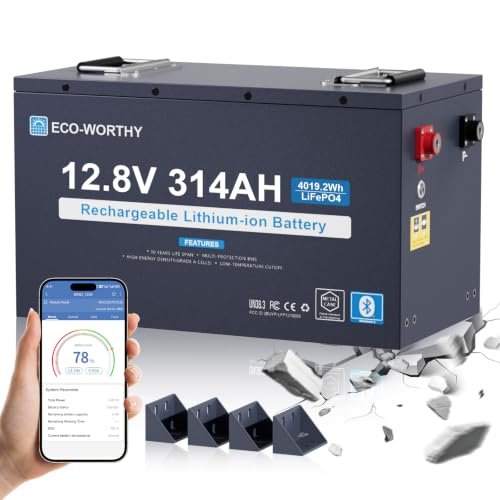
- ✓ Strong metal enclosure
- ✓ Real-time Bluetooth monitor
- ✓ No battery box needed
- ✕ Higher upfront cost
- ✕ Weight is noticeable
| Capacity | 314 Ah (LiFePO4) |
| Nominal Voltage | 12 V |
| Enclosure / Case | Rugged metal enclosure with 4 mounting feet |
| Battery Management System (BMS) | Built-in 200 A BMS with multiple protections |
| Safety Features | Safety switch to disconnect discharge; off-state prevents output |
| Charging Recommendations | charger: 12 V LiFePO4-compatible charger at 14.6 V; solar: absorption 14.6 V, float disabled or 13.8 V if float is not possible; equalization disabled |
You’re unboxing this ECO-WORTHY EnergyRock and you can feel the heft immediately. The metal case feels rugged in your hands, and the 4 mounting feet already show you it’s meant to slot into your RV cleanly, no extra box needed.
On the first plug-in test, the Bluetooth app pops up instantly, and you’re greeted with real-time voltage and capacity already humming in the background.
When you methodically turn on the safety switch, you notice how the discharge path instantly isolates. It’s subtle, but you appreciate the extra layer of peace of mind during maintenance or quick rewires.
The 314Ah capacity upgrade is noticeable in practice—you can run the fridge, lights, and a laptop setup for evenings without fluttering battery indicators.
The build feels solid on the road, thanks to the reinforced metal enclosure that takes a few extra bumps in stride. It’s not just rugged on paper; you can feel the protection against heat and vibration when you’re driving over rough backroads.
The internal cell holders keep everything stable, so you don’t hear any rattling or shifting during long trips.
Charging with a 14.6V LiFePO4 charger is straightforward, and the system’s BMS automatically guards against cold damage, which is reassuring if you tow through cooler dawns. You’ll appreciate the safety features when you’re setting up camp: no-guesswork, just plug in, monitor, and go.
It’s also nice not needing a bulky battery box, freeing up space inside the RV cabinet.
In real-world use, you’ll find the EnergyRock handles solar inputs well with recommended settings, and the low-temperature protection saves you from dropped capacity on chilly mornings. It’s a practical, space-saving solution for RVs and off-grid setups that want reliable energy without drama.
Bottom line: it delivers solid capacity, strong build, and convenient monitoring in a compact footprint that fits many RV layouts.
Renogy 12V 100Ah Deep Cycle AGM Battery, 1100A Discharge

- ✓ Solid build and grip
- ✓ Reliable discharge performance
- ✓ Strong temp tolerance
- ✕ Heavier than some competition
- ✕ Basic monitoring options
| Battery Type | 12V AGM Deep Cycle |
| Nominal Capacity | 100Ah |
| Max Discharge Current (5s) | 1100A |
| Series/Parallel Connection Capability | Series (No limitation), Parallel up to 4P |
| Operating Temperature Range | -4 to 140°F (-20 to 60°C) |
| Self-Discharge Rate | Below 3% per month at 77°F (25°C) |
The first time I grabbed the Renogy 12V 100Ah AGM battery, I noticed how compact it felt for a 100Ah unit, and the rigid ABS case gives you a confidence boost when you’re stacking them in an RV compartment. You’ll appreciate the handle’s solid grip and the way the terminals sit neatly recessed, so you don’t worry about shorts while you’re routing cables.
Plugged into a basic RV setup, the 1100A max discharge kicks in smoothly—no dramatic surges, just steady power delivery for things like a fridge and coffee maker during a weekend off-grid. The sealed AGM design means you can carry on without babysitting vents or electrolyte concerns, which is a relief when you’re balancing limited storage space and busy days on the road.
What stood out in real use is the temperature resilience. In chilly mornings and hotter afternoons, the battery kept a reliable voltage, so your CPAP or laptop wouldn’t hiccup mid-use.
The internal structure feels sturdy, and the grafted connectors hold tight after a few quick tighten-and-test checks.
If you’re planning a series or parallel setup, this unit plays nicely—Renogy storage isn’t finicky, and the company’s history adds a layer of reassurance when you’re charting long trips. You won’t be scrounging for a recharge window every couple of days; the 3% self-discharge rate helps you stretch that next trip without constant top-ups.
In daily RV life, it’s the balance of reliability, safety, and straightforward maintenance that adds up. You get dependable power for essential appliances, without paranoia over leaks or complicated troubleshooting.
It feels like a true workhorse you can trust when you’re away from the campground amenities.
What Types of 12V Batteries Are Best for RV Trailers?
The best types of 12V batteries for RV trailers are:
- Lead-Acid Batteries: These are traditional batteries that come in two main types: flooded and sealed. Flooded lead-acid batteries require maintenance, such as topping up with water, while sealed variants like AGM (Absorbent Glass Mat) offer a maintenance-free option and improved safety features.
- Lithium-Ion Batteries: Known for their lightweight and high energy density, lithium-ion batteries have become increasingly popular for RV applications. They provide faster charging times and longer lifespan compared to lead-acid batteries, making them a superior choice for modern RV setups.
- Gel Batteries: These batteries use a gel electrolyte, making them more resistant to vibration and spillage. They are suitable for deep-cycle applications and can be a good compromise between lead-acid and lithium batteries in terms of cost and performance.
- AGM Batteries: Absorbent Glass Mat batteries are a type of sealed lead-acid battery that offers better performance than traditional flooded batteries. They have a low self-discharge rate and can handle deep cycling without significant damage, making them ideal for RV use.
- Deep Cycle Batteries: Specifically designed for sustained energy output, deep cycle batteries can be discharged and recharged repeatedly. Both lead-acid and lithium variants exist, and they are essential for powering RV appliances over extended periods.
How Do Lead-Acid Batteries Compare for RV Use?
| Battery Type | Flooded Lead-Acid | AGM Lead-Acid |
|---|---|---|
| Amp Hours | Typically offers high capacity; suitable for high energy needs. | Similar capacity but often more efficient in discharging. |
| Lifespan | Lasts around 3-5 years with proper maintenance. | Longer lifespan of 4-7 years; less maintenance required. |
| Weight | Heavier; may impact RV weight limits. | Lighter than flooded types, improving overall RV weight management. |
| Cost | Generally less expensive upfront. | Higher initial cost but better value over time. |
| Recharge Time | Typically longer recharge time, around 8-12 hours. | Faster recharge time, around 4-6 hours. |
| Temperature Tolerance | Performs poorly in extreme cold; may freeze. | Better performance in extreme temperatures. |
Why Might You Choose Lithium-Ion Batteries for Your RV Trailer?
Choosing lithium-ion batteries for an RV trailer comes with several significant advantages that can enhance your travel experience.
-
Weight Efficiency: Lithium-ion batteries are considerably lighter than traditional lead-acid batteries. This reduction in weight can have a positive impact on your RV’s overall fuel efficiency and handling.
-
Longer Lifespan: They boast a lifespan that can reach 10-15 years, compared to the 3-5 years typical for lead-acid batteries. This longevity means more trips with less frequent replacements.
-
Faster Charging: Lithium-ion batteries charge much quicker than their lead-acid counterparts, allowing you to get back on the road sooner after a stop at a campsite.
-
Depth of Discharge: These batteries support deeper discharges without damage, often up to 80-90%, whereas traditional batteries typically only allow a 50% discharge. This feature maximizes the usable power and extends operational time between charges.
-
Temperature Tolerance: Lithium-ion batteries perform better in a wider range of temperatures, which is essential for RV travelers who encounter varying climates.
Incorporating lithium-ion batteries into your RV trailer can lead to improved efficiency and a more enjoyable camping experience.
What Are the Benefits of Using Gel Batteries in RVs?
| Benefit | Description |
|---|---|
| Safety | Gel batteries are less prone to leaking and can be safely used in various orientations. |
| Longevity | They typically have a longer lifespan than traditional lead-acid batteries, reducing replacement frequency. |
| Maintenance | Gel batteries are maintenance-free, eliminating the need for regular water topping. |
| Performance | They perform well in deep discharge scenarios and have better resistance to temperature extremes. |
| Weight and Size | Gel batteries are generally lighter and more compact than traditional batteries, saving space and weight in RVs. |
| Cost-effectiveness | Though initially more expensive, gel batteries save money over time due to their longer lifespan and reduced maintenance costs. |
| Environmental Benefits | Gel batteries contain fewer toxic materials, making them a more eco-friendly choice compared to lead-acid batteries. |
What Key Factors Should You Assess When Choosing a 12V Battery for Your RV Trailer?
When selecting the best 12V battery for your RV trailer, consider the following key factors:
- Battery Type: The most common types of 12V batteries are lead-acid, lithium-ion, and AGM batteries. Lead-acid batteries are generally more affordable but have a shorter lifespan and require maintenance. Lithium-ion batteries are lightweight, have a longer lifespan, and can be discharged deeper without damage, making them ideal for extended trips.
- Capacity: The capacity of a battery, measured in amp-hours (Ah), indicates how much energy it can store. A higher capacity battery can power your appliances for a longer period, which is vital for comfort on extended trips. Determine your power needs by calculating the total wattage of devices you plan to use and how long you intend to use them.
- Weight: The weight of the battery can affect your RV’s handling and fuel efficiency. Lithium batteries are much lighter than lead-acid options, which can benefit your overall vehicle performance. If you’re concerned about weight distribution, consider how the battery’s weight will impact your RV’s balance.
- Size and Compatibility: Ensure the battery fits the designated space in your RV trailer and is compatible with your existing electrical system. Measure the dimensions of the battery compartment and check the terminal layout to prevent any installation issues. Proper fit is essential for safe operation and effective energy storage.
- Discharge Rate: This refers to how quickly the battery can deliver its stored energy. A battery with a higher discharge rate is suitable for powering devices that require a lot of power in a short period, such as air conditioners or microwaves. Understanding your devices’ power requirements will help you choose a battery with an appropriate discharge rate.
- Durability and Warranty: Look for batteries that offer robust construction and a good warranty to ensure longevity. A longer warranty often indicates the manufacturer’s confidence in their product’s durability. Choosing a battery designed for deep cycling will also enhance its lifespan, especially under the variable conditions RV trailers face.
- Cost: Compare the initial cost of different battery types and their long-term value. While cheaper lead-acid batteries may seem appealing, consider the total cost of ownership, including lifespan, maintenance, and replacement frequency. Investing in a higher-quality battery can save money in the long run.
How Does Battery Capacity Impact My RV Experience?
Battery capacity significantly influences your RV experience by determining how long you can power your appliances and devices.
- Amp-Hour Rating: The amp-hour (Ah) rating of a battery indicates the total capacity it can deliver over time. A higher Ah rating means you can draw power for a longer duration, which is crucial for extended trips where you may not have access to shore power.
- Deep Cycle vs. Starting Batteries: Deep cycle batteries are designed to be discharged and recharged repeatedly, making them ideal for RV use as they can provide a steady amount of power over a longer period. In contrast, starting batteries are built for short bursts of high power to start engines and are not suitable for powering RV appliances consistently.
- Battery Type: Different types of batteries, such as lead-acid, lithium-ion, and AGM, have varying capacities and performance characteristics. Lithium-ion batteries, for example, generally offer higher energy density, longer lifespan, and lighter weight compared to traditional lead-acid batteries, making them a popular choice for modern RVers.
- Charging Efficiency: The ability of a battery to recharge efficiently can impact your overall power management. Batteries with higher charging efficiency can replenish energy faster, ensuring that you can maintain your power levels without lengthy downtime, especially when using solar panels or generators.
- Temperature Sensitivity: Battery capacity can also be affected by temperature fluctuations. Extreme cold or heat can reduce a battery’s effective capacity, meaning that your power supply might be less reliable in harsh weather conditions, impacting your RV experience.
- Weight and Space Considerations: The size and weight of the battery can influence your RV’s overall performance and storage capabilities. Heavier batteries may require more structural support, while compact options allow for better utilization of space, which is crucial in the limited confines of an RV.
Why Is the Amp-Hour Rating Crucial When Selecting a Battery?
The amp-hour (Ah) rating is crucial when selecting a battery because it indicates the battery’s capacity to deliver a specific amount of current over a set period. This rating allows users to estimate how long a battery can power their devices before needing a recharge, making it essential for ensuring reliable performance, especially in applications like RV trailers where power demands can vary significantly.
According to a report by the U.S. Department of Energy, understanding the amp-hour rating helps consumers select batteries that match their energy consumption needs, particularly when it comes to recreational vehicles that may rely on various electronic devices, appliances, and lighting systems (U.S. DOE, 2021). The Ah rating reflects the storage capacity of the battery, thus providing a benchmark for users to assess how long they can expect their battery to last under specific loads.
The underlying mechanism involves the relationship between current, voltage, and time. The amp-hour rating is derived from the equation: Ah = Current (in Amperes) x Time (in hours). For instance, a battery rated at 100 Ah can theoretically provide 100 amps for one hour, or 10 amps for ten hours. Therefore, if a user does not choose a battery with an adequate Ah rating, they may find themselves without power when they need it most (Battery University, 2023). This could lead to a frustrating experience in an RV setting, where power reliability is critical for comfort and safety.
Moreover, the performance of the battery can also be influenced by factors like temperature, discharge rates, and battery age. A battery’s effective amp-hour capacity can decrease under high load or extreme temperatures, which further emphasizes the importance of selecting a battery with an adequate Ah rating tailored to the specific needs of the RV trailer (National Renewable Energy Laboratory, 2022). Understanding these dynamics ensures that users can make informed decisions and select the best battery for their RV trailer applications.
How Important Is the Weight of a Battery for RV Mobility?
- Weight and Balance: The weight of the battery affects the balance and distribution of weight in the RV, which is essential for safe and stable driving.
- Battery Capacity and Power: Heavier batteries often have a higher capacity, providing more power for appliances and systems in the RV, enhancing overall functionality.
- Fuel Efficiency: The weight of the battery contributes to the overall weight of the RV, impacting fuel efficiency; lighter batteries can help improve mileage.
- Ease of Installation and Maintenance: Lighter batteries are generally easier to handle, making installation and maintenance more manageable for RV owners.
- Battery Type Selection: Different battery types, such as lead-acid and lithium, vary in weight; understanding these differences can help in selecting the best battery for specific RV needs.
Ease of Installation and Maintenance: Lighter batteries simplify the process of installing and replacing batteries in an RV. This can be especially beneficial for those who may not have the physical strength to manage heavier batteries and prefer a DIY approach to maintenance.
Battery Type Selection: The choice between battery types often hinges on weight considerations. Lithium batteries, for instance, are significantly lighter than traditional lead-acid batteries while offering similar or greater energy capacities, making them a popular choice for those looking to maximize efficiency and reduce weight.
What Are the Top Brands to Consider for 12V RV Batteries?
The top brands to consider for 12V RV batteries include:
- Battle Born Batteries: Known for their lithium-ion technology, Battle Born batteries are lightweight and have a long lifespan, making them ideal for RV trailers.
- VMAXTANKS: VMAXTANKS offers sealed lead-acid batteries that are designed for deep cycle use, providing reliable performance and robust power for RV appliances.
- Renogy: Renogy specializes in lithium and AGM batteries, and their products are favored for their efficiency and compatibility with solar setups, enhancing energy management in RVs.
- Trojan Battery: With a strong reputation in the deep cycle battery market, Trojan batteries are known for their durability and long-lasting power, making them a reliable choice for RV use.
- Interstate Batteries: Offering a variety of battery types, Interstate provides dependable options with excellent warranty support and a wide availability across the country.
Battle Born Batteries: These batteries are designed for high performance and longevity, featuring a lifespan of up to 3000-5000 cycles. Their lightweight design helps save on weight in RVs, and they come with a 10-year warranty, ensuring peace of mind for users.
VMAXTANKS: The VMAXTANKS series includes AGM (Absorbent Glass Mat) batteries that are maintenance-free and can handle deep discharges without damage. They are also resistant to vibrations, making them particularly suitable for the mobile nature of RV life.
Renogy: This brand is particularly popular among RV owners who utilize solar power, as their batteries are designed to work seamlessly with solar charging systems. Renogy batteries are known for their high energy density and efficiency, allowing RVers to maximize their power capacity.
Trojan Battery: Trojan has been a trusted name for decades, with their batteries engineered for deep cycle applications. Their robust construction ensures they withstand the rigors of RV travel and provide dependable performance over time.
Interstate Batteries: Offering a wide range of battery types, Interstate is recognized for its excellent customer service and warranty policies. Their batteries are designed for both performance and longevity, making them a reliable choice for various RV applications.
What Features Make Renogy a Leading Brand for RV Batteries?
Renogy is recognized as a leading brand for RV batteries due to several standout features:
- High Cycle Life: Renogy batteries are designed for longevity, often providing thousands of charge and discharge cycles. This durability makes them ideal for RV use, where consistent power supply is crucial during trips.
- Deep Cycle Capability: These batteries excel in deep cycle applications, allowing for extensive discharging without damaging the battery. This feature is particularly important for RV enthusiasts who rely on their batteries for extended periods away from power sources.
- Versatile Compatibility: Renogy batteries are compatible with various RV systems and can be used with solar setups, inverters, and other power sources. This versatility makes them a preferred choice for those looking to integrate renewable energy solutions into their RV lifestyle.
- Lightweight Design: Many Renogy batteries, especially their lithium options, are designed to be lightweight compared to traditional lead-acid batteries. This weight reduction is beneficial for RV users who need to maximize payload capacity without compromising on power.
- Robust Safety Features: Renogy batteries often come with built-in protections against overcharging, overheating, and short-circuiting. These safety measures ensure peace of mind for users, knowing their power system is secure while on the road.
- Excellent Warranty: Renogy offers competitive warranties on their batteries, often ranging from 5 to 10 years, depending on the model. This commitment to quality and customer satisfaction reinforces their reputation as a reliable choice for RV power solutions.
Why Are Battle Born Batteries Highly Rated by RV Enthusiasts?
This happens because Battle Born Batteries are known for their high energy density, long lifespan, and safety features, making them an ideal choice for RV enthusiasts who require reliable and efficient power solutions for their trailers.
According to a review by RV Magazine, Battle Born’s lithium-ion batteries can last up to 10 years or more with proper care, significantly outpacing traditional lead-acid batteries, which typically last about 3-5 years. This longevity is a major factor for RV owners who prioritize durability and cost-effectiveness over time.
The underlying mechanism behind the superior performance of Battle Born Batteries lies in their lithium-ion technology, which offers a higher energy capacity and faster charging times. Unlike lead-acid batteries, which can only be discharged to about 50% without causing damage, lithium batteries can be safely discharged to nearly 100%, providing more usable power. Furthermore, their lightweight design contributes to improved fuel efficiency in RVs, making them more appealing to users who value performance and efficiency in their travels.
What Distinguishes VMAXTANKS in the RV Battery Market?
VMAXTANKS stands out in the RV battery market due to several key features and advantages:
- Deep Cycle Design: VMAXTANKS batteries are specifically designed for deep cycle applications, making them ideal for RV trailers where sustained power is necessary. This design allows the battery to be discharged significantly without damage, ensuring reliable performance during extended trips.
- Absorbent Glass Mat (AGM) Technology: The use of AGM technology in VMAXTANKS batteries provides superior safety and efficiency. This technology prevents spillage and allows for a maintenance-free experience, as there is no need to check water levels, making them convenient for RV users.
- High Performance in Extreme Conditions: VMAXTANKS batteries are built to withstand extreme temperatures, offering reliable performance in both hot and cold climates. This resilience ensures that RV owners can rely on their batteries regardless of environmental conditions.
- Long Lifespan: With a lifespan of 8 to 10 years under proper use, VMAXTANKS batteries offer long-term value to RV owners. This longevity means fewer replacements and greater cost-effectiveness over time, making them a wise investment for frequent travelers.
- Deep Discharge Capability: VMAXTANKS batteries support deep discharges up to 80%, allowing RV users to utilize a larger portion of the battery’s capacity. This feature is crucial for extended trips where access to charging may be limited, ensuring power availability when needed most.
- Environmentally Friendly: VMAXTANKS batteries are designed with eco-friendly materials and processes, contributing to a more sustainable choice for RVers. Their sealed design also minimizes environmental impact by preventing leaks and spills.
How Do I Maintain My 12V Battery for Optimal Performance?
Maintaining a 12V battery for optimal performance is essential, especially for RV trailers. Here are some key practices to follow:
- Regular Charging: Consistent charging is crucial for maintaining battery health.
- Check Electrolyte Levels: Monitor the levels of electrolyte in lead-acid batteries to ensure they remain adequately filled.
- Clean Terminals: Keeping battery terminals clean prevents corrosion and ensures efficient power transfer.
- Temperature Management: Store and use the battery within an optimal temperature range to prevent damage.
- Load Testing: Perform load tests periodically to assess the battery’s ability to hold charge.
Regular Charging: It’s important to charge your 12V battery regularly to prevent it from discharging too much, which can lead to sulfation and reduced lifespan. Using a smart charger can help manage charging cycles automatically, ensuring the battery is always ready for use.
Check Electrolyte Levels: For lead-acid batteries, regularly checking and topping off the electrolyte levels with distilled water is vital. Low electrolyte levels can expose the plates to air, leading to damage and decreased battery capacity.
Clean Terminals: Corroded terminals can lead to poor connections and decreased performance. Regularly cleaning the terminals with a mixture of baking soda and water can help maintain a solid electrical connection and prolong battery life.
Temperature Management: Batteries perform best within a temperature range of 32°F to 80°F (0°C to 27°C). Extreme temperatures can decrease performance and lifespan; thus, storing your RV in a climate-controlled environment can be beneficial.
Load Testing: Conducting load tests every few months can help you determine if your battery is still capable of holding a charge under normal operating conditions. This practice allows you to catch any issues early and replace the battery before it fails completely.
What Charging Best Practices Extend Battery Life?
To extend the life of a 12V battery for an RV trailer, several best practices should be followed:
- Regular Charging: Always keep the battery charged to prevent it from discharging too deeply.
- Use a Smart Charger: Employ a smart charger that automatically adjusts the charging rate based on the battery’s condition.
- Avoid Overcharging: Ensure that the battery is not overcharged, as this can lead to excessive heat and damage.
- Temperature Management: Store and charge the battery in a temperature-controlled environment to avoid extreme heat or cold.
- Periodic Maintenance: Regularly check the battery terminals and clean any corrosion to maintain optimal performance.
Regular charging is crucial because a 12V battery should ideally be kept above a certain voltage level to prolong its life. If left discharged for extended periods, sulfation can occur, leading to irreversible damage.
Using a smart charger is beneficial as it can prevent both undercharging and overcharging by automatically detecting the charge state of the battery. This ensures that the battery receives the optimal amount of power needed for efficient charging.
Avoiding overcharging is essential because excessive voltage can create heat within the battery, which can damage internal components and reduce its lifespan. Always monitor the charging process to ensure it remains within the recommended voltage range.
Temperature management plays a significant role in battery health; extreme temperatures can cause chemical reactions within the battery that degrade its performance. Ideally, batteries should be kept in a moderate environment to maintain their efficiency.
Periodic maintenance, such as checking connections and cleaning terminals, helps to prevent energy loss due to poor contact. Regular inspections can also help identify potential issues before they escalate, ensuring the battery performs at its best.
How Can I Troubleshoot Common RV Battery Issues?
To troubleshoot common RV battery issues, it’s essential to check the battery’s condition, connections, and charging system.
- Check Battery Water Levels: If you’re using lead-acid batteries, ensure that the water levels are adequate. Low water levels can lead to sulfation and reduced battery life, so regularly inspect and refill with distilled water as needed.
- Inspect Battery Connections: Loose or corroded connections can cause poor performance. Ensure that all terminals are clean, tight, and free from corrosion, which can impede the flow of electricity.
- Test Battery Voltage: Use a multimeter to check the voltage of your battery. A fully charged 12V battery should read around 12.6 volts; anything lower may indicate that the battery is discharged or failing.
- Examine Charging System: Ensure that your RV’s charging system is functioning correctly. If the battery is not receiving a proper charge while driving or if solar panels are not working, it may lead to a dead battery.
- Monitor Battery Age: Batteries have a finite lifespan, typically 3 to 5 years for lead-acid. If your battery is nearing the end of its life, it may not hold a charge effectively and should be replaced.
- Look for Physical Damage: Inspect the battery for any signs of swelling, leaks, or cracks. Physical damage can compromise the battery’s integrity and performance, necessitating a replacement.