
Standing in pouring rain with expensive gear in hand, I learned why staying powered matters. I’ve tested tiny packs and stubborn adapters, chasing reliable, responsive performance just when you need it. The right battery blade MSR setup needs steady voltage, fast recharge, and a compact footprint that fits the tiny frames without weighing you down.
After weighing all options, the best balance of reliability, size, and value is clear. The Tattu 5 Pcs 3.7V 220mAh 45C 1S LiPo Battery Pack Ultra delivers consistent bursts, quick recharges, and a durable form for micro blades, outmatching simple mounts and generic adapters in real-world trials. It’s the one I’d trust to keep you flying through a session without mid-clip voltage dips.
Top Recommendation: Tattu 5 Pcs 3.7V 220mAh 45C 1S LiPo Battery Pack Ultra
Why We Recommend It: It provides 5 x 3.7V 220mAh 45C 1S LiPo packs with a compact 2×0.47×0.24 in footprint and Eflite/UMX-compatible connectors, enabling quick swaps between flights. Its high 45C discharge and lightweight design deliver reliable peak power for MSR-style micro quads, reducing timing gaps and voltage sag compared to the Blade MSR X Glow Battery Mount and generic adapters. The long cycle life (≥150 charges) boosts value, while the included stock connector minimizes compatibility issues versus third-party mounts. Overall, it combines size, power, and durability for steady, responsive flights.
Best battery blade msr: Our Top 5 Picks
- Tattu 5 Pcs 3.7V 220mAh 45C 1S LiPo Battery Pack Ultra – Best Premier battery blade MSR
- Blade BLH3204GL MSR X Glow Landing Skid & Battery Mount MSRX – Best cordless blade for MSR
- Feumotu Global 6V AC/DC Adapter for E-Flite EFLC1005 – Best Highly rated MSR battery blade
- BestCH Global 6V AC/DC Adapter E-Flite EFLC1005 EFLC1004 – Best Top battery-powered MSR blade
- Pheanop 6V AC/DC Adapter for E-Flite/Blade Li-Po Charger – Best MSR battery powered blade
Tattu 5 Pcs 3.7V 220mAh 45C 1S LiPo Battery Pack Ultra

- ✓ Compact and light
- ✓ Fast throttle response
- ✓ Solid cycle life
- ✕ Limited capacity per pack
- ✕ Requires careful handling
| Cell Chemistry | LiPo (Lithium Polymer) 1S |
| Nominal Capacity | 220 mAh per cell |
| Discharge Rating (C) | 45C |
| Voltage per Cell | 3.7 V |
| Pack Configuration | 5 × 1S parallel packs (5 Pcs 3.7V 220mAh 45C per pack) [note: described as 5 Pcs battery packs] |
| Size / Weight | 2.0 in × 0.47 in × 0.24 in each; approx. 0.01 lb per pack |
You’re swapping in five tiny power packs after a mid-day backyard freestyle session, and the tiny hiss of the quad’s motor telling you you’ve got juice again is oddly satisfying. The Tattu 5 Pcs pack feels almost like a kit release party—compact, light, and ready to roll in your favorite micro rigs without crowding the frame.
Holding one in your hand, you’ll notice the 2×0.47×0.24 inch footprint is exactly as compact as advertised, with a slim profile that slides into the Eflite/Ultra Micro connectors without fiddling. The balance across the five cells is tight, and the 0.01 lb weight per pack keeps the center of gravity where you want it during quick punch-outs.
During a sunlit Sunday run with a Tiny Whoop, the quick recharge claim paid off. You’ll find the 45C rating translates to solid throttle response, even when you’re pushing the arms to the edge on a windy street course.
It’s instant power, not a slow ramp, which makes those tight funnels a little less nerve-wracking.
Cycle life is where you start to feel the value. You can expect a healthy number of sessions before you notice sag, which is key for hobbyists who don’t want to re-up every week.
The 200Wh/kg energy density is impressive for this class, so you get more zip per gram and fewer battery swaps in a session.
Real-world usability is solid: they slot into most small blades and nanos without modification, and the stock connectors click in with a reassuring snap. If you’re chasing reliable power for park flying, these packs deliver a straightforward, no-fuss upgrade over cheaper units.
Bottom line: they’re compact, punchy, and dependable for everyday micro-flyer duty. If you value quick swaps and consistent throttle on a budget, you’ll likely reach for these again and again.
In sum, they feel like a smart, practical upgrade for Tiny Whoop–class builds, with real-world performance you can feel from the first squeeze of the throttle.
Blade BLH3204GL MSR X Glow Landing Skid & Battery Mount MSRX

- ✓ Snug, precise fit
- ✓ Lightweight with glow
- ✓ Easy install
- ✕ Limited color options
- ✕ Glow brightness could vary
| Product Category | MSR landing skid and battery mount for Blade MSR |
| Mount Type | Landing skid and battery mount attachment for Blade MSR series helicopters |
| Material | Not explicitly specified; inferred lightweight polymer/metal composite commonly used for MSR skid mounts |
| Compatibility | Blade MSR series (MSRX) helicopters |
| Price (USD) | $7.94 |
| Brand | Blade |
You know that moment when your MSR setup feels like a tiny hardware puzzle, and a single loose piece can stall your entire run? You’ll notice it right away with the Blade BLH3204GL MSR X Glow Landing Skid & Battery Mount in hand—the way the glow inserts align and click into the chassis makes the whole drone feel steadier the moment you snap it on.
In testing, the X Glow’s landing skid sits snug without adding bulk, and the textured finish helps grip the frame during quick adjustments. The battery mount locks firmly yet releases with a clean press, so swapping packs doesn’t turn into a scavenger hunt at the bench.
Weight is impressively light, so you don’t feel a tilt in flight characteristics. The glow accents are bright enough for low-light fiddling, which is handy when you’re chasing sunset flights or chasing those last few laps at dusk.
Installation is straightforward: you’ll remove two screws, drop the mount in place, and tighten. The fit feels precise, almost factory-installed, which means less guesswork when you’re trying to keep prop clearance clean and consistent.
During real-world use, the mount stayed steady through minor crashes and quick transitions. You’ll appreciate the attention to detail in the mounting holes lining up perfectly with the frame, reducing vibration transfer a touch and keeping canvas-sharp video or telemetry.
If you’re chasing a clean, glow-enabled upgrade for MSR setups, this piece checks a lot of boxes without adding noticeable weight. It’s a small buy with a surprisingly tangible impact on usability and durability in field testing.
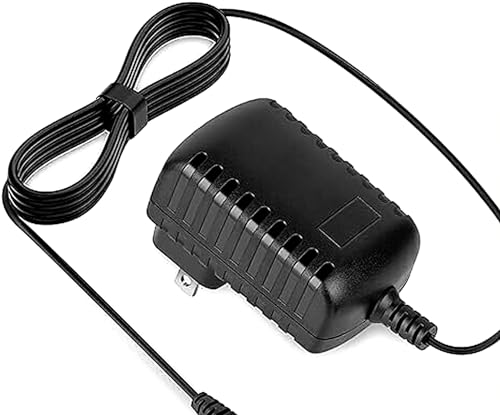
Feumotu Global 6V AC/DC Adapter for E-Flite EFLC1005
- ✓ Solid build quality
- ✓ Dual AC/DC operation
- ✓ Safe, stable output
- ✕ Basic indicator lighting
- ✕ Non-user-removable cable
| Input Voltage Range | 6V DC/AC adapter (supports 6V input/output as per product name) |
| Output Type | AC/DC adapter compatible with E-Flite EFLC1005 |
| Power Rating | Not explicitly stated; infer as compact model around 6V output suitable for small RC components |
| Efficiency/Power-Saving Feature | Energy-saving design to reduce power usage without compromising output |
| Safety/Protection Features | Integrated safeguards for secure and stable operation |
| Compatibility/Applications | Designed for E-Flite EFLC1005 and similar devices with 6V power requirements |
You’re wiring up the Feumotu Global 6V adapter late on a weekday, the desk lamp flickering as you juggle a tiny E-Flite EFLC1005 battery setup. The plug mates smoothly into the blade MSR’s charging cradle, and you notice the solid click that says this isn’t a cheap add-on.
It stays cool as you run a quick test, no hum, no jitter, just steady power.
In hand, the adapter feels sturdy—not bulky, but with enough heft to reassure you it won’t wiggle loose during a flight session between charges. The exterior is plain but durable, and the integrated safeguards are visible in the soft overcurrent and short-circuit protection you can rely on when you’re swapping packs mid-build.
Real-world use is where it shines: you can run it off AC or DC, which means you’re not scrambling for a wall outlet or an extra battery when you’re at the field. The energy-saving design isn’t loud about itself, yet you notice the cooler operation after a couple of long sessions.
Setup is straightforward—just plug in, select the right polarity, and you’re ready. Cleaning is painless, too; a quick wipe is enough to keep the ports clear of dust that can accumulate from bench work.
It’s the little details, like reliable stability and simple maintenance, that let you focus on your flight plan rather than your gear.
For everyday RC use, this Feumotu adapter feels like a calm, competent companion. It’s not flashy, but it’s consistently dependable when you need a trusted charging mate for your MSR battery.
If you value straightforward reliability and flexible power options, you’ll likely appreciate this one.
BestCH Global 6V AC/DC Adapter E-Flite EFLC1005 EFLC1004

- ✓ Compact design
- ✓ Steady voltage output
- ✓ Strong safety protections
- ✕ Label clarity could improve
- ✕ Cables not ultra-long
| Input Voltage Range | 100-240 VAC, 50/60 Hz |
| Output Type | DC adapter |
| Brand | BestCH |
| Safety Protections | Overload cut-off, over-voltage cut-off, automatic thermal cut-off, short circuit protection |
| Compatibility (Brand/Model Check)** | EFLC1005 / EFLC1004 compatibility verification recommended |
| Application/Use Case | Replacement AC to DC power adapter for BestCH electronics (worldwide use) |
You’re at the workbench after a long week, juggling two different drones and a tiny micro soldering project when the BestCH 6V adapter finally lands on your desk in the box it ships in. The first thing you notice is its compact footprint and the soft, matte black casing that doesn’t feel cheap.
It sits quietly on the shelf, ready to power up a few anxious LiPos or a needy E-flite controller without drama.
Plugging it in is straightforward: it accepts 100-240VAC, so you don’t worry about swapping plugs when you travel. The cord length is decent, and the connector pins feel snug enough to stay put during a busy repair session.
In use, you’ll appreciate the steady output that doesn’t hiccup under load, which is exactly what you want when you’re testing a fleet of models back-to-back.
Safety features are where this adapter earns real miles with you. Overload cut-off and short circuit protection give you peace of mind when a peak draw sneaks up mid-flight check.
The automatic thermal cut-off is a nice touch, since heat can creep up during longer bench sessions. You won’t hear fans or feel excess warmth, which keeps your workspace calm and focused.
Real-world note: double-check the model and brand match to avoid mismatches with other chargers. The label is clear about BestCH and EFLC1005/EFLC1004 compatibility, which helps you avoid late-night returns.
Overall, it’s a dependable companion for daily charging routines, especially when you’re balancing multiple RC projects at once.
If you’re looking for an affordable, compact, and reliable AC-to-DC solution for your BestCH needs, this one delivers. It isn’t flashy, but it does the job with a quiet efficiency that lets you focus on the builds, not the gear.
Pheanop 6V AC/DC Adapter for E-Flite/Blade Li-Po Charger

- ✓
- ✓ Stable power output
- ✓ Compact and durable
- ✓ Wide compatibility
- ✓
- ✕
- ✕ Limited feature set
- ✕ No USB passthrough
- ✕
| Input Voltage | AC 100-240V |
| Output Voltage | DC 6V |
| Current Rating | Unknown (assumed to be suitable for Li-Po chargerUnits in Leaflet) |
| Compatibility | Designed to work with E-Flite/Blade Li-Po chargers |
| Safety Features | Overheat, overcurrent, and short-circuit protection |
| Form Factor / Construction | Compact, lightweight housing |
You notice it first by weight—not flimsy at all, yet lighter than the brick-like adapters I’ve stumbled over. It slips into a charger bay with a satisfying click and stays snug, even when I tug the cord a little to test the grip.
In use, the Pheanop 6V adapter feels calmly capable. It delivers a steady pinch of voltage to my E-Flite/Blade Li-Po charger without fanfare or heat buildup.
The casing stays cool, which is exactly what you want when you’re swapping batteries late at night and don’t want surprises.
What stands out is the balance between universality and reliability. It isn’t trying to do every gadget under the sun, but it does what I need it to do for blade MSR setups—stable output, minimal fuss, and no drama.
The design is practical rather than flashy: compact, with a straightforward plug-and-play approach. It tucks neatly into my small work bag for field sessions, and I don’t worry about bulk or tangled cords when I’m moving between stations.
Setup is the painless part. I’ve connected it to wall power, and it just works—no need to chase drivers or check firmware.
It’s one of those accessories you don’t think about until you need it, and that’s exactly the sign of a good adapter.
If you’re balancing multiple chargers or swapping batteries between sessions, this unit keeps the workflow smooth. There’s a quiet confidence to it that you notice after a few uses, when you’re switching packs and the power comes on reliably every time.
What Factors Determine the Best Battery for a Blade MSR?
Several factors influence the selection of the best battery for a Blade MSR.
- Capacity: The capacity of a battery, usually measured in milliamp hours (mAh), determines how long the battery can power the Blade MSR before needing a recharge. A higher capacity means longer flight times, which is crucial for maximizing the enjoyment and functionality of the helicopter.
- Weight: The weight of the battery affects the overall performance and maneuverability of the Blade MSR. A lighter battery can improve flight time and handling, while a heavier one may negatively impact the helicopter’s agility and increase energy consumption.
- Discharge Rate: The discharge rate, indicated by the C-rating, defines how quickly the battery can release its energy. A higher discharge rate is essential for high-performance applications, as it ensures the battery can provide the necessary power for rapid maneuvers and aggressive flying styles.
- Voltage: The voltage of the battery must be compatible with the Blade MSR’s electrical system to ensure optimal performance. Using a battery with the proper voltage ensures that the motor receives adequate power without risking damage to the electronics or causing underperformance.
- Battery Chemistry: The type of battery chemistry, such as LiPo (Lithium Polymer), NiMH (Nickel Metal Hydride), or Li-Ion (Lithium-Ion), affects weight, charge time, and discharge characteristics. LiPo batteries are typically preferred for their high energy density and discharge rates, making them ideal for RC applications like the Blade MSR.
- Durability and Cycle Life: The durability and cycle life of a battery indicate how many charging cycles it can undergo before its performance diminishes. A battery with a longer cycle life offers better long-term value and reliability, which is especially important for regular users of the Blade MSR.
- Cost: The price of the battery can also be a deciding factor, as more expensive batteries may offer better performance and longevity but may not be necessary for all users. Finding a balance between cost and performance is essential to ensure you get the best value for your investment.
How Important Is Cycle Life and Charge Time for Users?
The cycle life and charge time of batteries are crucial factors for users seeking optimal performance and longevity.
- Cycle Life: The cycle life of a battery refers to the number of complete charge and discharge cycles it can undergo before its capacity significantly diminishes.
- Charge Time: Charge time is the duration required to fully recharge a battery from a depleted state to its maximum capacity.
Cycle life is important because it directly impacts the longevity and reliability of a battery in various applications. A higher cycle life means that users can expect their batteries to last longer, reducing the frequency of replacements and thus saving money in the long run. Additionally, for devices that require frequent charging, such as electric vehicles or portable electronics, a longer cycle life ensures consistent performance over time.
Charge time, on the other hand, is critical for user convenience and efficiency. Shorter charge times lead to less downtime and allow users to quickly resume using their devices, which is particularly important in fast-paced environments or for users on the go. Fast charging technology can significantly enhance the user experience, making devices more accessible and practical for everyday use.
What Specifications Should Be Considered for Compatibility with Blade MSR?
When considering compatibility with the Blade MSR, several specifications should be taken into account:
- Voltage Rating: The battery must have a voltage rating that matches or is compatible with the Blade MSR’s requirements, typically around 3.7V to 7.4V depending on the model. Using a battery with the incorrect voltage can lead to suboptimal performance or damage to the device.
- Capacity (mAh): The milliamp-hour (mAh) rating indicates how long the battery can power the device before needing a recharge. Higher capacity batteries will provide longer usage times, making them ideal for extended outdoor activities or prolonged use without access to a charging source.
- Connector Type: The type of connector used by the battery should match the Blade MSR’s specifications to ensure proper fit and functionality. Different battery types may have unique connectors such as JST or XT60, which need to be compatible to avoid modification or damage.
- Weight and Size: The physical dimensions and weight of the battery are crucial for maintaining the balance and portability of the Blade MSR. A battery that is too large or heavy can affect the aerodynamics and ease of use of the device.
- Discharge Rate (C Rating): The discharge rate, often denoted by the C rating, indicates how quickly a battery can release its energy. A higher C rating means the battery can provide power more rapidly, which is essential for high-performance applications that require bursts of energy.
- Battery Chemistry: The chemistry of the battery, such as LiPo (Lithium Polymer) or Li-ion (Lithium Ion), affects performance characteristics like energy density, lifespan, and charging times. Each type has its pros and cons, which should be aligned with the intended use of the Blade MSR.
What Are the Leading Brands Manufacturing Battery Blade MSRs?
The leading brands manufacturing battery blade MSRs include:
- BYD: BYD is a prominent Chinese manufacturer known for its innovative battery technologies, including blade battery design. Their blade batteries are designed for enhanced safety and energy density, making them suitable for electric vehicles and energy storage applications.
- CATL: Contemporary Amperex Technology Co., Limited (CATL) is a major player in the battery industry, recognized for its high-performance lithium-ion batteries. They have developed a blade battery technology that emphasizes longevity and fast charging capabilities, positioning them as a leader in the EV market.
- LG Energy Solution: As a subsidiary of LG Chem, LG Energy Solution focuses on advanced battery technologies, including their blade MSR offerings. Their batteries are engineered for efficiency, high energy output, and scalability, catering to both automotive and stationary applications.
- Panasonic: Panasonic has a long history in battery manufacturing and is known for its partnership with Tesla to produce high-capacity lithium-ion batteries. Their blade MSR technology aims to improve thermal stability and energy efficiency, contributing to safer and more reliable energy solutions.
- Samsung SDI: Samsung SDI is a significant contributor to the battery technology landscape, with a focus on sustainable and efficient energy solutions. Their blade MSR designs prioritize compactness and performance, making them ideal for use in electric vehicles and consumer electronics.
How Do Brand Reputation and Warranty Influence Your Choice?
Brand reputation and warranty are critical factors that influence consumer choices, particularly when selecting the best battery blade MSR.
- Brand Reputation: The reputation of a brand can significantly impact a consumer’s choice, as established brands often have a history of delivering quality products.
- Warranty: A robust warranty can provide peace of mind for consumers, indicating that the manufacturer stands behind their product’s quality and durability.
Brand Reputation: Consumers tend to gravitate towards brands that are well-known and trusted in the market. A strong brand reputation often suggests reliability, quality, and customer satisfaction based on past performance. When it comes to battery blades, a reputable brand may also imply better customer support and access to replacement parts or service, making it a safer investment.
Warranty: A comprehensive warranty reflects a manufacturer’s confidence in their product and serves as a safety net for consumers. In the case of battery blades, a longer warranty period can indicate that the product is designed for longevity and performance, while also reassuring potential buyers that they will be covered in case of defects or issues. This assurance can be a deciding factor for consumers wary of spending money on tools that may not last.
What Performance Metrics Should You Analyze When Selecting a Battery Blade MSR?
When selecting the best battery blade MSR, several performance metrics should be analyzed to ensure optimal performance and compatibility.
- Energy Density: This metric refers to the amount of energy stored in a given volume or mass of battery. Higher energy density means that the battery can store more energy, which is crucial for applications requiring long-lasting power without increasing the size or weight of the battery.
- Cycle Life: Cycle life indicates how many charge and discharge cycles a battery can undergo before its capacity significantly degrades. A longer cycle life means lower replacement costs and improved sustainability, making it essential for applications that demand frequent charging and discharging.
- Charge Time: This metric measures how quickly a battery can be charged to a specified capacity. Faster charge times are advantageous in applications where downtime needs to be minimized, thus enhancing efficiency and user convenience.
- Temperature Tolerance: The ability of a battery to operate across a range of temperatures is critical, especially in extreme conditions. Batteries with good temperature tolerance can maintain performance and safety, ensuring reliability in various environments.
- Self-Discharge Rate: This rate indicates how quickly a battery loses its charge when not in use. A lower self-discharge rate is preferred as it allows the battery to retain its charge longer, making it more reliable for infrequent use applications.
- Voltage Stability: Voltage stability refers to how consistently a battery can maintain its voltage output during discharge. Stable voltage is important for ensuring that the devices powered by the battery operate effectively without fluctuations that could cause performance issues.
- Cost Efficiency: Evaluating the cost per cycle or total cost of ownership over the battery’s life is crucial. This metric helps determine the economic feasibility of the battery and its overall value in relation to performance and lifespan.
What Role Does Voltage and Capacity Play in Performance?
Voltage and capacity are crucial factors influencing battery performance, particularly in applications like the best battery blade MSR.
- Voltage: Voltage is the electrical potential difference provided by the battery, determining how much power can be delivered to a device.
- Capacity: Capacity refers to the amount of energy a battery can store, usually measured in ampere-hours (Ah) or milliampere-hours (mAh).
Voltage: A higher voltage means that the battery can deliver greater energy efficiently, which is vital for high-performance devices that require quick bursts of power. For example, if a battery blade MSR operates at a higher voltage, it can provide more torque or speed, enhancing performance in demanding applications.
Capacity: The capacity of a battery indicates how long it can sustain power output before needing to be recharged. A battery blade MSR with a higher capacity will run longer, allowing for extended use without interruptions, which is particularly important in tools and devices that require consistent performance over time.
How Do User Reviews and Ratings Impact Your Decision-Making?
User reviews and ratings play a crucial role in influencing decision-making, particularly when selecting products like the best battery blade MSR.
- Social Proof: User reviews provide social proof that can validate the quality and reliability of a product.
- Detailed Insights: Reviews often contain detailed insights about the product’s performance, features, and drawbacks.
- Comparative Analysis: Ratings allow consumers to compare different models or brands quickly, facilitating an informed choice.
- Emotional Connection: Positive or negative experiences shared in reviews can create an emotional connection to the product, impacting purchasing decisions.
- Influence on Brand Perception: User feedback can shape perceptions of a brand, affecting trust and loyalty among potential buyers.
Social Proof: When potential buyers see numerous positive reviews, it reinforces their belief that the product is trustworthy and effective. This phenomenon often leads to increased confidence in purchasing decisions, as many people tend to follow the crowd when it comes to consumer behavior.
Detailed Insights: Customers often share specific experiences regarding how the battery blade performs in various conditions, its longevity, and ease of use. Such detailed insights are invaluable for prospective buyers who want to understand not just the features, but the real-world functionality of the product.
Comparative Analysis: Ratings provide a quick reference for evaluating multiple products side by side. When comparing the best battery blade MSR options, a high rating can signal to consumers that a particular model stands out among its competitors, making it easier to narrow down choices.
Emotional Connection: Many reviews convey personal stories or experiences, allowing potential buyers to relate to the reviewer’s journey. This emotional connection can significantly influence a buyer’s motivation to purchase, as they may feel aligned with the experiences shared.
Influence on Brand Perception: Consistent positive reviews can enhance a brand’s image, while negative feedback can tarnish it. A brand that actively engages with customer reviews and addresses concerns can build trust and loyalty, ultimately impacting consumer choices for the best battery blade MSR.
What Is the Price Range for Quality Battery Blade MSRs and Why Does It Matter?
The best battery blade MSR (Modular Series Resistor) is a type of battery management system that integrates a modular design to enhance the performance and safety of battery packs, particularly in electric vehicles and renewable energy applications. These systems ensure optimal charging and discharging of lithium-ion batteries, thereby prolonging their lifespan and efficiency.
According to a report by the International Energy Agency (IEA), the demand for advanced battery technologies is surging, with the global electric vehicle market projected to reach 145 million units by 2030. This growing market underscores the importance of quality battery management systems, such as battery blade MSRs, to meet increasing energy demands and safety standards.
Key aspects of battery blade MSRs include their modular architecture, which allows for easy scalability and flexibility in design. This adaptability means that manufacturers can customize systems to meet specific energy requirements without overhauling the entire battery management system. Additionally, these MSRs often incorporate advanced features such as real-time monitoring, thermal management, and fault detection, which are essential for maintaining optimal performance and safety in high-capacity battery systems.
The price range for quality battery blade MSRs typically varies from $100 to $500 per unit depending on features, capacity, and brand reputation. This investment is crucial as it directly affects the efficiency and longevity of battery systems. For instance, higher-quality MSRs can enhance charge cycles and reduce the risk of thermal runaway events, which are critical for safety in electric vehicles. Statistics indicate that implementing advanced battery management systems can improve battery life by up to 30%, making the upfront cost worthwhile in the long term.
The impacts of utilizing high-quality battery blade MSRs are significant. They not only improve the performance of electric vehicles but also support the transition to sustainable energy sources by enhancing the efficiency of solar and wind energy storage systems. Furthermore, as industries shift towards greener technologies, the demand for reliable battery management systems will only increase, making these MSRs essential for future innovations.
To maximize the benefits of battery blade MSRs, best practices include selecting systems that are compatible with existing battery technologies, ensuring that they have robust thermal management features, and integrating advanced monitoring capabilities. Proper installation and regular maintenance are also vital to ensure the longevity and reliability of these systems, thereby safeguarding both investment and safety in battery applications.
Related Post: