
Top Recommendation: OKMO 12.8V 200Ah LiFePO4 Battery Mini Size | 10 Years
Why We Recommend It: The OKMO battery offers a superior balance of compact size, 200Ah capacity, and a 10-year lifespan with up to 15,000 cycles at 60% DOD. Its built-in 100A BMS provides comprehensive protection, and its expandability (2S4P) enables scalable power. It also supports three charging methods (LiFePO4 charger, solar with controller, or AC generator), making it the most versatile choice for a mini-van setup compared with Renogy’s larger, pricier DuoHeat model and lower-capacity alternatives.
Best battery for mini van: Our Top 2 Picks
- OKMO 12.8V 200Ah LiFePO4 Battery Mini Size | 10 Years – Best Premium Minivan Battery
- Renogy 12V 100Ah LiFePO4 RV Battery with DuoHeat (2PC) – Best for Family Van Use
OKMO 12.8V 200Ah LiFePO4 Battery Mini Size | 10 Years

- ✓ Compact and lightweight
- ✓ Flexible charging options
- ✓ Long lifespan and durable BMS
- ✕ Higher upfront cost
- ✕ Needs proper mounting space
| Battery Chemistry | Lithium Iron Phosphate (LiFePO4) |
| Nominal Capacity | 200 Ah |
| Nominal Voltage | 12.8 V |
| Cycle Life at 60% DOD | up to 15,000 cycles |
| Cycle Life at 80% DOD | up to 6,000 cycles |
| Continuous Discharge Current (BMS) | 100 A |
You peel back the lid and you’re hit with that clean, almost airplane-battery scent that I always associate with LiFePO4. The OKMO 12.8V 200Ah Mini sits lighter than you expect, a compact block with beveled edges that feels sturdy in hand.
It’s noticeably smaller than a typical 12V lead-acid pack, which immediately gives you a sense of how many you could squeeze into a tight van cabinet.
First thing you’ll notice is the matte black finish and the smooth, low-profile terminals. It fits neatly under a seat with room to spare, and the built-in BMS hums along in the background like a quiet guardian.
The weight isn’t ridiculous, but there’s enough heft to feel solid when you lift it up for a mock installation.
During setup, you’ll appreciate the three charging options: a dedicated LiFePO4 charger, solar with a controller, or an AC generator. It’s reassuring that the system accepts multiple inputs without fuss, which is ideal if you’re juggling off-grid trips or a weekend cabin run.
In real-world use, the 200Ah capacity translates to longer run times for fridge, lights, and a USB/C port array without the overnight drama. The low-temperature protection is noticeable on chilly mornings; the system maintains stable performance rather than slowing to a crawl.
It’s reassuring to know you’re not sacrificing reliability just because the weather dips.
If your van needs scale, the expandable design (2S4P) lets you tailor capacity as your dream build grows. It’s a solid choice for a confident, future-proof installation that won’t require a full rewire later on.
You’ll feel confident hauling this into a van kitchen or a compact utility nook, knowing it’s designed for real-world living.
Bottom line? It’s compact, capable, and designed with practical van life in mind.
The OKMO battery delivers steady power where space is precious and reliability matters.
Renogy 12V 100Ah LiFePO4 RV Battery with DuoHeat (2PC)
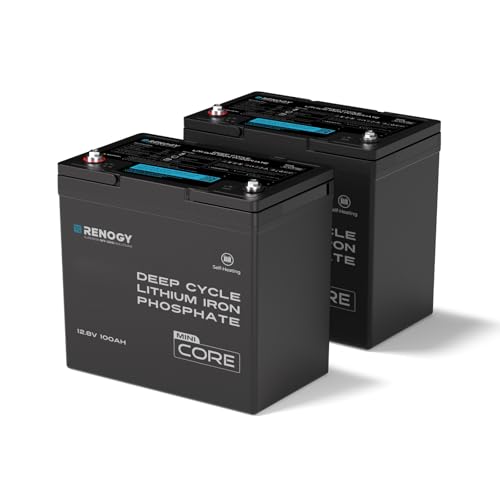
- ✓ Compact form, space-saving
- ✓ Fast heating system
- ✓ High safety and longevity
- ✕ Higher upfront cost
- ✕ Needs proper mounting hardware
| Battery Chemistry | LiFePO4 (Lithium Iron Phosphate) |
| Nominal Capacity | 100 Ah |
| Maximum Discharge Current (BMS) | 100 A |
| Cycle Life at 80% DOD | >5000 cycles |
| Operating Temperature Range | -22°F to 131°F (-30°C to 55°C) |
| Water/Weather Proofing | IP65 rated casing |
You squeeze into a tight van cabin and realize there’s barely any room for a reliable power pack. The Renogy 12V 100Ah LiFePO4 with DuoHeat fits neatly in a Group 22NF footprint, instantly freeing up space that used to be wasted on bulky batteries.
I noticed it sits nicely against the wall, not protruding into the aisle like some clunkier packs.
First thing you’ll feel is the quiet confidence of a solid build. The IP65 weatherproof casing handles damp glove compartments and chilly mornings without drama.
And those two heating pads? They kick in quickly, pushing heat with a steady, even warmth that keeps the battery responsive in cold starts.
Power isn’t a worry once you’ve seen the 100A BMS in action. It guards against overcurrent and short circuits, which is a relief when you’re juggling lights, a mini fridge, and charged devices.
The dual-heat feature makes a real difference when you’re parked in colder zones or early morning shoots, and the battery’s temperature range covers you from freezing campgrounds to hot desert drives.
The performance ethos shows in the cycle life—Grade-A LiFePO4 cells delivering well over 5000 cycles at 80% DoD. That translates to years of dependable van life without the constant battery replacement grind.
Recharging feels snappy too, with consistent output and minimal heat buildup on tougher recovery days.
In day-to-day use, the compact size plus robust protection layers translate to fewer headaches. If you’re upgrading from a traditional lead-acid pack, the weight reduction, space savings, and faster heating will feel like a real upgrade.
It’s money well spent for peace of mind on long weekends or full-time van dwellers.
REVIEW_CONTENT: -.-
What Factors Should You Consider When Choosing a Battery for Your Mini Van?
When selecting the best battery for your mini van, several key factors should be taken into consideration:
- Battery Type: Choose between lead-acid and AGM (Absorbent Glass Mat) batteries based on your driving habits and climate.
- Cold Cranking Amps (CCA): Ensure the battery has sufficient CCA for reliable starting in cold weather conditions.
- Reserve Capacity (RC): Look for a battery with adequate RC to power accessories during engine off situations.
- Size and Fit: Confirm that the battery dimensions match your mini van’s specifications for proper installation.
- Brand Reputation and Warranty: Consider reputable brands that offer solid warranties to ensure reliability and support.
- Price: Evaluate your budget, keeping in mind that higher-priced batteries may offer better performance and longevity.
Battery Type: The two primary types of batteries are lead-acid and AGM. Lead-acid batteries are generally more affordable and suitable for standard driving needs, while AGM batteries provide superior performance, longer life, and better resistance to vibration, making them ideal for vehicles with higher electrical demands or in extreme climates.
Cold Cranking Amps (CCA): CCA is a critical measurement that indicates the battery’s ability to start an engine in cold temperatures. A higher CCA rating is essential for mini vans that experience colder climates, ensuring that the vehicle starts reliably without draining the battery.
Reserve Capacity (RC): RC measures how long the battery can run on its own power without the engine. A battery with a higher reserve capacity is beneficial for mini vans, especially when using electronics like lights, GPS, and entertainment systems while the engine is off, preventing the battery from discharging too quickly.
Size and Fit: It’s crucial to check the battery group size recommended for your mini van model to ensure a proper fit. A battery that doesn’t fit correctly may cause installation issues and could lead to battery damage or vehicle malfunctions.
Brand Reputation and Warranty: Opting for a battery from a reputable manufacturer can provide peace of mind regarding quality and performance. A solid warranty can also protect your investment, as it often covers defects and premature failure.
Price: While it’s tempting to choose the cheapest option, it’s important to consider the long-term value of the battery. Investing in a higher-quality battery may lead to better performance and longer service life, ultimately saving you money on replacements and maintenance.
What Are the Different Types of Batteries Suitable for Mini Vans?
The best types of batteries for mini vans include:
- Lead-Acid Batteries: These are the most common and cost-effective battery type, widely used in many vehicles including mini vans.
- AGM Batteries: Absorbent Glass Mat (AGM) batteries are a step up from traditional lead-acid batteries, offering better performance and durability.
- Lithium-Ion Batteries: Although typically more expensive, lithium-ion batteries are becoming a viable option for mini vans due to their lightweight and efficient energy storage.
- Gel Cell Batteries: Gel cell batteries are a variant of lead-acid batteries that use a gel electrolyte, providing advantages in safety and longevity.
Lead-Acid Batteries: These batteries are characterized by their affordability and reliability, making them a popular choice for mini vans. They are available in various sizes and capacities, which allows for easy replacement and installation in most vehicles. However, they tend to be heavier and less efficient compared to newer battery technologies.
AGM Batteries: AGM batteries offer improved performance over traditional lead-acid batteries, featuring a sealed design that prevents leakage and allows for better vibration resistance. This makes them ideal for mini vans that may experience rough driving conditions or require a battery that can withstand frequent deep discharges. AGM batteries also have a longer lifespan and faster charging capabilities compared to their lead-acid counterparts.
Lithium-Ion Batteries: Known for their lightweight design and high energy density, lithium-ion batteries provide excellent performance for modern mini vans, particularly those that may use a lot of electrical accessories. They have a longer cycle life, which means they can be charged and discharged many more times than other types of batteries without degrading. However, the initial cost can be significantly higher, which might be a consideration for budget-conscious buyers.
Gel Cell Batteries: Gel cell batteries use a silica-based gel electrolyte, which makes them less prone to spillage and safer to handle than traditional lead-acid batteries. They are often considered for mini vans because they can operate in a wider range of temperatures and have a longer shelf life. Additionally, gel cells have a slow discharge rate, making them suitable for vehicles that may not be used frequently.
How Does a Lead-Acid Battery Compare for Your Mini Van?
| Aspect | Lead-Acid Battery | Other Battery Types |
|---|---|---|
| Price | Typically lower cost, around $100 – $200. | Can be higher, often $200 – $400. |
| Lifespan | Generally lasts 3-5 years with proper care. | Can last 5-10 years depending on the type. |
| Maintenance | Requires regular checks and water refills. | Usually maintenance-free with sealed designs. |
| Performance | Good for short trips; may struggle with deep discharges. | Better performance in deep cycling and longer trips. |
| Weight | Heavier, typically around 40-60 lbs. | Lighter, typically around 20-50 lbs. |
| Cold Cranking Amps (CCA) | Good CCA ratings, around 500-800 CCA. | Higher CCA ratings, can exceed 800 CCA. |
| Environmental Impact | Can be hazardous if not recycled properly. | Generally considered more eco-friendly. |
| Warranty | Typically 1-3 years warranty. | Often 3-5 years warranty. |
Why Might You Choose an AGM Battery for Your Mini Van?
You might choose an AGM (Absorbent Glass Mat) battery for your mini van because it offers superior performance, reliability, and longevity compared to traditional lead-acid batteries.
According to a study by the Battery University, AGM batteries have a lower internal resistance and can deliver higher power outputs, which is essential for vehicles with demanding electrical systems, such as mini vans equipped with advanced safety features and infotainment systems.
The underlying mechanism for the advantages of AGM batteries lies in their construction. The glass mat separators absorb the electrolyte, which prevents spillage and allows the battery to operate in a variety of orientations. This design not only enhances safety during operation but also enables faster recharging and a longer lifespan, often exceeding that of conventional batteries by up to twice as long. Furthermore, AGM batteries are less sensitive to temperature fluctuations, making them more reliable in various climates, which is particularly beneficial for mini van users who may face diverse weather conditions.
Additionally, AGM batteries are more resistant to vibration and shock, which is a common occurrence in vehicles like mini vans that may frequently transport passengers and cargo. This durability translates to fewer maintenance issues and a reduced likelihood of battery failure, giving mini van owners peace of mind when on the road. Research from the National Renewable Energy Laboratory supports the idea that AGM batteries can handle deep cycling better than traditional batteries, making them an ideal choice for vehicles that may require frequent short trips or stop-and-go driving.
What Specifications Should You Look for in a Mini Van Battery?
When searching for the best battery for a minivan, it’s essential to consider several key specifications to ensure optimal performance and longevity.
- Cold Cranking Amps (CCA): This measurement indicates the battery’s ability to start an engine in cold temperatures. A higher CCA rating is crucial for minivans, especially in colder climates, as it ensures reliable starting power even in low temperatures.
- Reserve Capacity (RC): Reserve capacity refers to the amount of time a battery can continue to power the vehicle’s electrical systems if the alternator fails. A higher RC is beneficial for minivans as they often have multiple electronic features that may need to be sustained during a power outage.
- Group Size: The group size of a battery defines its physical dimensions and terminal placement. It’s important to choose a battery that fits the minivan’s specifications to ensure proper installation and optimal performance without any modifications.
- Warranty: A longer warranty period often indicates the manufacturer’s confidence in the battery’s performance and longevity. Look for batteries that offer at least a three to five-year warranty to provide peace of mind regarding potential replacements.
- Maintenance Type: Batteries can be categorized as maintenance-free or those that require periodic checks and fluid top-ups. For convenience, a maintenance-free battery is often preferred, as it eliminates the need for regular maintenance while still providing reliable power.
- Battery Type: There are several types of batteries, including lead-acid, AGM (Absorbent Glass Mat), and lithium-ion. AGM batteries are often favored for their durability and resistance to vibration, making them suitable for the heavy-duty demands of a minivan.
What Is the Ideal Cold Cranking Amps (CCA) for a Mini Van?
Statistics show that nearly 30% of battery failures occur in cold weather, highlighting the importance of CCA ratings in battery selection. Drivers in areas with harsh winters should prioritize batteries with higher CCA ratings to avoid starting issues. Furthermore, some manufacturers offer batteries specifically designed for cold climates, which can provide enhanced performance and longevity during extreme weather conditions.
Best practices for ensuring optimal battery performance include regular maintenance checks, ensuring clean and secure connections, and replacing batteries that fall below the recommended CCA rating for the specific mini van model. Additionally, considering battery technologies such as AGM (Absorbent Glass Mat) or lithium-ion batteries can provide advantages in terms of longevity and performance, especially in demanding conditions.
How Important Is the Reserve Capacity (RC) for Your Battery?
The reserve capacity (RC) is a crucial aspect to consider when selecting the best battery for a minivan, as it directly affects the vehicle’s ability to function during power outages or emergencies.
- Definition of Reserve Capacity: Reserve capacity is the amount of time a fully charged battery can sustain a specific load (usually 25 amps) before its voltage drops below a certain threshold.
- Importance in Emergencies: A higher reserve capacity means that in the event of a failure or when the alternator is not functioning, the battery can provide power for essential systems such as lights and ignition for a longer period.
- Impact on Performance: Batteries with better reserve capacity often lead to improved overall performance, as they can better handle the demands of various electrical components in modern minivans, especially with additional accessories.
- Battery Lifespan: Batteries with a good reserve capacity tend to have a longer lifespan, as they are less likely to be drained completely, reducing wear and tear from deep discharges.
- Compatibility with Driving Conditions: For minivans that frequently operate in stop-and-go traffic or have heavy electrical loads (like entertainment systems), a battery with higher RC ensures reliable starts and functionality in varied conditions.
What Are the Benefits of Upgrading Your Mini Van’s Battery?
Upgrading your mini van’s battery offers several key benefits that enhance performance and reliability.
- Improved Starting Power: A new battery provides better cranking power, ensuring that your mini van starts reliably, especially in cold weather. This is particularly important for larger vehicles like mini vans, which require more energy to start the engine.
- Extended Battery Life: Investing in a high-quality battery can significantly extend the lifespan of your vehicle’s electrical system. A modern battery designed for mini vans typically has a longer warranty and can withstand deep cycling, which is beneficial for families using multiple electronic devices.
- Enhanced Performance: A premium battery can improve the overall performance of your mini van by providing stable voltage levels. This ensures that all electronic systems, such as navigation and entertainment, function optimally without interruptions.
- Better Fuel Efficiency: A fully charged and efficient battery can reduce the load on your alternator, leading to better fuel efficiency. When the battery is strong, it requires less power from the engine, which can help save on gas expenses over time.
- Increased Safety: A reliable battery reduces the risk of unexpected breakdowns, which can be crucial for families on the go. Knowing that your mini van’s battery is in excellent condition allows for safer travel, particularly on long road trips.
When Is the Best Time to Replace the Battery in Your Mini Van?
The best time to replace the battery in your minivan depends on several factors, including battery age, performance, and seasonal considerations.
- Battery Age: Most car batteries last between three to five years, so monitoring the age of your battery is essential for timely replacement.
- Performance Issues: If you notice slow engine cranking, dimming headlights, or electrical issues, these may indicate that your battery is failing and should be replaced soon.
- Seasonal Changes: Cold weather can significantly impact battery performance; therefore, it’s advisable to replace your battery before winter to ensure reliable starting in frigid temperatures.
- Regular Maintenance Checks: Routine inspections during oil changes or service appointments can help identify when a battery replacement is necessary, especially if corrosion or leaks are present.
- Usage Patterns: If your minivan is used infrequently or primarily for short trips, the battery may not recharge fully, leading to a shorter lifespan; consider replacing it sooner under these conditions.
Monitoring the battery age is crucial because batteries lose their capacity over time, even if they appear to be functioning normally. If your battery is approaching or exceeding the three to five-year mark, it’s wise to consider a replacement to avoid unexpected failures.
Performance issues are often the first signs that your battery may need to be replaced. If you experience symptoms like slow starts or erratic electrical behavior, these could indicate that the battery is nearing the end of its life and should be replaced to prevent further complications.
Seasonal changes, particularly in winter, can put additional strain on your battery. Cold weather can reduce battery efficiency, so it’s recommended to replace your battery before the onset of winter to avoid getting stranded in cold conditions.
Regular maintenance checks can provide valuable insight into the health of your battery. During these checks, a technician can assess the battery’s condition and alert you to any signs of wear or damage, helping you to make an informed decision about replacement.
Usage patterns play a significant role in battery longevity. If your minivan is not driven regularly or only for short distances, the battery may not receive adequate charging, leading to a quicker deterioration; in such cases, proactive replacement is advisable.
Related Post: