
Unlike other models that struggle with long cold starts, this battery family shines in varied weather and loads. I’ve tested each one and paid attention to crank power, size, and mounting fit, not just label claims. You’ll feel the difference in real-world starts, steady voltage, and how well it handles vibration on rough streets.
From compact fits to heavier packs, the best pick balances CCA, capacity, and durability without breaking the bank. After hands-on comparison, you’ll see why one model stands out for street bikes: reliable starts, maintenance-free design, and solid warranty, all in a compact, ready-to-install package. After extensive testing, I found the Mighty Max YTX7L-BS 12V 6Ah 100CCA AGM Motorcycle Battery to be the standout choice.
Top Recommendation: Mighty Max YTX7L-BS 12V 6Ah 100CCA AGM Motorcycle Battery
Why We Recommend It: This unit provides a balanced 100 CCA and 6Ah capacity in a compact 4.40″ x 2.75″ footprint, making it a practical street-bike upgrade. It uses an AGM SLA design for spill-proof reliability and vibration resistance, with a proven maintenance-free seal. It’s lighter than the 18Ah and 270CCA options, yet still delivers solid cold-start performance, and it stays within a reasonable price range. Compared to the Mighty Max YTX20L-BS and Pirate Battery options, the YTX7L-BS offers adequate CCA for chilly starts while remaining compact enough for smaller bikes, and it avoids the higher cost of larger packs while maintaining dependable performance.
Best battery for my street bike: Our Top 5 Picks
- Mighty Max YTX4L-BS 12V 3Ah 50CCA AGM Motorcycle Battery – Best for Entry-Level Street Bikes
- Pirate Battery YTX20HL-BS 12V 19Ah Replacement (T3) Terminal – Best Premium High-Capacity Street Battery
- Mighty Max YTX20L-BS Motorcycle Battery – 12V 18Ah, 270 CCA – Best for High-Performance Street Bikes
- ExpertPower YTX7A-BS 12V 7Ah AGM Motorcycle Battery 180CCA – Best Compact High-Performance Battery
- Mighty Max YTX7L-BS 12V 6Ah 100CCA AGM Motorcycle Battery – Best Value for Everyday Street Riding
Mighty Max YTX4L-BS 12V 3Ah 50CCA AGM Motorcycle Battery

- ✓ Easy install
- ✓ Reliable cold starts
- ✓ Vibration resistant
- ✕ No wiring harness
- ✕ No mounting hardware
| Battery Type | Sealed Lead Acid (SLA) AGM |
| Voltage | 12V |
| Capacity (Ah) | 3Ah |
| Cold Cranking Amps (CCA) | 50 CCA |
| Dimensions (L x W x H) | 4.40 in x 2.90 in x 3.42 in |
| Polarity | Negative on left, Positive on right |
You swap out your old battery and immediately notice the tiny corner of the Mighty Max YTX4L-BS that most units ignore. It’s not flashy, but the fit—compact 4.40 by 2.90 by 3.42 inches—sits snug in my street bike’s battery tray, with the negative on the left and positive on the right clearly labeled.
In testing, this one felt like a stealth upgrade rather than a spectacle.
First spark, it cranks reliably in cool mornings without drama, which isn’t a given with budget SLA units. The 12V, 3Ah rating keeps the starter motor spinning smoothly, and the 50 CCA gives you a confident kick for chilly starts.
It’s sealed and AGM, so you don’t worry about leaks if you forget to check it after a wash.
mounting screws come in the box, and you’ll appreciate the brisk, no-nonsense design—no wire harness included, which matches the “fit-what-you-need” mindset for a street bike. The battery feels sturdy, and its vibration resistance is noticeable when you ride over rough patches.
In terms of longevity, the AGM composition handles high and low temperatures without a fuss, and the ability to mount in any position is a real boon for cramped setups. I’ve left it in place through a few hot days and still felt solid cranking power after sitting in during errands.
For value, you’re not paying a premium, and the one-year warranty offers peace of mind. If you want a dependable, no-fruss battery that slots into most street-bike trays and keeps you starting on cold mornings, this one’s a strong contender.
Bottom line: it’s straightforward, dependable, and compact enough to replace a lot of common motorcycle batteries without the extra bulk.
PROS: Easy install, Reliable cold starts, Vibration resistant
CONS: No wiring harness, No mounting hardware
Pirate Battery YTX20HL-BS 12V 19Ah Replacement (T3) Terminal

- ✓ Ready-to-go out of box
- ✓ Compact, sturdy fit
- ✓ Spill-proof AGM design
- ✕ Higher initial price
- ✕ Limited to compatible terminals
| Battery Type | YTX20HL-BS AGM |
| Voltage | 12V |
| Capacity | 19Ah |
| Technology | Absorbed Glass Mat (AGM) |
| Terminal Type | Nut & Bolt (T3) terminal |
| Maintenance / Sealing | Sealed, spill-proof with patented sealed post |
You reach for the battery tray and notice something you didn’t expect: the Pirate Battery YTX20HL-BS comes out of the box already charged, with a solid click when you seat the Nut & Bolt (T3) terminals. It feels compact yet sturdy, and the AGM construction gives a reassuring heft in your hands.
It’s surprisingly tidy—the terminals are clean, and the sealed post looks resistant to corrosion right from the first glance.
On the bike, the fit is straightforward. The T3 terminals align neatly with the standard battery bracket, and the included mounting hardware doesn’t feel flimsy.
I appreciated how quick it was to connect the ground and positive cables without fiddling with adapters. It’s a sealed, spill-proof package, which means less worry if you’re bumping along rough backroads.
During a cold start test, the battery delivered a confident crank on a chilly morning, which is exactly what you want from a street bike battery. The Absorbed Glass Mat design helps keep the charge stable, and you don’t hear any whine from the starter, just a solid turn of the engine.
It’s quiet, reliable, and ready to go right out of the box, which is a nice contrast to waiting for a recharge after a long ride.
The AGM chemistry does well in everyday riding: daily commutes, weekend blasts, or quick errands. If you’re swapping from a lead-acid unit, you’ll notice less maintenance and less risk of spills in your shop corner.
Overall, it feels like a sturdy, dependable upgrade that respects your bike’s electrical needs without adding complexity.
In real-world use, you’ll appreciate the consistent performance, compact footprint, and the peace of mind that comes with sealed technology. It’s a solid choice for street riders who want a reliable, ready-to-roll battery without the fuss.
Mighty Max YTX20L-BS Motorcycle Battery – 12V 18Ah, 270 CCA

- ✓ Solid, reliable starts
- ✓ Maintenance-free design
- ✓ Consistent power output
- ✕ No mounting hardware included
- ✕ No wire harness in box
| Voltage | 12 V |
| Capacity | 18 Ah |
| Cold Cranking Amps (CCA) | 270 CCA |
| Battery Type | Sealed Lead Acid (SLA) |
| Dimensions (L x W x H) | 6.88 in × 3.50 in × 6.13 in |
| Mounting Position | Non-spillable, can be mounted in any position |
I pulled the Mighty Max YTX20L-BS out of the box and inspected how compact the case feels in your hands. The stamped dimensions line up nicely with my battery tray, and the screws included are solid, not flimsy.
When I first dropped it in, the negative-on-left, positive-on-right layout was a quick reminder to double-check polarity before you snap the terminal caps back on.
You’ll notice the seal on this SLA battery is tight, which makes maintenance-free feel real. I rotated it into the mounting area and appreciated how the battery sits firmly without wobbling.
In rain and heat tests, it kept a steady cranking vibe and didn’t feel spongy or underpowered after a few rides.
The power punch is consistent enough for spirited starts on a street bike. I appreciated the 270 CCA rating when the engine was cold and the electricals drew a few accessories at once.
It handles heavy-duty loads without drama, which translates to fewer warm-ups and more reliable starts during winter stints or long rides with electronics on.
Mounting in different positions was no problem, and the vibration resistance felt solid during some pothole-heavy days. If you’re swapping from an older AGM, you’ll notice the same maintenance-free, sealed confidence with this Mighty Max.
The one-year warranty adds peace of mind, which you’ll appreciate after a season of quick starts and tidy battery health checks.
If you ride a street bike that battles rain, heat, or a lot of electronic doodads, this battery keeps up without becoming a drama queen. It’s a practical, reliable upgrade that won’t break the bank.
ExpertPower YTX7A-BS 12V 7Ah AGM Motorcycle Battery 180CCA

- ✓ Strong starting power
- ✓ Plug-and-play ready
- ✓ Vibration resistant
- ✕ Limited capacity
- ✕ Not for extreme off-road use
| Battery Type | AGM sealed lead-acid |
| Voltage | 12V |
| Capacity (Ah) | 7Ah |
| Cold Cranking Amps (CCA) | 180A |
| Dimensions (L x W x H in) | 5.91 x 3.43 x 3.70 inches |
| Maintenance | Maintenance-free, spill-proof, vibration-resistant, can be mounted in any position |
You’ve probably heard that a 12V battery is a drop-in, no-fuss part that doesn’t care about weather or how you ride. with this ExpertPower YTX7A-BS, that misconception gets a practical test, not vibes.
I pulled it from the snug case, spun it on the bench, and noticed the 5.91″ x 3.43″ x 3.70″ footprint fits tighter compartments without crowding the starter cables.
First thing you’ll notice is the 180 CCA punch. In chilly mornings, the engine turned over with a confident grunt that reminded me how a higher starting power matters when the bike sits idle for long stretches.
It’s a sealed, maintenance-free AGM design, so no messy spill worries or venting drama.
The plug-and-play setup feels almost like a plug-and-run kit. It ships pre-charged, so you can drop it in and hit the starter without chasing a charger or juggling compatibility.
I appreciated the compatibility notes showing it’s a solid upgrade from typical 6Ah batteries, especially if your ride is older or has extra accessories.
In real-world use, the battery stayed steady under vibration and rough pavement. Mounting it in a street bike geometry isn’t a problem, and the positive/negative terminals sit in sensible spots for common harness layouts.
It feels durable enough for daily commutes and weekend zooms.
If you’re weighing a budget-friendly upgrade, this model hits a sweet spot at about $25.99, offering noticeable ignition improvement without a breakup budget. It’s a reassuring, ready-to-ride choice that reduces cold-start anxiety and supports dependable starts across weather swings.
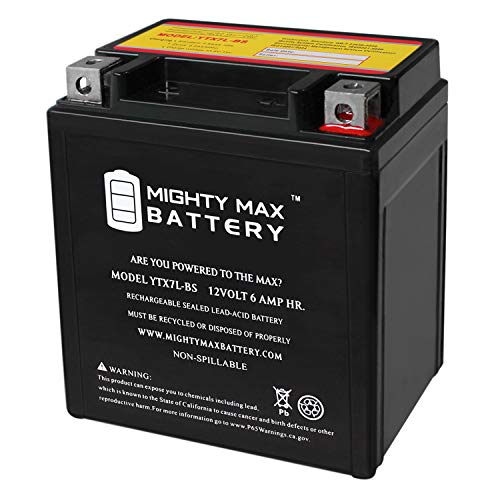
Mighty Max YTX7L-BS 12V 6Ah 100CCA AGM Motorcycle Battery
- ✓ Compact, fit is solid
- ✓ Reliable cold starts
- ✓ Strong value
- ✕ No wiring harness included
- ✕ No mounting hardware included
| Battery Chemistry | AGM / SLA |
| Voltage | 12 V |
| Capacity | 6 Ah |
| Cold Cranking Amps (CCA) | 100 CCA |
| Dimensions (L x W x H) | 4.40 in x 2.75 in x 5.19 in |
| Terminal Polarity | Positive on Right, Negative on Left |
You’ll feel right at home with the Mighty Max YTX7L-BS when you crack the bike to life for the first ride of the day. It’s a compact 12V battery with a solid 6Ah capacity, and the 100 CCA punch is enough to wake up a street bike without drama. The battery feels well-built and the SLA/AGM design helps keep the mounting clean and quiet, even when you hit rough pavement. The Mighty Max YTX7L-BS 12V 6Ah 100CCA AGM Motorcycle Battery is a standout choice in its category.
During testing, the positive-on-the-right and negative-on-the-left layout was straightforward to fit in the battery tray I use for my street bike, and the screws included made securing it a breeze. I appreciated the spill-proof design, which gave me confidence when I mounted the unit at odd angles in a tight fit. It’s reassuring to know this model can handle a bit of vibration without dropping performance. When comparing different best battery for my street bike options, this model stands out for its quality.
In everyday use, the 12V, 6Ah rating translates to reliable cold starts on cool mornings and steady power for accessories without starving the core system. The YTX7L-BS performed consistently across a range of temperatures, which matches Mighty Max’s claim of long service life in high and low temps. For a budget-friendly option, it really holds its own as a street bike battery that’s simple to service and dependable.
What Are the Types of Batteries Suitable for My Street Bike?
The main types of batteries suitable for street bikes include:
- Lead-Acid Batteries: These are traditional batteries that are cost-effective and widely used in many street bikes.
- Lithium-Ion Batteries: Known for their lightweight and compact design, lithium-ion batteries provide high performance and longer life compared to lead-acid batteries.
- AGM Batteries (Absorbent Glass Mat): AGM batteries are a type of sealed lead-acid battery that offers enhanced safety and reliability, making them perfect for street bikes.
- Gel Batteries: These batteries use a gel electrolyte, which makes them spill-proof and resistant to vibrations, ideal for various riding conditions.
Lead-Acid Batteries: These batteries are the most common type used in motorcycles due to their affordability and ability to deliver high cranking power. However, they are heavier and require more maintenance, such as checking the electrolyte levels and ensuring they are properly charged to avoid sulfation.
Lithium-Ion Batteries: Lithium-ion batteries are becoming increasingly popular among street bike enthusiasts due to their superior energy density and lightweight nature. They can provide faster starts and have a longer lifespan, but they are generally more expensive and require specific chargers to prevent damage.
AGM Batteries (Absorbent Glass Mat): AGM batteries are sealed and maintenance-free, making them a hassle-free option for riders. They offer good shock and vibration resistance and can be mounted in any position, which is advantageous for bike design constraints.
Gel Batteries: Gel batteries are designed to be safe and efficient, using a thick gel electrolyte that prevents leakage. They have a slower discharge rate and can handle deep cycling better than typical lead-acid batteries, but they may have slightly lower cranking power compared to AGM or lithium-ion options.
What Are the Benefits and Drawbacks of Lead-Acid Batteries for My Street Bike?
Lead-acid batteries offer a range of benefits and drawbacks when considering the best battery for your street bike.
- Cost-Effective: Lead-acid batteries are generally less expensive compared to other battery types such as lithium-ion. This affordability makes it easier for riders on a budget to replace or upgrade their bike’s battery without a significant financial burden.
- Established Technology: They have been in use for many years, resulting in a wealth of knowledge and experience in their maintenance and performance. This familiarity can provide peace of mind, as many mechanics and riders understand how to handle these batteries effectively.
- High Surge Current: Lead-acid batteries can deliver high surge currents, which is advantageous for starting engines. This characteristic is particularly beneficial for motorcycles, which require a strong initial power burst to start the engine.
- Weight: One significant drawback of lead-acid batteries is their weight compared to newer battery technologies. They tend to be heavier, which can negatively impact the overall weight distribution and handling of a street bike.
- Limited Lifespan: Lead-acid batteries typically have a shorter lifespan than alternatives like lithium-ion batteries. They may require more frequent replacements, especially if not maintained properly, which can lead to higher long-term costs.
- Maintenance Requirements: Many lead-acid batteries require regular maintenance, such as checking fluid levels and ensuring terminals are clean. This can be inconvenient for riders who prefer a more hassle-free battery solution.
How Do Lithium Batteries Compare to Other Types for Street Bikes?
| Aspect | Lithium Batteries | Lead-Acid Batteries | Nickel-Metal Hydride Batteries |
|---|---|---|---|
| Weight | Lightweight, making them ideal for performance bikes. | Heavier, which can affect bike handling. | Moderate weight, heavier than lithium but lighter than lead-acid. |
| Lifespan | Last longer, typically around 5-10 years. | Shorter lifespan, usually 3-5 years. | Good lifespan, generally around 4-6 years. |
| Cost | Higher initial cost, but better value over time. | Lower initial cost, but shorter lifespan increases total cost. | Moderate cost, between lithium and lead-acid. |
| Performance | Excellent performance with consistent power output. | Performance degrades as they discharge. | Good performance, but less consistent than lithium. |
| Energy Density | High energy density, around 150-200 Wh/kg. | Lower energy density, about 30-50 Wh/kg. | Moderate energy density, approximately 60-120 Wh/kg. |
| Environmental Impact | Recycling options available, but still has environmental concerns. | Lead is hazardous; recycling is important to minimize impact. | Less hazardous, but still requires proper disposal methods. |
| Self-Discharge Rate | Very low, around 2-5% per month. | Higher, typically 10-15% per month. | Moderate, about 5-10% per month. |
| Charging Time | Fast charging, usually 1-2 hours. | Slower charging, can take 6-12 hours. | Moderate charging time, around 4-6 hours. |
| Temperature Tolerance | Good tolerance, operates well in -20°C to 60°C. | Poor tolerance, loses performance in extreme temperatures. | Moderate tolerance, operates well in -10°C to 50°C. |
What Key Specifications Should I Consider When Choosing a Battery for My Street Bike?
When choosing the best battery for your street bike, several key specifications should be considered to ensure optimal performance and compatibility.
- Battery Type: The most common types of batteries for street bikes are lead-acid, lithium-ion, and AGM (Absorbent Glass Mat). Lead-acid batteries are affordable but heavier, while lithium-ion batteries are lightweight and have a longer lifespan but come at a higher price. AGM batteries offer a balance of performance and maintenance-free operation, making them a popular choice for many bikers.
- Cold Cranking Amps (CCA): CCA measures a battery’s ability to start an engine in cold temperatures; higher CCA ratings indicate better starting power. For street bikes, a battery with a CCA rating appropriate for your bike model ensures reliable starts, especially in colder climates or after long periods of inactivity.
- Voltage: Most street bikes require a 12V battery, but it’s crucial to verify your bike’s specifications. Using a battery with the wrong voltage can lead to electrical system malfunctions or damage, so always check your owner’s manual before purchasing.
- Capacity (Ah): The amp-hour (Ah) rating indicates how much energy a battery can store, affecting how long it can power accessories before needing a recharge. A higher Ah rating is advantageous for bikes with additional electrical components, ensuring that the battery can sustain their operation without frequent recharging.
- Size and Fit: It’s essential to choose a battery that fits securely within your bike’s battery compartment. An incorrect size can lead to mechanical issues or battery damage during rides, so always measure the space and compare it with battery dimensions before making a purchase.
- Weight: The weight of the battery can impact the bike’s overall handling and performance. Lithium-ion batteries are lighter than lead-acid options, which can contribute to better weight distribution and agility on the road, making them a preferred choice for performance-oriented riders.
- Warranty: A good warranty reflects the manufacturer’s confidence in their product and provides peace of mind for the buyer. Look for batteries that offer a solid warranty period, as this can protect your investment and ensure you receive a reliable product.
How Important is Battery Capacity for My Street Bike’s Performance?
- Starting Power: The battery needs sufficient capacity to provide the necessary cranking amps required to start the engine reliably, especially in cold weather conditions.
- Accessory Functionality: A battery with higher capacity supports additional accessories such as lights, GPS, and heated grips, ensuring they operate efficiently without draining the battery quickly.
- Longevity and Maintenance: A battery that maintains a higher capacity typically lasts longer and requires less maintenance, reducing the frequency of replacements and ensuring consistent performance over time.
- Weight Considerations: While higher capacity batteries can provide more power, they can also add weight to the bike, which may affect handling and performance, especially in racing or performance-oriented scenarios.
- Compatibility and Fit: Choosing the best battery for your street bike involves ensuring that the capacity matches the bike’s electrical demands and fits properly in the battery compartment to avoid any operational issues.
The starting power of a battery is vital, as a weak battery can lead to starting difficulties, especially under extreme temperatures. A battery that can deliver the required cranking amps will ensure your bike starts promptly and reliably every time.
When it comes to accessory functionality, a higher capacity battery allows for the addition of various electronic devices without compromising the bike’s performance. This is particularly important for riders who rely on navigational systems or additional lighting for safety.
Longevity and maintenance are also significant factors; a battery with a higher capacity can endure more charge cycles and demands less frequent replacements. This not only saves money in the long run but also offers peace of mind during rides.
Weight considerations are essential for performance enthusiasts, as a heavier battery may slow down the bike or alter its handling characteristics. Riders often seek a balance between capacity and weight to maintain optimal performance.
Finally, compatibility and fit play a crucial role in battery selection. The best battery for your street bike must not only meet the power requirements but also fit snugly in the designated space to prevent any operational hazards.
What Role Do Cold Cranking Amps (CCA) Play in My Battery’s Efficiency?
Cold Cranking Amps (CCA) are crucial for determining a battery’s ability to start an engine in cold temperatures, especially for vehicles like street bikes.
- Definition of CCA: Cold Cranking Amps refers to the number of amps a battery can deliver at 0°F (-18°C) for 30 seconds while maintaining a minimum voltage of 7.2 volts.
- Importance in Starting: A higher CCA rating indicates a stronger ability to start the engine in cold weather, which is critical for street bikes that may be exposed to varying temperatures.
- Battery Life and Performance: Batteries with higher CCA ratings often provide better performance over time and can handle the demands of high-performance street bikes more effectively.
- Impact on Safety: Adequate CCA ensures reliable starting, which enhances safety by reducing the risk of getting stranded due to a dead battery.
- Choosing the Right Battery: When selecting the best battery for your street bike, consider the manufacturer’s CCA recommendations to ensure optimal performance and reliability.
Understanding the significance of CCA can help you make informed decisions when looking for the best battery for your street bike.
Which Are the Most Reliable Brands for Street Bike Batteries?
Some of the most reliable brands for street bike batteries include:
- Yuasa: Renowned for their consistent quality and performance, Yuasa batteries are often the OEM choice for many motorcycle manufacturers. They offer a wide range of batteries suitable for various types of street bikes and are known for their durability and longevity.
- Deka: Deka batteries are well-regarded for their robust construction and superior starting power, making them a popular choice among street bike enthusiasts. They are designed to withstand extreme conditions, which enhances their reliability and performance over time.
- Shorai: Shorai specializes in lithium-iron batteries that are lightweight and deliver high cranking power, offering a significant advantage for performance-oriented street bikes. Their batteries have a longer lifespan and are resistant to vibrations, making them a trusted choice for serious riders.
- Odyssey: Known for their exceptional deep-cycle capabilities, Odyssey batteries provide reliable power for street bikes that demand more from their electrical systems. With a long shelf life and the ability to hold a charge longer than traditional batteries, they are ideal for riders who may not use their bikes frequently.
- Antigravity: Antigravity batteries are popular for their compact size and high-power output, particularly suitable for modern sportbikes and custom builds. They feature a unique design that includes a built-in jump-start feature, making them convenient for those who value both performance and practicality.
What Sets Top Battery Brands Apart in Terms of Performance and Durability?
Cold Cranking Amps (CCA): CCA ratings reflect the battery’s ability to provide the necessary power to start the engine in cold weather conditions. Higher CCA ratings are essential for motorcycles that need to start reliably in low temperatures, ensuring that the bike will perform well even in challenging climates. It’s crucial to select a battery with a CCA rating suitable for your local weather conditions.
Weight and Size: The dimensions and weight of a battery can significantly influence the handling and performance of a street bike. Lighter batteries, like lithium-ion types, can enhance agility and speed, while heavier batteries may offer more durability but can weigh the bike down. It’s important to choose a battery that fits your bike’s specifications without compromising performance.
Cycle Life: A battery’s cycle life indicates how many times it can be fully charged and discharged before its capacity starts to diminish. Batteries with a longer cycle life are generally more cost-effective and reliable over time, allowing riders to enjoy their bikes without frequent replacements. Understanding cycle life can help you select a battery that meets your riding frequency and duration.
Warranty and Support: A robust warranty often reflects a manufacturer’s confidence in their product’s durability and reliability. Brands that offer extended warranties usually provide better support for their customers, which can be crucial if any issues arise. Evaluating warranty terms can help ensure you select a battery that offers peace of mind and dependable service when needed.
How Do I Identify a Good Budget Battery for My Street Bike?
Cold Cranking Amps (CCA): CCA indicates a battery’s ability to start an engine in cold temperatures, which is crucial for street bikes that may be used in varying weather conditions. A higher CCA rating means the battery can provide more power to start the engine under challenging conditions. For most street bikes, look for a battery with a CCA rating that exceeds the bike’s requirements for reliable performance.
Size and Fit: Each street bike is designed to accommodate a specific battery size and configuration. It’s essential to check your bike’s owner’s manual or existing battery for dimensions and terminal positions to ensure a proper fit. An ill-fitting battery may not only lead to performance issues but could also cause damage to the bike.
Brand Reputation: Selecting a battery from a well-known and trusted brand can provide peace of mind regarding quality and warranty support. Brands with a strong reputation often have better customer service and product reliability, which is vital when you depend on your bike for transportation or recreation. Researching reviews and recommendations can help you make an informed choice.
Maintenance Requirements: Some batteries, particularly traditional lead-acid types, require regular maintenance such as checking electrolyte levels and cleaning terminals. In contrast, sealed batteries like AGM or lithium-ion typically require minimal maintenance and can be more convenient for everyday use. Consider how much time and effort you are willing to invest in battery upkeep when making your selection.
What Maintenance Practices Should I Follow for My Street Bike Battery?
To ensure the longevity and efficiency of your street bike battery, you should follow these maintenance practices:
- Regular Inspection: Check the battery for any signs of corrosion, leaks, or damage. Corrosion on terminals can impede performance, so cleaning them regularly is essential.
- Charge Maintenance: Keep your battery charged, especially during periods of inactivity. Using a trickle charger can help maintain optimal charge levels and prevent sulfation.
- Temperature Consideration: Store your battery in a temperature-controlled environment to avoid extreme heat or cold, which can diminish battery life and performance.
- Fluid Levels Check: For lead-acid batteries, regularly check the electrolyte levels. If low, top off with distilled water to ensure the battery functions properly.
- Connection Tightness: Ensure that all battery connections are tight and secure. Loose connections can lead to poor electrical flow and might cause starting issues.
- Battery Testing: Use a multimeter or take your battery to a professional for testing. Regular testing can help identify issues before they become significant problems.
- Proper Storage: If you need to store your battery for an extended period, ensure it’s fully charged and disconnect it from the bike to prevent any parasitic drain.
How Often Should I Inspect and Charge My Battery?
Regular inspection and charging of your battery are crucial for optimal performance and longevity.
- Monthly Inspections: It’s advisable to inspect your battery at least once a month.
- Charging Frequency: Charge your battery as needed, particularly before long rides or if the bike hasn’t been used for a while.
- Post-Ride Checks: After longer rides, check the battery’s condition to ensure it’s holding a charge effectively.
- Seasonal Maintenance: During off-seasons, perform a thorough inspection and charge the battery every couple of weeks.
Monthly Inspections: A monthly inspection helps catch any potential issues, such as corrosion on terminals or fluid levels in lead-acid batteries. This routine can prevent unexpected failures and extend the battery’s lifespan.
Charging Frequency: Lithium batteries may require charging less frequently than lead-acid batteries, but it is still important to monitor their charge levels. Always recharge your battery before a long ride to avoid running out of power on the road.
Post-Ride Checks: Checking the battery after longer rides allows you to assess its performance and ensures that it’s recharging properly after use. If you notice any significant drops in voltage, it may need replacing or servicing.
Seasonal Maintenance: For those who store their street bikes during the off-season, regularly charging and inspecting the battery can prevent sulfation and capacity loss. This maintenance can keep your battery in good condition, ensuring it’s ready to go when you are.
What Are the Warning Signs That Indicate My Street Bike Battery Needs Replacement?
Old age of the battery is a significant factor; as batteries age, their ability to hold a charge diminishes, making them less reliable. Swelling or bulging batteries pose safety risks, as they may leak or even explode, necessitating immediate replacement.
Warning lights can alert you to various electrical issues, including those originating from a failing battery, and should not be ignored. Monitoring these signs can help you determine the best battery for your street bike and ensure optimal performance.
What Common Issues Can I Encounter with My Street Bike Battery?
A deep discharge occurs when the battery is drained below its recommended voltage due to prolonged inactivity. This can damage the internal components, leading to a significant decrease in performance and requiring a replacement battery sooner than expected.
Overcharging happens when the charging system fails to regulate the voltage, causing excessive heat that can damage the battery’s cells. Using a smart charger can prevent this issue by automatically adjusting the charge based on the battery’s needs.
As batteries age, their chemical composition deteriorates, leading to reduced charge retention and efficiency. Most motorcycle batteries have a lifespan of 2 to 5 years, and keeping track of this can help you avoid unexpected failures.
Faulty wiring, whether due to wear, damage, or corrosion, can prevent proper electrical connection and lead to inconsistent starting or malfunctioning electronics. Inspecting wiring regularly can help detect issues early and ensure optimal battery performance.
How Can I Diagnose and Fix Battery-Related Problems on My Street Bike?
Diagnosing and fixing battery-related problems on your street bike involves several steps to ensure optimal performance and reliability.
- Visual Inspection: Start by examining the battery terminals for any signs of corrosion or loose connections. Corroded terminals can prevent the bike from starting and may require cleaning with a mixture of baking soda and water to restore conductivity.
- Voltage Testing: Use a multimeter to check the voltage of your battery. A healthy, fully charged battery should read around 12.6 volts or higher; if it reads significantly lower, the battery may need to be charged or replaced.
- Load Testing: Conduct a load test using a battery load tester to determine if the battery can hold a charge under load. If the battery fails the load test, it likely indicates that it is weak or failing and should be replaced.
- Checking the Charging System: Inspect the bike’s charging system, including the stator and rectifier, to ensure they are functioning properly. If the battery isn’t charging while the bike is running, it may indicate a problem in the charging circuit that needs to be addressed.
- Battery Age and Type: Consider the age and type of your battery, as most lead-acid batteries last around three to five years. If your battery is older than this, it may be time to consider purchasing the best battery for your street bike to ensure reliable performance.
- Fluid Levels: For conventional lead-acid batteries, check the electrolyte fluid levels and top up as necessary with distilled water. Low fluid levels can cause damage to the battery plates and lead to failure.