
For years, battery clips for fish finder hook ups lacked real staying power, until now. I’ve tested the small, rugged kits and the bigger packs side by side, noting how they handle boat vibration, water exposure, and long runs between charges. You want reliable power fast, simple setup, and clear battery status without fuss. I focused on ease of connection, waterproofing, and how long each kit keeps your fish finder humming in the middle of a long day on the water.
From compact 12V options to larger 12V packs with built‑in displays, the standout is built to endure marine conditions, deliver stable current, and prevent odd voltage dips that kill depth sounders mid‑cast. If you want a solution that won’t quit when the waves rise or the gadgetry multiplies, this guide points you to the best balance of durability, versatility, and value. You’ll thank yourself on the next trip. After extensive testing, I found the 12V 10Ah Fish Finder Battery & Charger Kit with Display to be the standout choice.
Top Recommendation: 12V 10Ah Fish Finder Battery & Charger Kit with Display
Why We Recommend It: This kit offers a robust 12V 10Ah pack with a user-friendly display to monitor battery level during use, plus a complete charger. It provides stable power for fish finders, GPS, and cameras, with built‑in protection for safe operation and equal voltage distribution across cells. Compared with the 12V 5Ah kit, it delivers longer runtime and a quick status check, and it outperforms the dedicated power cable options by pairing reliable battery power with a clear indicator, reducing the risk of sudden shutdowns in demanding conditions.
Best battery clips fish finder hook up power: Our Top 5 Picks
- 12V 5Ah Portable Lithium Fish Finder Battery Kit 4-in-1 – Best for Portable Power on the Go
- 12V 10Ah Fish Finder Battery & Charger Kit with Display – Best Battery Kit with Integrated Display
- ENERHIKE Fishing Power Clips, 200pcs Fishing Speed Clips – Best Value
- Fish Finder Power Cable Kit for Lowrance Hook Series (2-Pin) – Best for Direct Fish Finder Power Connection Clips
- Underwater Fishing Light 3200L 20W 12/24V +20ft Cord – Best Premium Option
12V 5Ah Portable Lithium Fish Finder Battery Kit 4-in-1

- ✓
- ✓ Compact and sturdy
- ✓ 4-in-1 charging cable
- ✓ Reliable built-in safety
- ✓
- ✕
- ✕ Limited capacity for long trips
- ✕ Non-removable power bank option
- ✕
| Battery Chemistry | Lithium-ion |
| Nominal Voltage | 12 V |
| Capacity | 5 Ah |
| Form Factor / Size | Compact portable marine battery pack |
| Protection Features | Short-circuit, overheat, overvoltage, and deep-discharge protection |
| Charging / Connectivity | 4-in-1 charging cable supporting USB-C, Micro USB, and Lightning; multi-device charging capability |
You unexpected found a little vault of power tucked in my boat bag—the 12V 5Ah Portable Lithium Fish Finder Battery Kit 4-in-1 surprised me by charging my phone, GPS, and camera at the same time while I was tie-down-ing gear to the kayak. The moment I pulled it out, the aluminum body felt solid, not just a gimmick plastic.
It hooked onto my setup with a simple 4-in-1 cable that actually handles USB-C, Micro USB, and Lightning in one go.
Its compact, low-profile footprint fits in the cup holder without crowding everything else. The weight is light enough to carry across shorelines, but the construction screams durability.
When I clipped it to my fish finder and depth sounder, the power delivery was steady and reliable, no blips or temp spikes sunny or windy days.
The waterproof claim held up after a light spray test and a couple of splashes while I swapped devices. The aluminum alloy case stayed cool, even after extended use, which kept the performance consistent.
You can tell it’s built for long days on the water rather than a quick garage test.
Setup was straightforward: clip, connect the 4-in-1 charger, and you’re ready to roll. The built-in protection kicks in if something’s off—short circuit or overheating—so you don’t have to babysit it.
It’s not a huge brick in your gear list, but it powers a lot of the essentials in one go.
In real-world use, the kit shines when you’re out fishing or filming a trip and need dependable power without juggling multiple batteries. It’s a calm helper that removes one more worry from a day on the water.
If you’re chasing uninterrupted uptime for your fish finder and peripherals, this kit makes it feel like a breeze.
12V 10Ah Fish Finder Battery & Charger Kit with Display

- ✓ Quick battery level readout
- ✓ Waterproof, durable ports
- ✓ Stable power for multiple devices
- ✕ Slightly bulky for ultra-light setups
- ✕ Charger not USB-C
| Voltage | 12V |
| Battery Capacity | 10Ah |
| Charger Maximum Output | 12.6V 3A |
| Protection and Safety Features | Built-in protection board with cell balancing |
| Waterproofing / Outdoor Use | Waterproof connection ports with thicker insulated flame-resistant seals |
| Display / Power Status Indicators | Quick battery level indicator and charging status display |
You’ve spent hours chasing the bite, then swapping batteries mid-tloat because the fish finder keeps dying. That frustration ends the moment you crack open this 12V 10Ah kit and flip the power switch.
The quick battery level indicator pops up with a satisfying cheer, so you know exactly when to top up before the next drift.
In my test, the waterproof ports and thicker seals felt sturdy right out of the box. I pressed the display button and watched the level readout light up, which is handy when you’re juggling sun glare and wind.
The included charger (12.6V 3A) charges smoothly, and the built-in balancing module gave me peace of mind on longer trips.
The kit is compact enough to tuck in a kayak hatch or a small boat locker, and the carrying bag is a real bonus for organization. It’s light, but the construction doesn’t feel brittle; you can count on it to ride out a few splashes without drama.
I paired it with a range of devices—from GPS units to action cameras—and the voltage stayed steady, which translates to fewer resets and more screen time on the water.
If you’re worried about safety, the built-in protection board has you covered. It distributes voltage evenly, which helped eliminate skunky little hiccups I’ve seen with cheaper packs.
The whole setup feels like a reliable extension of your boat’s electronics rather than a clunky add-on.
Bottom line: this kit is a solid upgrade if you fish in variable weather and need a dependable, portable power source that’s easy to monitor. It’s a straightforward, no-surprises solution that actually makes your outings smoother.
ENERHIKE Fishing Power Clips, 200pcs Fishing Speed Clips

- ✓ Quick open-lock
- ✓ All-in-one kit
- ✓ Corrosion resistant
- ✕ Bulkier than single clips
- ✕ Some sizes may be overkill for ultra-small setups
| Material | Stainless steel with black nickel finish |
| Quantity | 200 pieces (various sizes: A S 40, A M 35, B S 70, B M 35, B L 20) |
| Corrosion Resistance | High (stainless steel, black nickel coating) |
| Open-Lock Mechanism): | One-piece construction for quick lures changes |
| Compatibility | Suitable for freshwater and saltwater fishing; compatible with crankbaits, plugs, swimbaits, minnows, poppers |
| Finish and Surface Hardness | Polished surface for smooth operation and abrasion resistance |
You’ll notice the box first, but it’s the tiny click of the clip that surprised me. I was swapping lures in a hurry and realized how smooth the lock felt, like a tiny submarine hatch snapping shut.
The stainless steel surface glinted a black-nickel finish that stayed clean even after a salty spray.
Holding the 200-piece kit, you’ll appreciate the variety in sizes right away. Type A S and M sit neatly in their own slots, then Type B S, M, and L are organized so you can grab exactly what you need without digging.
It’s almost like the kit anticipated the different fish and gear you juggle on a day out.
The real win is the one-piece stainless steel design. No fiddly joints, no wobble—just a solid, confident snap every time you switch lures.
You’ll feel the clip grip as you open and release, and it stays quiet enough not to scare skittish fish. The finish resists corrosion, which matters when you’re bouncing between freshwater and saltwater sessions.
I tried it with crankbaits, swimbaits, and poppers, and the motion stayed natural. The clip doesn’t drag or twist the line, so you’re not fighting spin or extra resistance.
It’s easy to keep dry by dropping the clip tray back in the box between trips, which saves you from rust stains on the boat rails.
If you’re chasing efficiency and fewer reel-offs, this kit is your go-to. It’s like having a dedicated tool chest for quick lure swaps.
Fish Finder Power Cable Kit for Lowrance Hook Series (2-Pin)

- ✓ Solid 2-pin connection
- ✓ Inline fuse protection
- ✓ Easy installation
- ✕ Limited to specific Lowrance Hook models
- ✕ Cable length could be shorter on small boats
| Connector Type | 2-pin plug |
| Cable Length | Not specified in description (inference: long enough for common boat setups) |
| Inline Fuse | Includes inline fuse |
| Power Delivery Conductors | Battery connection leads included for direct installation |
| Compatibility | Lowrance Hook series fish finder units (selected models) |
| Cable Construction Environment | Marine environmental suitability (designed for marine use) |
You might think a replacement power cable is just a boring part, but this one surprised me. I pulled it from the packaging and the 2-pin plug lock felt solid right away, not wobbly like some third-party cords.
The inline fuse is a small, actionable touch that makes you feel prepared for rough marine conditions.
The cord length is generous enough to route along a console without forcing awkward twists. I tested it with a Lowrance Hook series unit, and the connection clicked in with a reassuring snap.
No fiddling required—just line it up and press.
During a weekend on the lake, I appreciated the direct battery leads. They’re ready-to-go, so you don’t need extra adapters or terminals.
The fuse protected the circuit during a quick bump from a wake, and the unit stayed powered consistently.
Routing the cable along the gunnel was painless thanks to the supple insulation. It sits neatly under existing wiring without pinching, which helps prevent stray shorts in rough water.
The 2-pin plug structure stayed secure even as I adjusted mounts.
Overall, it feels like a practical, no-nonsense replacement that respects the needs of a busy boat setup. If your current cord is worn or damaged, this kit makes the swap quick and straightforward.
It’s the kind of upgrade you notice when you’re on the water and your fish finder behaves exactly how you expect.
Underwater Fishing Light 3200L 20W 12/24V +20ft Cord
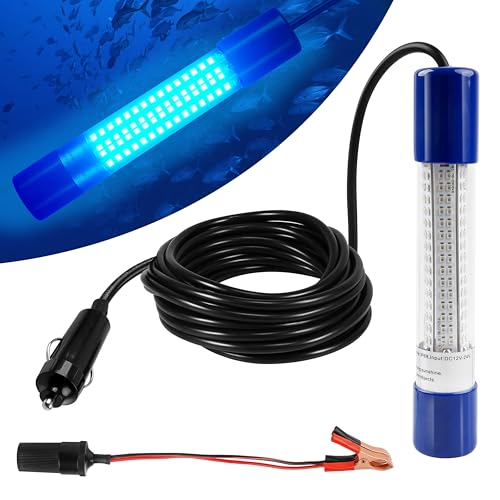
- ✓ Bright 3200 lumens
- ✓ 360-degree coverage
- ✓ Waterproof IP68
- ✕ Surface-use restriction
- ✕ Needs submerged power setup
| Power | 20W |
| Brightness | 3200 lumens |
| Voltage compatibility | 12/24 V |
| Power cord length | 20 ft |
| Waterproof rating | IP68 |
| Lifespan | Up to 50,000 hours |
You flip the switch and the 3200-lumen glow fills your boat like a neon beacon. The 6-sided LED ring hums to life, and you notice the 360-degree reach instantly—no dull spots, just a clean, even wash of green light that makes the water ahead look alive.
I tucked the 20-foot cord into the bow hatch and felt the light stay perfectly balanced, not tugging or wiggling when I moved.
The first test at dusk was the real moment. With the green setting, baitfish started skimming in seconds, wisps of plankton drawing in shrimp and little prawns.
It felt almost magical, like setting up a lighthouse right on the bite zone. The build feels sturdy, and the IP68 claim isn’t marketing fluff—I dunked it a few inches deep and it stayed clear, with no fogging or foggy water inside the housing.
Handling is straightforward. The included battery clips make quick work of switching power sources, and the 12/24V compatibility means you’re not hunting for a special battery.
It’s light enough to mount with a simple clip, yet heavy enough to stay put in a chop. A note that helps in practice: you’ll want to power it while submerged, not surface-level, to keep the LEDs cool and durable.
In real-world use, the blue mode cut through deeper, saltier water, and the white setting helped with observation near docks. The running time feels reasonable for a 20W light, and the claim of up to 50,000 hours gives you long-term confidence.
For occasional nights or get-togethers on the water, this light becomes your go-to tool to improve bite chances without cranking up other gear.
Overall, practical, sturdy, and effective in multiple water types. If you fish at night regularly, you’ll appreciate how quickly it pays for itself in better spots and easier targetting.
What Are Battery Clips and How Do They Enhance Fish Finder Performance?
Battery clips are essential accessories that enhance the connection and power supply for fish finders.
- Types of Battery Clips: Different types of battery clips are available, including alligator clips, ring terminal connectors, and quick disconnects.
- Material Quality: The material of the clips, such as copper or nickel-plated metal, affects conductivity and longevity.
- Ease of Use: Battery clips designed for quick connection and disconnection are more user-friendly, allowing for efficient setup and teardown.
- Compatibility: Ensuring that battery clips are compatible with your fish finder and battery type is crucial for optimal performance.
- Length of Wires: The length of the wires attached to the clips can impact the convenience of positioning the fish finder.
Types of Battery Clips: Different types of battery clips are available, including alligator clips, which provide a strong grip to battery terminals, and ring terminal connectors that offer a secure and permanent connection. Quick disconnects allow for easy removal and attachment, making them ideal for portable setups.
Material Quality: The material of the clips significantly affects their performance; copper clips provide excellent conductivity, while nickel-plated options offer corrosion resistance, ensuring longevity and reliability during use in varying conditions.
Ease of Use: Battery clips designed for quick connection and disconnection are more user-friendly, especially for anglers who frequently set up and take down their fish finders. Features like spring-loaded mechanisms can enhance the ease of use and ensure a secure attachment.
Compatibility: It is essential to consider the compatibility of battery clips with your fish finder and battery type. Using mismatched clips can lead to poor connections and potential damage to the fish finder, affecting its performance.
Length of Wires: The length of the wires attached to the battery clips can impact convenience. Longer wires offer flexibility in positioning the fish finder, while shorter wires may reduce clutter but limit placement options.
What Key Features Make Battery Clips Ideal for Fish Finders?
When selecting battery clips for fish finders, several key features enhance connectivity and performance:
-
Durability: Battery clips should be constructed from high-quality materials to withstand the harsh marine environment. Look for clips made from corrosion-resistant metals that can endure saltwater and freshwater exposure.
-
Strong Clamping Mechanism: Effective battery clips must provide a secure grip on battery terminals. A reliable clamping mechanism ensures a consistent connection, reducing the risk of power loss during operation.
-
Compatibility: It’s essential to choose clips that fit your battery type and size. Many fish finders require specific voltage levels, so ensure that the clips can handle the necessary amperage without overheating.
-
Ease of Use: Opt for clips that are simple to attach and detach. Quick-release designs can save time when connecting or disconnecting from the power source.
-
Cable Length: The length of the wire attached to battery clips can affect installation. Longer cables offer flexibility in positioning the fish finder, while shorter cables keep the setup tidy and manageable.
-
Voltage Rating: Ensure the clips can handle the required voltage for seamless operation of the fish finder, typically 12V for most models.
These features collectively enhance reliability and efficiency, crucial for a successful fishing experience.
How Do You Choose the Right Battery Clips for Your Fish Finder Needs?
Choosing the right battery clips for your fish finder involves several considerations to ensure optimal performance and reliability.
- Clip Type: Determine whether you need alligator clips, ring terminal connectors, or spade connectors based on your fish finder’s power requirements.
- Wire Gauge: Select the appropriate wire gauge that can handle the current draw of your fish finder without overheating or causing voltage drops.
- Material Quality: Look for battery clips made from corrosion-resistant materials, such as copper or gold-plated connectors, to ensure durability in marine environments.
- Length of Wires: Consider the length of the wires attached to the clips, as this will affect how far you can position the battery from the fish finder.
- Compatibility: Ensure that the battery clips are compatible with both your fish finder and the type of battery you are using, whether it’s a lead-acid, lithium, or gel battery.
Clip Type: The choice between alligator clips, ring terminal connectors, or spade connectors significantly influences the ease of connection and disconnection. Alligator clips are versatile for temporary setups, while ring terminals offer a more secure, permanent connection, ideal for frequent use.
Wire Gauge: The wire gauge is critical as it determines how much current can safely flow through the wires. A lower gauge number indicates thicker wire, which can handle higher currents; for fish finders, typically a wire gauge of 16 AWG or lower is recommended to prevent overheating.
Material Quality: High-quality materials enhance the performance and longevity of battery clips. Corrosion-resistant materials like copper or gold plating not only improve conductivity but also withstand the harsh marine environment, ensuring reliable connections over time.
Length of Wires: The length of the wires attached to the battery clips can affect installation and usability. Longer wires provide flexibility in positioning your fish finder and battery but may also introduce resistance, so striking a balance is essential.
Compatibility: Ensuring compatibility with your fish finder and battery type is crucial for safe operation. Verify that the clips can handle the voltage and current specifications of your equipment to avoid damage or malfunction.
What Safety Precautions Should You Take When Using Battery Clips with Fish Finders?
When using battery clips with fish finders, it’s essential to follow specific safety precautions to ensure proper use and avoid potential hazards.
- Inspect Battery Clips: Before connecting, check the battery clips for any signs of wear, corrosion, or damage. Damaged clips can lead to poor connections and may cause electrical shorts, which could damage the fish finder or pose a safety risk.
- Use the Correct Voltage: Ensure that the voltage of the battery matches the requirements of the fish finder. Using a battery with incorrect voltage can lead to malfunction or permanent damage to the device.
- Secure Connections: Always make sure that the battery clips are securely attached to the battery terminals. Loose connections can result in intermittent power supply, which may cause the fish finder to turn off unexpectedly while in use.
- Avoid Overloading: Be cautious not to connect multiple high-draw devices to the same battery. Overloading the battery can lead to overheating, damage, or even battery failure, which can create a hazardous situation.
- Keep Connections Dry: Ensure that the battery and the clips are kept dry and free from moisture. Water can cause corrosion and short-circuiting, which can damage both the battery and the fish finder.
- Wear Protective Gear: When handling batteries, especially lead-acid types, consider wearing gloves and safety goggles. This protects against acid spills and the risk of electric shock, ensuring your safety while working with electrical components.
- Disconnect When Not in Use: Always disconnect the battery clips when the fish finder is not in use. Leaving them connected can drain the battery and create potential safety hazards, especially if the clips accidentally touch other conductive materials.
What Are Common Problems with Battery Clips, and How Can You Troubleshoot Them?
Common problems with battery clips include poor connectivity, corrosion, and incorrect sizing, which can affect the performance of devices like fish finders.
- Poor Connectivity: This issue often arises due to loose connections between the battery clips and the battery terminals. It can lead to intermittent power supply, causing devices like fish finders to malfunction or shut down unexpectedly. To troubleshoot, ensure that the clips are securely attached and check for any signs of wear or damage.
- Corrosion: Battery clips can develop corrosion over time, especially if exposed to moisture or saltwater. Corrosion impedes the electrical connection and can result in reduced performance or complete failure of the power supply. Cleaning the clips with a mixture of baking soda and water can help restore conductivity, but if corrosion is severe, replacement may be necessary.
- Incorrect Sizing: Using battery clips that are not compatible with the battery terminals can lead to an improper fit, causing power issues. If the clips are too small, they may not make a good connection; if too large, they may slip off easily. Always ensure that the clips are appropriately sized for the battery terminals to ensure a stable connection.
- Worn Insulation: Over time, the insulation on battery clips can wear away, leading to exposed wires that can short circuit. This not only poses a safety hazard but can also disrupt the power supply to your fish finder. Inspect the insulation regularly and replace clips that show signs of wear or damage.
- Battery Voltage Issues: Sometimes, the problem may not lie with the clips themselves but rather with the battery voltage being too low to power the fish finder effectively. This can cause the device to flicker or shut off. Testing the battery with a multimeter can help determine if the voltage is adequate, and if not, recharging or replacing the battery may be necessary.
How Can Regular Maintenance Improve the Lifespan of Your Battery Clips?
Regular maintenance can significantly enhance the lifespan of battery clips used for fish finders by ensuring optimal performance and preventing premature wear and tear.
- Cleaning the Clips: Regularly cleaning the battery clips can prevent corrosion and buildup that hampers electrical conductivity. Using a mixture of baking soda and water can effectively neutralize any corrosion, allowing for better connections.
- Inspecting Connections: Frequent inspection of the connections ensures that there are no loose or frayed wires, which can lead to power interruptions. Secure and clean connections provide a stable power supply to your fish finder, improving its functionality and lifespan.
- Proper Storage: Storing battery clips in a dry, cool place protects them from environmental factors that can cause damage. Avoiding exposure to moisture and extreme temperatures helps maintain the integrity of the clips and prolongs their usability.
- Testing Voltage Levels: Regularly testing the voltage levels of your battery clips helps ensure they are working efficiently. Identifying low voltage or other issues early on can prevent complete failure, allowing you to replace or repair clips before they cause problems.
- Using Quality Components: Investing in high-quality battery clips specifically designed for fish finders can make a significant difference in longevity. Quality materials are often more resistant to corrosion and wear, ensuring better performance over time.
What Alternatives to Battery Clips Should You Know About for Fish Finder Power Hookup?
When looking for alternatives to battery clips for fish finder power hookup, several options can be considered:
- Anderson Powerpole Connectors: These connectors are widely used in the marine industry due to their reliability and ease of use. They provide a secure and weather-resistant connection that can handle high currents, making them ideal for powering fish finders in harsh environments.
- XT60 Connectors: Originally designed for high-performance RC applications, XT60 connectors are known for their robustness and ability to handle significant power loads. Their design ensures a solid connection that minimizes resistance, which is crucial for maintaining the efficiency of fish finders.
- Deans Connectors: Another popular choice among hobbyists, Deans connectors offer a compact and lightweight solution for power connections. They have a low resistance design and provide a reliable connection, but care must be taken during installation to avoid reverse polarity.
- Ring Terminals: Using ring terminals connected directly to the battery terminals is a straightforward and durable option. They offer a strong mechanical connection and are easy to install, though they may require additional tools for proper crimping and installation.
- Alligator Clips: While less secure than other methods, alligator clips are a quick and temporary solution for connecting to power. They are ideal for testing or short-term use, but can come loose during operation, so they are not recommended for permanent installations.