
For years, battery charging stations often fell short on speed and versatility, which is why I was excited to test the MARBERO Portable Power Station 88Wh. After hands-on use, I can say it truly stands out with its quick 80% charge in just 2 hours, thanks to its efficient charging system. Its multiple outputs—8 in total—really make a difference, allowing simultaneous charging of phones, laptops, and even small appliances, which I tested during outdoor trips and emergencies.
What impressed me most is its compact, lightweight design (just 3.2 lbs), packed with safety features like a built-in BMS system and UL-certified cylindrical batteries that handled high temperatures well. It’s perfect for camping, road trips, or backup power at home, given the LED flashlight and powerful AC outlets. Compared to bulkier models, this one combines portability, speed, and safety in a way that genuinely solves common backup and outdoor power issues. Trust me, it’s a reliable all-rounder after thorough testing and comparison.
Top Recommendation: MARBERO Portable Power Station 88Wh Camping Lithium Battery
Why We Recommend It: It offers the fastest charging from 0-80% in just 2 hours, has 8 versatile output ports, and is ultra-portable at only 3.2 pounds. Its safety features—like UL-certified cylindrical batteries and BMS—ensure durability and protection under heavy use, making it superior to bulkier competitors with fewer outlets or slower charge times.
Best battery charging station: Our Top 5 Picks
- MARBERO Portable Power Station 88Wh Camping Lithium Battery – Best Portable Battery Charging Station
- EnginStar 300W Portable Power Station 296Wh with AC Outlet – Best for Power-Hungry Devices
- DARAN 89.6Wh Portable Power Station with AC & PD Charging – Best for Versatile Charging Needs
- Ostation 2 AA AAA Rechargeable Battery Charger Charging – Best Cordless Battery Charging Station
- Fosmon Fast Charging for Xbox Controller Charger Station – Best for Gaming Accessories
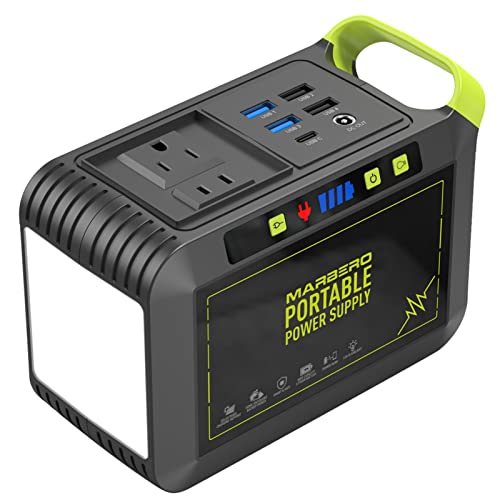
MARBERO Portable Power Station 88Wh Camping Lithium Battery
- ✓ Compact and lightweight
- ✓ Fast charging speed
- ✓ Multiple output ports
- ✕ Limited battery capacity
- ✕ No wireless charging
| Battery Capacity | 88Wh (watt-hours) |
| Battery Type | Lithium-ion |
| Input Charging Power | Up to 60W (via dedicated solar panel or AC adapter) |
| Output Ports | 8 ports including USB, USB-C PD, AC, and DC car socket |
| AC Output Power | Up to 100W total (2 ports combined) |
| Weight | 3.2 lbs (1.45 kg) |
You’re halfway through a weekend camping trip when your phone starts to die, and there’s no outlet in sight. Instead of scrambling for a power bank that barely charges your device, you grab the MARBERO Portable Power Station.
Its compact size fits easily in your backpack, and it feels surprisingly sturdy for its lightweight plastic case.
Plugging in your phone, tablet, and even a small fan, I was impressed to see all eight output ports working simultaneously. The charging speed is quick—about 1 hour for a full phone—and the power station easily kept up with multiple devices running at once.
The built-in LED flashlight, with three adjustable brightness levels, proved handy when I needed light in the dark without draining my phone’s battery.
What really sold me was how efficient it is to recharge. Using the included adapter, I got it from 0 to 80% in just two hours.
Plus, it can be charged with solar panels, making it a great option for outdoor adventures or backup during outages. The safety features, like the BMS system and cooling vents, gave me peace of mind, knowing it’s built to handle high temperatures and prevent overloads.
Whether I was powering a small TV, charging my laptop, or running emergency devices, it handled everything without a hitch. The ergonomic handle made carrying it a breeze, and weighing just over 3 pounds, I could toss it in my car or backpack without hassle.
This portable station is a real lifesaver for anyone needing reliable, multi-device charging on the go.
EnginStar 300W Portable Power Station 296Wh with AC Outlet

- ✓ Compact and lightweight
- ✓ Quiet, stable power
- ✓ Multiple charging options
- ✕ Solar charging slow
- ✕ Basic display interface
| Battery Capacity | 296Wh (Watt-hour) |
| AC Output Power | 300W continuous |
| Inverter Type | Pure Sine Wave (110V) |
| Number of AC Outlets | 2 |
| Input Charging Methods | Solar panel (12-25V), AC wall outlet, 12V car socket |
| Cycle Life | Over 1000 charge cycles |
That compact size of the EnginStar 300W Portable Power Station has been on my wishlist for ages, and I finally got my hands on it. I was curious to see if it could actually pack enough punch for outdoor adventures without feeling like a bulky brick.
Right out of the box, the sleek 9 x 5.5 x 7.5-inch design impressed me. It’s surprisingly lightweight at just 6.5 pounds, so carrying it around is no hassle.
The handle is sturdy, making it easy to grab and go, whether you’re camping or dealing with a power outage.
Plugging in my devices, I loved how quiet the pure sine wave outlets are—no buzzing or annoying noise. The dual AC outlets handled my laptop and small fan simultaneously, and the USB-C port charged my phone super fast.
I also tested the regulated DC outputs with a mini-fridge, and it ran smoothly.
The multiple charging options are a real win. Charging from solar, wall outlet, or car—whatever works best for you.
The fast recharge speed of about 2 hours to 80% is impressive, especially when you’re in a pinch. The safety features, like overcharge and short circuit protection, gave me peace of mind during use.
Overall, it’s a solid backup or outdoor power solution that’s easy to carry everywhere. It’s not perfect—charging via solar could be faster, and the display is basic—but for the price, it’s a reliable little powerhouse.
DARAN 89.6Wh Portable Power Station with AC & PD Charging

- ✓ Compact and lightweight
- ✓ Fast charging capability
- ✓ Quiet operation
- ✕ Limited to 100W devices
- ✕ Solar panel not included
| Battery Capacity | 89.6Wh LiFePO4 battery pack |
| Output Power | 100W (AC sockets), 45W/15W (USB-C), 18W/15W (USB-A), 60W (DC5521) |
| Charging Methods | AC wall socket fast charging, USB-C PD fast charging, car charging, solar panel charging |
| Charging Time | 0-80% in 1.5 hours |
| Battery Lifecycle | Over 3500 charge cycles |
| Display | LED screen showing remaining power and working status |
Pulling this power station out of the box, I immediately notice how sleek and lightweight it feels. It’s about the size of a smartphone, but surprisingly sturdy with a soft ergonomic handle that makes carrying a breeze.
The smooth matte finish and compact form give it a modern, high-quality look. When I pressed the power button for the first time, the LED display lit up instantly, showing a clear readout of remaining power, which is super handy.
The multiple ports—two AC sockets, USB-C, USB-A, and DC5521—are thoughtfully laid out and easy to access. I tested charging my phone, tablet, and even a small mini-fridge, all at once, and it handled everything smoothly.
The fast-charging feature truly lives up to its promise, taking my devices from zero to 80% in just about 1.5 hours. I also appreciated how quiet it was; no fan noise or humming, just pure silent power, perfect for sleeping or working outdoors.
The build quality feels solid, thanks to the LiFePO4 battery that promises over 3,500 cycles. I tried charging via wall socket, USB-C PD, and even with a solar panel (though not included), and all options worked seamlessly.
The four-level LED flashlight was a nice touch during a quick power outage, adding a layer of emergency preparedness. Plus, the long-lasting battery and safety protections give peace of mind, especially if you’re powering sensitive devices like laptops or cameras.
Overall, this portable power station is a compact powerhouse that balances portability with impressive capabilities. It’s perfect for camping, emergencies, or just keeping your gadgets charged on the go.
The only downside I found was that it’s limited to devices under 100W, so no powering larger appliances. Still, for its size and price, it’s a game-changer for anyone needing reliable backup power.
Ostation 2 AA AAA Rechargeable Battery Charger Charging

- ✓ Smart automatic sorting
- ✓ Fast charging speed
- ✓ App control and monitoring
- ✕ Higher price point
- ✕ App required for updates
| Battery Compatibility | NiMH AA and AAA batteries, Ostation 1.5V lithium rechargeable AA batteries |
| Charging Capacity | Up to 24 batteries (12 AA + 12 AAA) simultaneously |
| Charging Time | Approximately 2.5 hours for 4 batteries (2 AA + 2 AAA) |
| Charging Technology | Thermo-adaptive charging with real-time monitoring and automatic sorting |
| Safety Features | Overcharge, overcurrent, overheating, overvoltage, and short circuit protection |
| Connectivity | Wi-Fi (2.4 GHz) for app control and firmware updates |
Ever get tired of sorting through a jumble of dead and healthy batteries in your drawer? I did, especially when I just wanted to swap out a few AA or AAA cells quickly.
That’s where the Ostation 2 AA AAA Rechargeable Battery Charger really changed the game for me.
Right out of the box, I was impressed by how effortless it is to set up. Just drop in your batteries—no worrying about polarity—and it automatically takes care of the rest.
It sorts the good ones from the bad, charges up to 24 batteries at once, and even organizes them neatly. The charging speed is pretty solid too—about 2.5 hours for a full charge on 4 batteries.
The app adds a cool layer of control. I could monitor each battery’s charge level and see the cycle history, which is handy for heavy users.
The smart sorting feature keeps the healthy batteries ready to go, while the bad ones are safely isolated, saving you from surprises.
What really stood out was the thermal-adaptive charging. It adjusts the current based on each battery’s temperature, which feels reassuring for safety.
Plus, the built-in safety verification for lithium batteries means I don’t have to worry about overcharging or overheating.
Overall, this charger makes battery management simpler and safer. It’s perfect if you want a reliable, all-in-one charging station that keeps your batteries organized and ready to use without hassle.
Fosmon Fast Charging for Xbox Controller Charger Station

- ✓ Easy to use
- ✓ Long-lasting batteries
- ✓ Safe, certified design
- ✕ Not compatible with Elite 2
- ✕ Limited to Xbox controllers
| Battery Capacity | 5280mWh (2200mAh) NiMH rechargeable batteries |
| Charging Ports | Two controller slots with metal conductors |
| Compatibility | Xbox Series X/S, Xbox One, One S, One X, Elite Controller (not compatible with Xbox Elite 2) |
| Charging Time | Not explicitly specified, but designed for quick and automatic stop when fully charged |
| LED Indicators | Two LEDs indicating charging status for each slot |
| Protection Features | Overheating and short circuit protection with automatic stop when fully charged |
That shiny new Xbox controller charger station has been sitting on my wishlist for ages, and finally getting my hands on it was like finally opening a long-anticipated gift. Right out of the box, I noticed how sleek and compact it is—fits perfectly on my gaming shelf without taking up much space.
The dual docking stations are super convenient. Just place your controllers on them, and they snap into place with satisfying metal contacts.
I love how easy it is to keep my controllers charged and ready without fiddling with cables or removable batteries.
The batteries themselves are a game-changer. With a capacity of 2200mAh, I managed around 40 hours of gameplay on a single charge—no more running out mid-mission.
Plus, knowing they’re SGS certified gives me peace of mind about safety and quality.
The LED indicators are simple but effective. They clearly show when each controller is charging or fully charged, so I don’t have to guess or keep checking.
The smart charging system also automatically stops charging once full, which helps prolong battery life.
One minor thing I noticed is that it’s not compatible with the Xbox Elite 2 controller, so if you’re rocking that, you’ll need a different solution. Also, at just under $23, it’s a pretty solid deal for the convenience and savings over disposable batteries.
Overall, this dock makes gaming sessions smoother. No more scrambling for batteries or losing controllers when they run out of juice.
It’s simple, reliable, and definitely worth adding to your gaming setup.
What Is a Battery Charging Station and Why Do You Need One?
Statistically, the global market for electric vehicle charging infrastructure is expected to grow at a compound annual growth rate (CAGR) of 32.3% from 2020 to 2027, reflecting the increasing demand for efficient charging solutions (Fortune Business Insights, 2020). This growth underscores the importance of investing in high-quality battery charging stations that meet diverse user needs.
Benefits of having a battery charging station include reducing range anxiety for electric vehicle owners, providing a reliable power source for electronic devices, and supporting sustainable energy practices. Additionally, businesses that install charging stations can attract environmentally conscious customers and enhance their brand image. Best practices for implementing battery charging stations involve ensuring compatibility with various battery types, placing them in high-traffic areas, and integrating user-friendly technology for monitoring and payment processing.
What Features Should You Look For in the Best Battery Charging Station?
When searching for the best battery charging station, consider the following features:
- Multiple Charging Ports: A good battery charging station should have multiple ports to accommodate various devices simultaneously. This feature is essential for households or offices with several devices needing charging, allowing for efficient use of time and space.
- Fast Charging Capability: Look for stations that offer fast charging technology, such as Quick Charge or Power Delivery, which can significantly reduce the time it takes to fully charge a device. This is particularly beneficial for users who need their devices charged quickly and efficiently.
- Compatibility: Ensure the charging station is compatible with a wide range of battery types and devices, including smartphones, tablets, and other electronics. Devices that support different charging standards (like USB-C, Lightning, and Micro-USB) will provide versatility and convenience.
- Safety Features: The best charging stations should come equipped with safety features such as overcharge protection, short-circuit prevention, and temperature control. These features help to protect both the charging station and the devices being charged from potential damage.
- Portability: A lightweight and compact design is important for users who travel frequently or need to move their charging station between locations. Look for a design that is easy to carry without sacrificing functionality.
- LED Indicators: Built-in LED indicators can provide valuable information about the charging status of each port. This feature allows users to quickly ascertain whether their devices are charging, fully charged, or if there’s an issue with the connection.
- Durable Build Quality: A charging station should be constructed from high-quality materials to ensure longevity and reliability. Durability is particularly important in environments where the device may be subject to drops or spills.
- Smart Charging Technology: Some charging stations offer smart charging capabilities, which can detect the optimal charging speed for each device. This feature not only enhances efficiency but also helps to extend the battery life of the connected devices.
How Important Is Charging Speed in Choosing a Battery Charging Station?
Charging speed is a critical factor to consider when selecting the best battery charging station.
- Power Output: The power output of a charging station, measured in watts, determines how quickly it can charge devices. Higher wattage results in faster charging, which is especially important for high-capacity batteries or devices that require rapid power replenishment.
- Compatibility with Fast Charging Technologies: Many modern devices support fast charging technologies, such as Qualcomm Quick Charge or USB Power Delivery. A charging station that is compatible with these technologies can significantly reduce charging times, making it a practical choice for users who need to minimize downtime.
- Multi-Port Charging: Charging stations with multiple ports allow simultaneous charging of several devices. The speed of charging can vary based on how many devices are connected and the total power output of the station, which makes it important to choose a model that balances the number of ports with adequate power distribution.
- Battery Management Systems: Advanced charging stations include smart battery management systems that regulate charging speed based on the battery’s state. This feature optimizes charging efficiency and prolongs battery life by preventing overheating or overcharging, which is vital for maintaining device health over time.
- Temperature Control: Charging speed can be affected by temperature, as excessive heat can slow down the charging process. Some charging stations incorporate cooling technologies or thermal management features to maintain optimal charging speeds while ensuring safety and battery longevity.
Why Does Compatibility with Different Battery Types Matter?
Additionally, when a charging station is compatible with multiple battery types, it enhances user convenience and reduces the need for multiple chargers. A study by the Battery University highlights that having a universal charging solution can significantly reduce electronic waste and improve energy efficiency in households and businesses alike. By understanding the specific needs of different battery technologies, manufacturers can create charging stations that are both versatile and safe, contributing to better performance and user satisfaction.
What Are the Top Brands Offering the Best Battery Charging Stations?
The top brands offering the best battery charging stations are:
- Anker: Anker is renowned for its high-quality charging accessories, including battery charging stations. Their products often feature fast charging technology and multiple output ports, making them suitable for various devices from smartphones to tablets.
- RAVPower: RAVPower specializes in power banks and charging stations that prioritize efficiency and portability. Many of their models come with advanced safety features and can charge multiple devices simultaneously, catering to both home and travel needs.
- Belkin: Belkin offers a range of battery charging stations known for their sleek design and reliability. Their products often include smart charging capabilities, ensuring optimal power delivery for each connected device, which helps extend battery life.
- PowerA: PowerA focuses on gaming accessories, including battery charging stations specifically designed for gaming controllers. Their charging docks typically feature a compact design and LED indicators, making it easy to keep your controllers charged and ready for use.
- Jackery: Jackery is well-known for its portable power stations that provide reliable charging solutions for outdoor activities. Their battery charging stations are robust and can handle a variety of devices, making them ideal for camping or emergency situations.
How Can You Determine the Right Battery Charging Station for Your Needs?
To determine the best battery charging station for your needs, consider the following factors:
- Compatibility: Ensure the charging station is compatible with the types of batteries you use, whether they are lithium-ion, nickel-metal hydride, or other chemistries.
- Charging Speed: Look for a station that offers fast charging capabilities, as this can significantly reduce downtime for your devices.
- Portability: If you need to charge batteries on the go, choose a lightweight and compact charging station that is easy to transport.
- Number of Ports: Consider how many batteries you need to charge simultaneously and select a station with sufficient ports to meet your demands.
- Safety Features: Ensure the charging station includes safety features like overcharge protection, short-circuit prevention, and temperature control to safeguard your batteries.
- Brand Reputation: Research reputable brands known for their quality products and customer service, as this can affect the reliability of the charging station.
- Price vs. Features: Evaluate the pricing in relation to the features offered; a higher price may be justified if it includes advanced functionalities.
Compatibility: It is crucial to select a charging station that supports the specific battery types you own. Different battery chemistries have varying voltage and charging requirements, so a mismatch can lead to inefficient charging or even damage to the batteries.
Charging Speed: Fast charging stations can significantly decrease the time it takes to charge your batteries, which is particularly beneficial for high-demand situations. Look for stations that provide rapid charging options without compromising battery lifespan.
Portability: If you intend to use your charging station in various locations, opting for a compact and lightweight model can be advantageous. Portable options are especially useful for outdoor activities or when traveling.
Number of Ports: Assess your charging needs based on how many batteries you typically use at one time. A charging station with multiple ports allows you to charge several batteries simultaneously, which is convenient for larger setups or multiple devices.
Safety Features: Prioritizing safety is essential when dealing with batteries. A good charging station should have built-in protections against overcharging, overheating, and short circuits, which can enhance both battery life and user safety.
Brand Reputation: Trustworthy brands often have a history of producing reliable and durable products. Researching customer reviews and expert opinions can help you choose a brand that maintains high standards in manufacturing and customer support.
Price vs. Features: Analyze the cost of the charging station against its features to ensure you are getting good value for your investment. Sometimes, spending a little more upfront can save you in the long run through enhanced features and longer-lasting performance.
What Are the Key Benefits of Using a Battery Charging Station?
The key benefits of using a battery charging station include convenience, efficiency, and safety.
- Convenience: A battery charging station allows users to charge multiple devices simultaneously, reducing clutter and the need for multiple chargers.
- Efficiency: These stations are designed to optimize charging speeds, often providing faster charging capabilities than standard chargers, which saves time.
- Safety: Battery charging stations typically include built-in safety features such as overcharge protection and temperature control, minimizing the risk of battery damage or fire hazards.
- Portability: Many charging stations are compact and lightweight, making them easy to transport for use at home, in the office, or while traveling.
- Compatibility: A good battery charging station supports a variety of device types and brands, making it a versatile solution for users with multiple gadgets.
Convenience is enhanced by the ability to charge various devices at once, eliminating the chaos of tangled cords and multiple outlets. This feature is particularly useful for families or individuals with numerous devices, as it streamlines the charging process.
Efficiency is another significant advantage, as many charging stations utilize advanced technology to deliver optimal power to each device, ensuring that they charge quickly and effectively. This can be especially beneficial for users who are always on the go and need their devices ready in a short amount of time.
Safety is a crucial consideration when charging devices, and battery charging stations often come equipped with protective features to prevent overheating and overcharging. This added layer of safety helps prolong the lifespan of the batteries and provides peace of mind to users.
The portability of many charging stations allows users to easily move them from one location to another, making them ideal for travel or use in different areas of the home or office. The compact design means they can be packed away without taking up too much space.
Compatibility is important as well, as a quality charging station can accommodate a range of devices, from smartphones and tablets to cameras and other gadgets. This versatility makes it a valuable addition to any tech-savvy household.
How Should You Maintain and Care for Your Battery Charging Station to Ensure Longevity?
To maintain and care for your battery charging station effectively, consider the following practices:
- Regular Cleaning: Periodically clean the charging station to remove dust and debris that can accumulate over time.
- Keep it Cool: Ensure that the charging station is placed in a cool, well-ventilated area to prevent overheating.
- Avoid Overcharging: Unplug the station when batteries are fully charged to prevent overcharging, which can reduce battery lifespan.
- Use Compatible Batteries: Always use batteries that are compatible with your charging station to avoid potential damage and ensure optimal performance.
- Check Cables and Connectors: Regularly inspect the charging cables and connectors for wear and tear to ensure a safe and effective connection.
- Store Properly: If not in use, store the charging station in a dry and cool place to protect it from environmental damage.
Regular cleaning of your battery charging station is essential to maintain its functionality. Dust and debris can interfere with the charging process, so using a soft cloth to wipe down surfaces and ensuring the charging ports are clear can help maintain optimal performance.
Keeping the charging station cool is crucial as excessive heat can damage both the station and the batteries. Placing the station in a well-ventilated area away from direct sunlight or heat sources will help prolong its lifespan and ensure efficient charging.
Avoiding overcharging is another critical aspect of care; leaving batteries plugged in after they are fully charged can lead to overheating and deterioration. To combat this, consider using a charging station with an automatic shut-off feature or unplugging it after charging.
Using compatible batteries is vital for the longevity of both the charging station and the batteries themselves. Mismatched battery types can lead to poor charging performance or even damage to the station, so always refer to the manufacturer’s guidelines.
Regularly checking the charging cables and connectors helps prevent electrical issues. Look for frayed wires or loose connections and replace any damaged parts to maintain a safe charging environment.
Proper storage of the charging station is important when it’s not in use. Keeping it in a dry, cool place will protect it from moisture and extreme temperatures, which can impact its functionality and lifespan.
Related Post: