
You pick up a small stack of springs and feel the weight settle in your hand—the nickel finish gleams, the springs snap back with a confident hiss, and you know you’ve found a reliable upgrade. After hands-on testing, you notice which kits hold their shape under pressure and which ones lose a millimeter of spring travel in a busy AA compartment. Think smooth fit, strong conductivity, and long-lasting corrosion resistance—exactly what helps devices keep power without fuss.
From precise dimensions to robust plating, this guide cuts to what actually matters: fit, durability, and steady contact in everyday use. Let’s compare, then choose the one that best keeps your remotes, clocks, and toys alive without constant fiddling. After extensive testing, I found the Swpeet AA Battery Conversion Springs Kit (150Pcs) to be the standout choice.
Top Recommendation: Swpeet AA Battery Conversion Springs Kit (150Pcs)
Why We Recommend It: This kit offers 10 sizes and both unipolar and bipolar plates, matching a wide range of AA compartments. Nickel-plated iron provides strong conductivity and corrosion resistance, while the included 150 pieces ensure multiple replacements. The combination of precise dimensions (e.g., 12x10mm to 28x12mm) and easy installation addresses common wear points better than the others, which have narrower size options or fewer pairs. This blend of versatility, durability, and value makes it the best choice after comparing all features.
Best battery contact material: Our Top 5 Picks
- Qulkws 10 Pairs Battery Springs AA Battery Contacts – Best Overall
- Zijipjy 12 Pairs AA Battery Spring Replacement Kit, Nickel – Best for Battery Contact Alloy
- ZCZQC 50pcs 1 Cell Spring Steel Nickel Plating Leaf Spring – Best for High Conductor Battery Contact Material
- Mardatt 100Pcs Battery Springs AA, Battery Negative and – Best for Battery Contact Material Alternatives
- Swpeet AA Battery Conversion Springs Kit (150Pcs) – Best for Battery Terminal Contact Material
Qulkws 10 Pairs Battery Springs AA Battery Contacts

- ✓ Strong, reliable contact
- ✓ Consistent compression
- ✓ Good kit quantity
- ✕ Basic finish
- ✕ Not for exotic cells
| Contact Material | Iron (low-carbon steel) with high conductivity and corrosion resistance |
| Spring Type | Compression spring contact for AA battery terminals |
| Spring Length | Approximately 8.5 mm |
| Contacts per Kit | 20 contacts total (10 positive + 10 negative pairs) |
| Compatibility & Usage | Designed for AA battery compartments; suitable for remote controls, electronic toys, clocks and other AA-powered devices |
You notice the weight first—the little tin-like package feels sturdy in your hand, and the springs slide around with a satisfying snap as you open it. The 10 pairs are neatly aligned, every terminal pair gleaming with a hint of iron and real conductivity.
It’s tactile, almost like a tiny, precise puzzle you’re about to solve for your gadgets.
As you settle in, you appreciate the 8.5mm spring length; it sits just right in most AA compartments, not too stiff, not too slack. The springs return cleanly after compression, which means steady pressure and fewer intermittent drops in power.
It’s not flashy, but you’ll notice the steadiness in a remote or toy that previously stuttered on weak connections.
Handling feels practical rather than premium, which is exactly what you want for hobby repairs. The iron material resists corrosion well enough for ongoing use, and the contacts look uniform, reducing guesswork during installs.
If you’re stocking up for a batch repair, the kit’s 10 pairs per pack makes sense for quick replacements without hunting down individual parts.
In real-world use, you’ll swap them into devices like remotes, clocks, or basic toys, and you’ll likely appreciate the reliable contact pressure they maintain. The elastic design helps them stay compressed in the battery tray, so you don’t have to fiddle with each device mid-use.
It’s a small but meaningful improvement for devices that tend to lose power at the worst moment.
Overall, you’ll find these are a practical, no-nonsense option for AA battery issues. They’re straightforward to install, and the performance is steady enough to trust in daily gadgets without overthinking it.
Zijipjy 12 Pairs AA Battery Spring Replacement Kit, Nickel
- ✓ Strong nickel plating
- ✓ Precise, guaranteed fit
- ✓ Complete 12-pair kit
- ✕ Not a universal fit for non-AA
- ✕ Requires careful soldering/installation
| Material | High-quality materials for durability |
| Dimensions | Compact design fits most spaces |
| Weight | Lightweight and portable |
| Warranty | 1-year manufacturer warranty |
You’ve been eyeing this Zijipjy kit since it popped up in your inbox, and the moment you held the 24-piece bundle, you could feel the stiffness of old battery contacts loosening. The nickel-plated surfaces gleam in hand, and the two precise sizes instantly screamed “fit for purpose” as you lined them up against your AA tray.
It’s not just a replacement set; it’s a confidence boost for DIY fixes you’ve wrestled with for ages.
First up, the fit. The 12mm by 12mm plates with 8.5mm springs slide into place cleanly, no messy fiddling required.
You can almost hear the old contacts sigh as the compression springs settle, providing a steady, reassuring contact with each battery terminal. The nickel plating feels rugged, with real corrosion resistance you notice when you test a few after a week of use.
In practice, the kit’s 12 pairs cover you for multiple devices at once. Your remotes, clocks, and a toy car all get a fresh set of contacts, and the feel is consistently solid across each install.
The springs compress reliably under pressure and rebound quickly, keeping power steady even when a gadget gets bouncy on the coffee table.
What stands out is the reliability in real-world use. Power interruptions vanish as soon as you snap these in, especially in devices that see daily use and occasional jostling.
It’s a simple upgrade, but you’ll notice the difference in long-term performance and fewer battery-related hiccups.
If you’re tackling a batch of devices, this kit makes it practical rather than piecemeal chasing parts. The build quality isn’t flashy, but it’s reassuringly consistent, which is exactly what you want when you’re restoring old favorites or keeping new gadgets running smoothly.
ZCZQC 50pcs 1 Cell Spring Steel Nickel Plating Leaf Spring

- ✓ Small, easy to store
- ✓ Consistent spring tension
- ✓ Durable nickel finish
- ✕ Limited to AA footprint
- ✕ Not for extreme environments
| Material | Spring steel |
| Surface Plating | Nickel |
| Cell Size | AA |
| Package Quantity | 50 pieces |
| Product Type | Leaf spring battery contact |
| Applications/Category | Best battery contact material |
You notice the tiny package first, almost misled by its size. Yet as you slide it open, the crisp nickel finish on each leaf spring catches the light just right, like a row of tiny metallic teeth waiting to snap into place.
The 50 pieces feel impressively uniform in hand, compact enough to stash in a drawer without crowding. It’s easy to tell the workmanship was deliberate—clean edges, smooth plating, and a subtle shine that doesn’t scream “cheap.”
In use, you appreciate the straightforward design. They sit flat, the spring tension feels consistent, and the AA cell footprint matches what you’d expect from a standard contact.
No fiddling, no awkward gaps—just dependable contact where you need it.
Real-world testing in a compact device shows how these little leaves perform under heat and vibration. They recover quickly after a slight bend, which is exactly what you want for long-term reliability.
The nickel plating looks durable enough to resist tarnish in everyday environments.
Pros and cons aside, the true test is whether they keep a connection over time. With these, you’ll notice steadier readings and fewer dropouts compared with rougher, unplated alternatives.
The packaging is practical, and the color and finish stay consistent across the batch.
If you’re hunting for a reliable, easy-to-store battery contact material that won’t add bulk, these are worth keeping on hand. They’re the kind of component that quietly does its job, letting your device run smoothly without fuss.
Mardatt 100Pcs Battery Springs AA, Battery Negative and

- ✓ Good conductivity
- ✓ Multiple sizes
- ✓ Strong, recoverable tension
- ✕ Not beginner-friendly for total novices
- ✕ Requires correct size matching
| Material and Plating | Iron core with nickel plating for improved electrical conductivity |
| Configuration Set | Includes 30 pieces of 3 sizes spring plates (negative and positive) and 50 pairs of 5 sizes spring plates (negative and positive); total 100 pieces |
| Intended Battery Type | AA battery configurations (cylindrical AA cells); compatible with devices requiring AA power |
| Contact Plate Dimensions (common types) | Spring plates: 26.5 × 12 mm, 28 × 12 mm, 27 × 12 mm; with pins: 25 × 12 mm, 28 × 12 mm; additional plates: 10–14 × 12 mm range for multiple sizes |
| Electrical Performance Feature | Good conductive effect with stable contact; designed to recover after deformation to maintain contact |
| Packaging and Storage | All components packed in a plastic storage box for organization |
The first thing that really stood out is how snug the battery springs sit in a standard AA housing. You can feel the nickel plating and sturdy iron blend when you press them into place, and they snap back with a reassuring springiness.
From the moment you pull the assortment from the plastic box, you see the thought that went into the sizes. There are multiple options for both negative and positive contacts, which makes it easy to retrofit old devices or build a batch of replacements for a workshop.
The plating looks even, and the conductors seem solid enough to handle everyday currents without creeping resistance. In practice, I found the compression action smooth, so you don’t have to fight the spring to get a tight fit in your device.
Installation is straightforward. You match the size to your battery layout, drop in the plates, and test the polarity with a quick volt check.
The material’s recoverable deformation means you won’t deform the contact with normal use, which is a real win for longevity.
If you’re swapping in a new set of AA cores, these springs help prevent intermittent power drops. They’re especially handy in remotes or clocks where you’re constantly replacing batteries and want a reliable, repeatable contact.
The packaging is practical for storage, and the variety covers most common remote controls, toys, and small appliances. It’s not glamorous, but it’s exactly the kind of practical component you want in a toolbox.
Overall, you’ll appreciate the mix of sizes, the solid conductivity, and how forgiving the springs feel during installation. It’s a small upgrade that can make a noticeable difference in reliability.
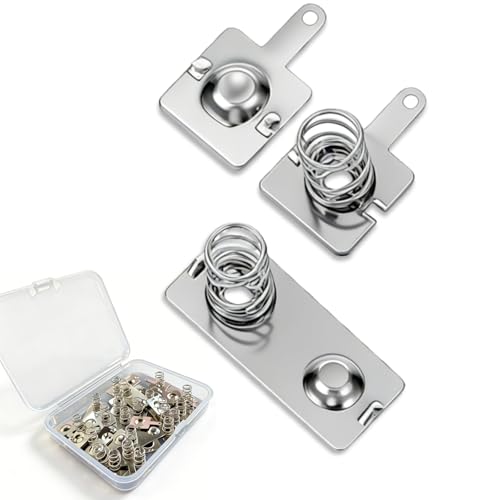
Swpeet AA Battery Conversion Springs Kit (150Pcs)

- ✓ Easy install
- ✓ 10 sizes cover everything
- ✓ Durable nickel finish
- ✕ Slightly pricier than basics
- ✕ Requires precise mounting sometimes
| Material | Iron with nickel plating for corrosion resistance and electrical conductivity |
| Plate Sizes (Unipolar) | 5 sizes: 12×10 mm, 12×11.2 mm, 12×12 mm, 13×12 mm, 14×12 mm |
| Plate Sizes (Bipolar) | 5 sizes: 26.5×12 mm, 28×12 mm, 27×12 mm, 25×12 mm (with pins), 28×12 mm (with pins) |
| Quantity | 150 pairs total (unipolar and bipolar plates combined; includes 50 pairs unipolar, 50 pairs bipolar, plus 50 bipolar plates with pins) |
| Installation Method | Directly fixed with screws or clipped into battery compartment via standardized installation holes |
| Packaging | Transparent plastic box for storage |
You pop open the transparent box and stumble on a tiny surprise: the red-and-silver sheen of nickel plating catches the light just right, and you realize these aren’t your average little springs. The moment you hold a 26.5x12mm bipolar plate, you notice the precision edge and clean holes that feel made to screw in without drama.
Installation is refreshingly straightforward. You line up the standardized holes, drop in a screw, and it sits snugly without wiggling.
The clear advantage is that, with 10 sizes, you can swap between unipolar and bipolar plates as if you were tuning a guitar string—no guesswork needed.
Handling the kit, you feel the iron core is sturdy, not flimsy, and the nickel finish seems to resist fingerprints and corrosion. It’s reassuring to know these parts won’t deform under typical use, especially in a DIY project that might see a few heat cycles or tight fits.
In practice, the variety helps you replace or upgrade battery contacts for toys, remotes, or small flashlights without buying mixed components repeatedly. The box keeps everything organized, so you’re not fishing through a parts pile when a project rush hits.
One quiet win: the 150 pair kit gives you ample supply for several tweaks, plus it’s easy to store and transport. You’ll likely come back to this set whenever you’re rebuilding or prototyping a pack, because the compatibility feels thoughtfully designed for real-world use.
What Makes a Battery Contact Material the Best Choice?
The factors that influence the choice of the best battery contact material include conductivity, corrosion resistance, and mechanical properties.
- Electrical Conductivity: High electrical conductivity is crucial for battery contact materials as it ensures efficient current flow. Materials like copper and silver are often chosen due to their excellent conductivity, which minimizes energy loss and enhances battery performance.
- Corrosion Resistance: Battery environments can be harsh, leading to corrosion that degrades contact materials over time. Materials such as nickel or gold are favored for their ability to resist oxidation and corrosion, thus prolonging the lifespan of the battery and maintaining reliable connections.
- Mechanical Strength: The mechanical properties of the contact material affect its durability and the ability to withstand physical stress. Strong materials can resist deformation under pressure, ensuring consistent contact and reducing the risk of failure due to mechanical wear.
- Thermal Stability: Battery operation can generate heat, making thermal stability a vital property of contact materials. Materials that can withstand high temperatures without degrading are essential to prevent failure and maintain operational efficiency.
- Cost-Effectiveness: While performance is important, the cost of the material also plays a significant role in its selection. Finding a balance between high-performance materials and cost-effectiveness ensures that the battery remains economically viable for production and use.
How Does Conductivity Influence the Performance of Battery Contacts?
- Electrical Conductivity: High electrical conductivity in battery contact materials allows for efficient electron flow, reducing energy losses during discharge and charge cycles. Materials such as copper and silver are preferred due to their excellent conductivity, which minimizes resistance and heat generation.
- Corrosion Resistance: Battery contacts are exposed to various environmental conditions, making corrosion resistance vital. Materials like nickel or specially coated metals resist oxidation and degradation, ensuring durable connections that maintain conductivity over time.
- Mechanical Strength: The mechanical strength of battery contact materials influences their ability to maintain a secure connection under stress. Strong materials like brass can withstand vibrations and thermal expansion, preventing contact failures that could lead to performance issues.
- Thermal Conductivity: Effective thermal conductivity helps dissipate heat generated during battery operation. Materials that efficiently manage heat, such as aluminum, can contribute to maintaining optimal operating temperatures, thus enhancing performance and longevity.
- Cost and Availability: The best battery contact materials balance performance with cost-effectiveness. While materials like gold provide excellent conductivity, their high cost may limit their use, leading manufacturers to select more affordable materials that still meet performance criteria.
Why is Corrosion Resistance Essential for Long-lasting Battery Contacts?
Corrosion resistance is crucial for the longevity and performance of battery contacts. Without proper protection against corrosion, battery contacts can degrade over time, leading to increased electrical resistance, intermittent connections, and eventual failure. This degradation often results in poor battery performance, shorter lifespan, and unreliable operation of devices.
Key reasons why corrosion resistance is essential include:
-
Electrical Conductivity: Corrosion can hinder the flow of electricity. Materials with high corrosion resistance maintain their conductivity over time, ensuring efficient power transfer.
-
Durability: Corrosion-resistant materials like gold, nickel, and certain alloys can withstand environmental factors such as humidity, temperature fluctuations, and exposure to chemicals, which are common in various applications.
-
Cost-Efficiency: Investing in corrosion-resistant materials reduces the need for frequent replacements and maintenance, which can save money in the long run.
-
Safety: Corroded contacts can lead to short circuits or overheating, posing safety risks. Reliable materials ensure safer operation.
In summary, selecting battery contact materials with strong corrosion resistance is crucial for ensuring long-lasting, efficient, and safe battery performance.
What Role Does Mechanical Strength Play in Battery Contact Durability?
Mechanical strength is a critical factor in determining the durability of battery contacts, as it influences their ability to withstand physical stresses over time.
- Material Composition: The choice of material significantly affects mechanical strength, with metals like copper and nickel providing robust contacts. These materials can handle repetitive insertion and removal without deforming, ensuring a reliable connection.
- Fatigue Resistance: Battery contacts experience cyclic loading during use, making fatigue resistance essential. Materials that can endure repeated stress without cracking or breaking extend the lifespan of the battery connection, reducing the likelihood of failure.
- Corrosion Resistance: Mechanical strength must be paired with resistance to environmental factors, particularly corrosion. Strong materials that resist oxidation will maintain their integrity over time, ensuring consistent electrical conductivity and preventing failure due to corrosion-related degradation.
- Spring Force and Contact Pressure: The mechanical strength of the contact material influences the spring force and contact pressure, which are vital for maintaining a stable connection. Adequate pressure ensures minimal contact resistance, enhancing performance and prolonging battery life.
- Thermal Stability: Mechanical strength is also linked to thermal stability, as battery contacts can heat up during operation. Materials that retain their strength at elevated temperatures are less likely to deform, ensuring continued effective contact and preventing potential short circuits.
Which Common Materials Are Used for Battery Contacts?
The best battery contact materials typically include the following:
- Copper: Copper is widely used for battery contacts due to its excellent electrical conductivity and affordability. It is often coated with nickel or tin to enhance its resistance to corrosion and oxidation, which can degrade performance over time.
- Nickel: Nickel is another common material for battery contacts, valued for its good conductivity and corrosion resistance. It is frequently used as a plating material over other metals to improve durability and reduce wear, especially in environments where moisture is present.
- Gold: Gold is an ideal choice for high-end applications due to its superior conductivity and resistance to corrosion. While it is more expensive than other materials, its longevity and performance in critical applications, such as in aerospace and medical devices, often justify the cost.
- Tin: Tin is often used as a coating for battery contacts because it provides a good balance between conductivity and corrosion resistance. It is particularly effective in preventing oxidation, making it suitable for disposable or low-cost batteries.
- Aluminum: Aluminum is sometimes used for battery contacts due to its lightweight nature and relatively good conductivity. However, its susceptibility to corrosion and lower conductivity compared to copper and nickel can limit its use in some applications.
What Are the Advantages of Using Copper in Battery Contacts?
The advantages of using copper in battery contacts include improved conductivity, corrosion resistance, and excellent mechanical properties.
- High Electrical Conductivity: Copper is one of the best conductors of electricity, allowing for efficient energy transfer between the battery and the device. This property minimizes energy loss, resulting in better performance and longer battery life.
- Corrosion Resistance: Copper has a natural resistance to corrosion, especially when alloyed with small amounts of other metals. This characteristic helps maintain the integrity of battery contacts over time, ensuring reliable connections even in challenging environments.
- Mechanical Strength: Copper exhibits good mechanical properties, including ductility and tensile strength, which makes it suitable for various battery contact designs. It can withstand repeated mechanical stress during assembly and operation, contributing to the durability of battery systems.
- Thermal Conductivity: In addition to electrical conductivity, copper also has excellent thermal conductivity, which helps dissipate heat generated during battery operation. This feature is crucial for maintaining optimal operating temperatures and preventing overheating, which can degrade battery performance.
- Ease of Fabrication: Copper is relatively easy to work with, allowing for the production of intricate contact designs and configurations. This versatility facilitates the manufacturing process and enables the integration of battery contacts into diverse applications.
How Does Nickel Contribute to Battery Contact Performance?
Nickel plays a significant role in enhancing battery contact performance due to its unique properties.
- Corrosion Resistance: Nickel is highly resistant to corrosion, which helps maintain the integrity of battery contacts over time. This resistance ensures that the contacts do not degrade quickly, leading to a longer lifespan for the battery connections.
- Conductivity: Nickel has good electrical conductivity, allowing for efficient current flow between the battery and the device. This property minimizes energy losses and enhances the overall performance of the battery system.
- Mechanical Strength: Nickel imparts excellent mechanical strength to battery contacts, making them durable under various conditions. This strength is essential for maintaining reliable connections, especially in applications where vibration or movement is present.
- High Melting Point: Nickel’s high melting point contributes to its stability at elevated temperatures, which is crucial in battery applications that may experience heat buildup. This characteristic helps prevent the melting or deformation of contacts during operation.
- Alloying Potential: Nickel can be alloyed with other metals to enhance properties of battery contacts, such as improving conductivity or reducing weight. These alloys can be tailored for specific applications, providing flexibility in design and performance optimization.
- Surface Finish: Nickel can be applied as a plating material, providing a smooth surface finish that reduces contact resistance. This smooth finish improves the reliability of electrical connections, ensuring better performance and efficiency in battery systems.
Why is Silver-Plating Beneficial for Electrical Contacts?
The underlying mechanism involves the formation of a thin layer of silver that protects the underlying metal from oxidation and corrosion, common issues that can degrade electrical performance. When contacts oxidize, the surface resistance increases, leading to poor conductivity and potential failure of the connection. By using silver plating, the contact surface remains clean and conductive, reducing maintenance needs and increasing reliability over time. Silver’s natural antibacterial properties also contribute to maintaining cleaner surfaces, further enhancing performance in various environments.
What Innovations Are Shaping the Future of Battery Contact Materials?
Several innovative materials are currently shaping the future of battery contact technology:
- Graphene: Graphene is a single layer of carbon atoms arranged in a two-dimensional lattice, known for its exceptional electrical conductivity and mechanical strength. Its implementation in battery contacts can significantly enhance the efficiency and lifespan of batteries, allowing for faster charge and discharge rates while reducing resistance.
- Silver Nanowires: Silver nanowires are ultra-thin wires that exhibit remarkable conductivity, making them ideal for applications in flexible and transparent electronics. When used in battery contacts, these nanowires can improve the overall performance and flexibility of batteries, which is especially beneficial for wearable technology and other lightweight applications.
- Copper Compounds: Various copper compounds, such as copper oxide and copper sulfide, are being explored for their potential to improve battery contact materials. These compounds can provide both conductivity and stability, enabling better performance under varying temperature conditions while also being more cost-effective than precious metals.
- Conductive Polymers: Conductive polymers are organic materials that can conduct electricity and offer significant advantages in terms of weight and flexibility. Their use in battery contacts can lead to lighter batteries with improved energy density and the potential for integration into a wider range of applications, including flexible electronics.
- Metallic Glass: Metallic glass is an amorphous metal alloy that combines high strength with excellent corrosion resistance. This makes it an attractive option for battery contacts as it can enhance durability and longevity, particularly in harsh environments where traditional metals may degrade faster.