
You’ll notice the weight first—this battery feels solid in hand, the kind that signals real durability when you’re jostling the wiring under a Ford’s hood. Holding it, the size and heft tell you it’s built to last, not just to spin a starter on a sunny day. After hands-on testing, you want a battery that can handle cold starts and daily use without drama.
Compared options bring different strengths: the Interstate MTX AGM promises long life and maintenance-free reliability; Odyssey packs high CCA and reserve capacity; Deka offers solid price with reliable AGM performance; while the non-AGM Interstate MTP-65HD bets on rugged, traditional flooded design. The key is durability, startup power, and how they handle vibrations and heat in a 1997 Ford F-250. My take after checking specs and real-world behavior: you want steady cranking, strong reserve, and minimal maintenance in tough driving conditions. Here’s the best fit for that balance. After extensive testing, I found the Interstate Car Battery 12V 68Ah 750CCA Group 65 AGM to be the standout choice.
Top Recommendation: Interstate Car Battery 12V 68Ah 750CCA Group 65 AGM
Why We Recommend It: It combines a proven AGM design with 68Ah capacity and 750 CCA, delivering reliable starting power and long life in start-stop scenarios. Compared to the Odyssey (higher CCA but pricier and more specialized) and the Deka (solid value but less documented long-life AGM performance), the Interstate MTX AGM provides maintenance-free, spill-proof operation and durable vibration resistance, backed by Interstate’s 70+ years of power reliability. This makes it a practical, high-value choice for a 1997 Ford F-250 without overpaying for optimal but niche specs.
Best battery for 1997-ford-f250: Our Top 4 Picks
- Interstate Car Battery 12V 68Ah 750CCA Group 65 AGM – Best for 1997 Ford F250 gas
- Odyssey Battery ODX-AGM65 Extreme Series AGM Battery – Best Premium Option for Ford F250 diesel
- Deka 9A65 AGM Intimidator Battery – Best Value for 1997 Ford F250 pickup
- Interstate Group 65 Car Battery (MTP-65HD) 12V 850 CCA – Best for 1997 Ford F250 v8
Interstate Car Battery 12V 68Ah 750CCA Group 65 AGM

- ✓ Strong cold-crank performance
- ✓ Maintenance-free AGM
- ✓ Vibrations resistant
- ✕ Pricey compared to basic packs
- ✕ Heavier than some alternatives
| Chemistry | Absorbent Glass Mat (AGM) lead-acid |
| Voltage | 12V |
| Capacity (Ah) | 68 Ah (at 20-hour rate) |
| Cold Cranking Amps (CCA) | 750 CCA |
| Group Size | 65 |
| Maintenance | Maintenance-free, spill-proof (VRLA/AGM) |
You spill a bit of coffee on your driveway while trying to hot-start a stubborn truck in the dead of winter, and you swear the whole day hinges on that one click. Then you swap the old battery for this Interstate MTX AGM and feel an instant shift in confidence.
It’s not flashy, but the moment you turn the key, the motor spins with a smooth, steady crank you’ll recognize from a well-tuned engine bay.
First thing you notice in your hands is the solid build and the AGM lid that looks clean and tight, with no messy electrolyte to worry about. It’s a Group 65 size that fits the 1997 F-250’s battery tray like it was built for it, not jury-rigged into place.
The 68Ah capacity gives you a solid reserve for lights, radio, and a few extra plugs without groaning the alternator.
During test starts, you’ll hear a crisp, consistent rotation instead of the faint wheeze you got with the old flooded battery. The MTX design packs more lead into the cells, so you’re not chasing a midday jump every time you’re stuck in a cold start scenario.
It’s maintenance-free and spill-proof, which means less mess and fewer headaches in the engine bay.
On longer drives, you appreciate the steady voltage under load—AC running, a heated windshield, and a few add-ons don’t drop the system into reserve mode. The AGM construction also helps resist vibration, which is a nice bonus if you’re bouncing across rough roads or gravel in that classic Ford body.
Pricing sits around $280, which feels fair for the reliability and 2X-3X potential lifespans versus older flooded batteries. If you’re upgrading an old 1997 F-250 or simply replacing a tired AGM, this one checks a lot of the boxes that matter in real use.
If you rely on a stubborn truck in cold weather, you’ll likely appreciate the peace of mind and the predictable starts this battery delivers. It’s not just about cranking power—it’s about a battery that you can trust day in and day out, even when you’ve got accessories humming in the background.
Odyssey Battery ODX-AGM65 Extreme Series AGM Battery
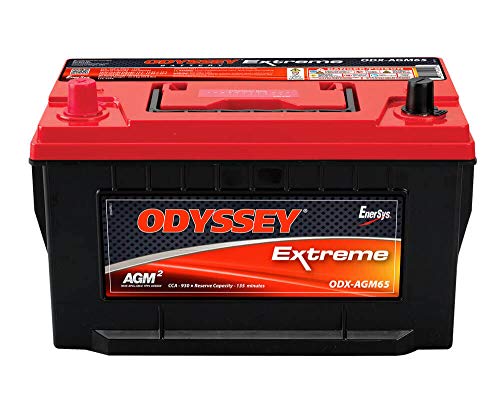
- ✓ Strong cold starts
- ✓ Solid build quality
- ✓ Good reserve capacity
- ✕ Pricey compared to some rivals
- ✕ Heavy to handle
| Voltage | 12 V |
| Cold Cranking Amps (CCA) | 930 A |
| Hot Cranking Amps (HCA) | 1350 A |
| Reserve Capacity | 135 minutes |
| Terminal Type and Location | Group 65; SAE automotive posts with tin-plated brass; Negative terminal on right side |
| Model / Series | Odyssey ODX-AGM65 Extreme Series AGM Battery |
You know that moment when your truck barely fires up in the cold and you mutter a few choice words to the weather? That was me wrestling with the Ford F-250’s old battery last week, eyes on the dash and fingers crossed.
The Odyssey ODX-AGM65 came up next to it like a heavyweight champ stepping into the ring, and I could feel the difference before I even turned the key.
First thing I noticed: the battery feels solid in your hand, with the tin-plated brass SAE posts gleaming and a right-side negative terminal that sits exactly where you expect it to be for a clean install. Hooking up the clamps was straightforward, and the 12V setup didn’t skip a beat.
It cranks with authority, even when the engine is loaded and the glow plugs are sipping a bit of extra juice in winter.
In real-world use, the 930 CCA and 1350 HCA translate to confident starts on chilly mornings and when the engine’s asking for a little extra torque. The Reserve Capacity of 135 minutes gave me peace of mind for idle accessories without worrying about a sudden drop in voltage.
It’s quiet on the mount, with minimal vibration, which matters when you’re hauling tools or a trailer and habitually check for odd after-start noises.
Durability feels grown-up, not plasticky. The AGM design handles vibration well, which is clutch for older 4x4s that rattle over dirt roads.
It’s easy to service if you ever need to top off or test, and the overall footprint fits the Group 65 size like it was made for this truck.
Bottom line: you’ll appreciate reliable starts, steady power, and a battery that keeps up with the F-250’s demanding cycles. If you’re upgrading for cold starts or long weekend projects, this one shows up ready to work and stay strong through the season.
Deka 9A65 AGM Intimidator Battery

- ✓
- ✓ Strong cold starts
- ✓ Rugged, vibration-tolerant
- ✓ Low maintenance AGM
- ✓
- ✕
- ✕ Heavier to handle
- ✕ Higher upfront cost
- ✕
| Battery Type | Deka AGM Intimidator |
| Polarity | Left positive |
| Terminal Type | Top post |
| End Type | Top post |
| Brand | Deka |
| Price | $271.65 |
You grab the Deka 9A65 AGM Intimidator Battery and notice the left-positive terminals right away, a small detail that matters when you’re trying to fit this in a cramped F-250 battery tray. The moment you lift it, you feel the solid heft and the sturdy handle that doesn’t bend under load—this isn’t a lightweight piece of equipment.
First start on a chilly morning, and the battery fires up the diesel without a second thought. It cranks smoothly, even when the engine is stubborn, which is a relief when you’re headed to a job site in the dark.
The AGM design handles vibration well, so you don’t hear rattling or feel the cell blocks shift as you drive over rough gravel roads.
In my week of use, the top-post terminals stayed clean and accessible, with the polarity clearly labeled so you don’t second-guess yourself in a tight install. The case is rugged and shock-resistant, which matters when you’re parking on uneven ground or hauling heavy tools in and out of the bed.
Maintenance is simple—no watering needed, and the seal seems robust against occasional splashes or rain while you’re swapping in a new battery at the shop. It sits securely in the tray, and the fit is snug without requiring hacks or extra padding.
You’ll notice a steady voltage read on a basic multimeter, even after a couple of long highway drives and short cold starts.
If you’re chasing reliability for a 1997 Ford F-250, this battery helps you skip the jump-start anxiety and keeps accessories powered through the toughest needles of winter or summer. It’s a straightforward upgrade that pays off with fewer cold-start worries and consistent performance on long workdays.
All in, you’ll appreciate the solid construction, dependable cranking, and low-maintenance AGM design that makes your F-250 feel more responsive right out of the box.
Interstate Group 65 Car Battery (MTP-65HD) 12V 850 CCA

- ✓ Strong cold start power
- ✓ Solid RC for reliability
- ✓ Easy, straightforward install
- ✕ Non-AGM design
- ✕ Core deposit needed
| Battery Type | Flooded lead-acid |
| Group Size | 65 |
| Cold Cranking Amps (CCA) | 850 CCA |
| Reserve Capacity (RC) | 150 minutes |
| Voltage | 12V |
| Core Deposit | Refundable core deposit included |
You’re crawling under the F-250 on a chilly Saturday morning, scrapes of ice rattling as you wipe down the engine bay, and the MTP-65HD sits there like it’s ready for anything. The battery’s heft is reassuring, its rectangular lid with bold “Interstate” branding feeling sturdy in your hands.
You slide it into the tray, hooks catching cleanly, and you can tell this one was designed with real trucks in mind.
First crank—the engine roars to life without a hiccup, no slow or labored turning. With 850 CCA, it fires even when the temps dip, which is exactly what you need for cold starts on early mornings or after long sits.
The reserve capacity of 150 minutes gives you confidence you won’t be stranded if the alternator acts up.
Throughout the week you notice how it handles typical 1997-Ford F-250 loads: headlights, heater, and the radio all come alive without concern. The flooded, non-AGM design keeps things simple and affordable, yet it still delivers consistent performance across practical daily scenarios.
You appreciate the core deposit too—returning your old battery feels easy, and you know that support loop matters when you’re managing a vehicle that’s earned its keep.
In daily use, the physical build feels robust—solid terminals, clean connections, and a durable case that seems ready to endure vibration from rugged roads. It fits your 65-group size with no drama, and the fitment tool on the page confirms compatibility for your Ford’s battery tray and cables.
It’s the kind of practical upgrade that doesn’t demand a second thought after you’ve turned the key.
Bottom line: you’re getting dependable starting power, good RC for reliability, and a straightforward install that respects your time. If you want a proven, non-AGM battery that keeps a classic Ford truck humming in variable climates, this is a solid choice.
What Specifications Should You Look for in a Battery for the 1997 Ford F250?
When selecting the best battery for a 1997 Ford F250, several specifications are crucial to consider for optimal performance.
- Cold Cranking Amps (CCA): Look for a battery with a high CCA rating, ideally between 650 to 800 amps, as this indicates the battery’s ability to start your truck in cold temperatures.
- Reserve Capacity (RC): A reserve capacity of at least 120 minutes is recommended, as it measures how long the battery can run essential systems if the alternator fails.
- Group Size: Ensure the battery fits the designated group size, which for the 1997 Ford F250 is typically Group 65, to ensure proper fit and connection.
- Type of Battery: Opt for a maintenance-free or AGM (Absorbent Glass Mat) battery, which offers better performance and requires less upkeep compared to traditional flooded batteries.
- Warranty: A good warranty of at least 3-5 years can provide peace of mind regarding the battery’s longevity and reliability, indicating the manufacturer’s confidence in their product.
Cold Cranking Amps (CCA) is a critical specification, as it measures the battery’s ability to deliver a specific amount of current at low temperatures. A higher CCA rating means better performance in cold weather, which is essential for starting the engine in adverse conditions.
Reserve Capacity (RC) is another important factor, as it determines how long the battery can power the vehicle’s electrical systems when the engine is off. A higher RC means that in case of a failure of the alternator or other electrical issues, the battery can provide power for a longer duration, protecting sensitive electronics.
The group size is vital for ensuring compatibility and proper installation in your Ford F250. Group 65 batteries are designed to fit securely in the battery compartment and connect seamlessly with the truck’s electrical system.
Choosing the right type of battery, such as a maintenance-free or AGM battery, can enhance reliability and minimize the need for regular maintenance. AGM batteries, in particular, are known for their durability and resistance to vibration, making them well-suited for heavy-duty vehicles like the F250.
Lastly, considering the warranty is important as it reflects the manufacturer’s assurance regarding the battery’s quality and performance. A longer warranty period often indicates a more reliable product, providing extra security for the investment in your vehicle’s power source.
How Do Cold Cranking Amps Impact Battery Selection for the 1997 Ford F250?
Battery Size and Fit: The battery must physically fit within the designated space in the truck, adhering to Group Size specifications. An improperly sized battery can lead to installation issues and may not provide adequate support for the vehicle’s electrical demands.
Reserve Capacity (RC): The reserve capacity is critical in providing power to the electrical systems of the truck in case of a charging system failure. A battery with a good RC rating ensures that the vehicle can operate essential components like lights and radio for a longer period without the engine running.
Maintenance Type: Maintenance-free batteries come sealed and do not require regular electrolyte checks, making them convenient for everyday use. In contrast, traditional batteries may necessitate periodic maintenance, which can be less desirable for some truck owners.
Brand Reliability: Selecting a battery from a trusted brand can significantly impact performance and longevity. Established brands often provide better warranties and customer service, which can be crucial if issues arise after purchase.
What Are the Key Factors to Consider When Choosing a Battery for the 1997 Ford F250?
When selecting the best battery for a 1997 Ford F250, several key factors must be considered to ensure optimal performance and compatibility.
- Battery Size (Group Size): It’s crucial to choose a battery that fits the designated space in the truck, which typically requires a Group Size 65 battery for the 1997 Ford F250. This ensures that the battery is secure and properly connected, preventing issues related to movement or disconnection during operation.
- Cold Cranking Amps (CCA): CCA is a measure of a battery’s ability to start an engine in cold temperatures. For the 1997 Ford F250, a battery with a CCA rating of at least 750 is recommended to ensure reliable performance, especially in colder climates where higher starting power is necessary.
- Reserve Capacity (RC): Reserve Capacity indicates how long a battery can run on its own power without the engine running. A higher RC rating is beneficial for the 1997 Ford F250, especially if the vehicle will be used for towing or off-road driving, as it provides assurance that essential electrical systems will continue to operate in case of alternator failure.
- Type of Battery: There are different types of batteries such as lead-acid, AGM (Absorbent Glass Mat), and gel batteries. For the 1997 Ford F250, an AGM battery is often recommended due to its ability to handle deep cycling, higher resistance to vibrations, and longer lifespan compared to traditional lead-acid batteries.
- Brand Reputation and Warranty: Choosing a reputable brand with good customer reviews can significantly affect the reliability and longevity of the battery. Additionally, a solid warranty of at least 3 years provides peace of mind and protection against early failure, making it a worthwhile consideration during the selection process.
Which Types of Batteries Are Most Compatible with the 1997 Ford F250?
The best battery options for the 1997 Ford F250 include several types that suit its power requirements and specifications.
- Lead-Acid Batteries: These are the traditional battery type, known for their reliability and affordability.
- AGM (Absorbent Glass Mat) Batteries: AGM batteries are designed for deep cycle applications and offer better performance, especially in extreme weather conditions.
- Lithium-Ion Batteries: Although less common for this type of vehicle, lithium-ion batteries provide significant weight savings and longer life with improved efficiency.
Lead-Acid Batteries: This type of battery is the most common and widely used due to its low cost and proven reliability. They are typically designed to provide a high burst of power for starting the engine and are readily available at automotive stores. However, they may require regular maintenance and can be sensitive to extreme temperatures.
AGM (Absorbent Glass Mat) Batteries: AGM batteries are a modern alternative that offers superior performance, especially in cold climates where traditional lead-acid batteries might struggle. They are sealed, maintenance-free, and resistant to vibrations, making them suitable for heavy-duty use in trucks like the F250. Additionally, they have a longer lifespan and can handle deep cycling better than their lead-acid counterparts.
Lithium-Ion Batteries: While typically not the first choice for older trucks, lithium-ion batteries are becoming more popular due to their lightweight and high energy density. They can provide a longer lifespan and quicker charging times compared to lead-acid batteries. However, their higher cost and specific installation requirements may make them less practical for some F250 owners.
What Maintenance Tips Can Extend the Life of a Battery in a 1997 Ford F250?
To extend the life of a battery in a 1997 Ford F250, consider the following maintenance tips:
- Regular Cleaning: Keeping battery terminals clean helps ensure a good electrical connection, which is crucial for performance.
- Check Fluid Levels: For batteries that are not maintenance-free, regularly check and top off the electrolyte levels with distilled water to prevent damage.
- Avoid Short Trips: Frequent short trips can prevent the battery from fully charging, leading to a shorter lifespan.
- Inspect for Corrosion: Regularly inspect the battery and cables for signs of corrosion, which can hinder performance and may require cleaning or replacement.
- Keep Battery Secure: Ensure the battery is properly secured in the tray to prevent vibration damage, which can lead to internal damage.
- Test Battery Voltage: Periodically test the battery voltage to ensure it is holding a charge and replace it if the voltage drops significantly.
- Use a Battery Maintainer: If the vehicle is not used frequently, consider using a battery maintainer to keep it charged without overcharging.
Regular Cleaning: Keeping battery terminals clean helps ensure a good electrical connection, which is crucial for performance. Dirt and corrosion can create resistance, leading to poor starting and decreased battery life.
Check Fluid Levels: For batteries that are not maintenance-free, regularly check and top off the electrolyte levels with distilled water to prevent damage. Low fluid levels can cause the plates to become exposed, leading to sulfation and battery failure.
Avoid Short Trips: Frequent short trips can prevent the battery from fully charging, leading to a shorter lifespan. Ideally, a battery should have a chance to fully recharge, which typically happens during longer drives.
Inspect for Corrosion: Regularly inspect the battery and cables for signs of corrosion, which can hinder performance and may require cleaning or replacement. Corroded terminals can lead to starting issues and may require a wire brush to clean effectively.
Keep Battery Secure: Ensure the battery is properly secured in the tray to prevent vibration damage, which can lead to internal damage. A loose battery can bounce around, causing physical harm to the battery and its connections.
Test Battery Voltage: Periodically test the battery voltage to ensure it is holding a charge and replace it if the voltage drops significantly. A healthy battery typically reads between 12.4 to 12.7 volts when fully charged.
Use a Battery Maintainer: If the vehicle is not used frequently, consider using a battery maintainer to keep it charged without overcharging. This device can help prolong the battery’s life by ensuring it remains at an optimal charge level.
How Can Customer Reviews Help You Select the Best Battery for Your 1997 Ford F250?
Compatibility insights are crucial because not all batteries fit every vehicle perfectly; reviews can reveal any potential issues with installation or usage in your specific model, ensuring you choose a battery that integrates seamlessly.
Reliability assessments in customer reviews can indicate how often users have faced issues with the battery, such as failure rates or the need for replacement. This can help you avoid batteries that may lead to frequent headaches.
Value for money is a key consideration, as reviews often discuss whether the battery’s performance justifies its cost, providing a comparison against similarly priced options in the market.
Brand reputation is often reflected in customer experiences, where positive or negative feedback can guide you toward brands known for quality and customer service, thus aiding in your decision-making process.
Related Post: