
When consulting with a mechanic about their LR3 battery needs, one requirement consistently topped their list: reliability in starts and cold temps. I’ve tested these options in real-world conditions, from chilly mornings to long highway runs, and I’m sharing what actually matters. You want solid cranking power, a maintenance‑free design, and a fit that matches your 2005 LR3 without fuss.
Across the lineup, the best balance of performance, durability, and value came from a battery that delivers dependable starts, immune to leaks, and sized to fit your LR3 perfectly. Here’s how the contenders stack up against real-life use cases and why one stands out for daily reliability. After extensive testing, I found the Interstate Batteries 12V 80Ah 850CCA Group H7 AGM to be the standout choice.
Top Recommendation: Interstate Batteries 12V 80Ah 850CCA Group H7 AGM
Why We Recommend It: This option uses an AGM design that offers maintenance-free, spill-proof performance, crucial for start-stop systems. It provides strong 850 CCA for reliable cold starts, plus 80Ah capacity for accessories. It’s built to last with vibration resistance and a proven MTX AGM chemistry, delivering longer life than conventional flooded batteries. Compared to the PartCatalog OE replacements, the Interstate battery offers superior lifespan and resilience in temperature swings, while remaining competitively priced at $279.95, giving the best overall balance of reliability, durability, and value.
Best battery for 2005 lr3: Our Top 5 Picks
- Vehicle Battery for Land Rover LR3 2005-2006#f3dr – Best for LR3 2005-2006 Fit
- Vehicle Battery for Land Rover LR3 2005-2009#f38l – Best for LR3 2005-2009 Fit
- Interstate Batteries 12V 80Ah 850CCA Group H7 AGM – Best Overall
- MARXON Group 47 H5 L2 12V 60Ah 660CCA AGM Car Battery – Best Budget
- Mighty Max MM-H7 12V 80Ah AGM Car Battery 94R/140RC 850CCA – Best High-Capacity AGM
Vehicle Battery for Land Rover LR3 2005-2006#f3dr

- ✓
- ✓ Direct fit, easy install
- ✓ Consistent cold starts
- ✓ OE-like performance
- ✓
- ✕
- ✕ Pricey compared to basics
- ✕ Limited compatibility list
- ✕
| Vehicle Battery Type | OE replacement automotive battery |
| Application / Fitment | Land Rover LR3 (2005-2006) and listed vehicles in fitment chart/image gallery |
| Compatibility Check Guidance | Refer to image gallery specifications to confirm match |
| Installation / Replacement | Direct replacement with no modifications required |
| Manufacturer / Brand | PartCatalog |
| Price | $639.42 |
You wake up to a stubbornLR3 start that drains twice as fast as your coffee. The battery is the quiet culprit behind slow cranks and electronic quirks you’ve been shrugging off as a nuisance.
This battery from PartCatalog slides in with a clean, factory-fit feel. The terminals align perfectly, and the case mirrors the original shape, so no wobbly install or awkward bracket fiddling.
It’s the kind of direct replacement that makes you forget you’re changing a part at all.
During installation, you’ll notice the positive and negative posts sit at just the right height for easy cable routing. It’s a compact unit that doesn’t crowd adjacent components, which can be a small win on an LR3 engine bay.
Once connected, the voltage returns to normal in a snap, and the dash lights glow evenly without any hint of hesitation.
In daily driving, you’ll appreciate steady starts, even after a few weeks of infrequent use. The battery’s performance feels consistent across climates, so you aren’t guessing if you’ll wake the car on a chilly morning.
It’s reassuring to rely on a single component rather than juggling charging quirks or jump-starts.
Overall, installation is straightforward, and the OE-like performance means you’re back to worry-free commutes. If you’re upgrading the battery in a 2005-2006 LR3, this one nails the direct-fit promise with solid, dependable power.
Vehicle Battery for Land Rover LR3 2005-2009#f38l
- ✓ Direct, factory-fit
- ✓ Reliable cold-start
- ✓ Low-maintenance design
- ✕ Pricey compared to generic
- ✕ Heavy to handle solo
| Vehicle Battery Type | OE replacement automotive battery |
| Vehicle Compatibility | Fits Land Rover LR3 2005-2009 (per fitment chart/image gallery) |
| Battery Format / Terminal Layout | Direct replacement with original part fitment |
| Performance Standard | Meets or exceeds original equipment (OE) standards |
| Installation Note | Direct fit, minimal installation effort |
| Price | $572.54 |
You pop the hood, and the LR3 squeaks a bit with the cold, then you slot this battery into place and hear that reassuring click when the terminals settle. The first spark is instant, no hesitation, no crank-spin marathon—just a clean, crisp startup that makes you grin and wonder why your last battery felt like a lottery ticket.
Removing the old unit was painless thanks to the OE-fit design. The fitment hardware lined up like it was made for this exact vehicle, and the case width doesn’t crowd the nearby components.
You’ll notice the heft feels substantial, in a reassuring, factory-spec way that says this is staying put through the next few winters.
During a cold morning test, the LR3 roared to life without that dramatic cranking you dread. You don’t hear the engine struggle, just that steady, confident begin.
It’s exactly what you want when you’re not sure what the day will throw at you—packing, errands, then a quick hop to the trailhead.
Size and mounting points are on-point, and the battery’s service ports are easy to reach with standard tools. If you’re swapping an aging unit, you’ll appreciate the no-fuss installation and the way the terminals stay clean, reducing corrosion considerations down the line.
In daily driving, it handles the usual blend of lights, HVAC, and infotainment without a hiccup. You’ll get dependable voltage at idle and in the rain, which matters when you’re juggling a full cabin and a few accessories.
It feels like a long-term part you can trust rather than a temporary fix.
Bottom line: this is a straightforward, factory-grade replacement that lives up to the hype of “direct fit.” If you want peace of mind for an LR3 that’s ready for the next few years, this battery delivers.
Interstate Batteries 12V 80Ah 850CCA Group H7 AGM

- ✓ Strong, reliable starts
- ✓ Maintenance-free AGM
- ✓ Spill-proof design
- ✕ Higher price point
- ✕ Heavier than some options
| Battery Type | MTX AGM (Absorbed Glass Mat) |
| Voltage | 12V |
| Nominal Capacity | 80Ah |
| Cold Cranking Amps (CCA) | 850 CCA |
| Maintenance | Maintenance-free, spill-proof (VRLA/AGM) |
| Format/Group Size | H7 |
You head out on a chilly morning, and your LR3 stares back with a stubborn cold start. The frustration hits when you hear that weak wheeze of the engine trying to turn over, especially with all the gadgets you’ve added.
Then you swap in the Interstate Batteries 12V 80Ah 850CCA MTX AGM, and the reality shifts: it fires smoothly, every time, even with the heated seats and added electronics humming in the background.
The MTX AGM design packs more lead into the case, and you can feel the difference in how decisively the starter engages. No more waiting for a second or third crank; it delivers the kind of solid initial spin that makes you confident tapping the key in colder weather.
And the battery feels sturdy in the hand—solid terminals, snug fit, and a spill-proof build that you notice right away when you route the cables.
Installation is straightforward, with a standard fit for the 2005 LR3 as advertised in the compatibility guide. The AGM design means maintenance-free operation, so you won’t be topping up water or fussing with vent caps.
You’ll appreciate the VRLA tech that keeps the electrolyte contained, minimizing spill risk even if you park on an incline.
Beyond cold starts, the MTX delivers steady power for accessories and mods without lag. In daily driving, it supports start-stop features and keeps the voltage steady under load, which translates to fewer hiccups when you’re running radios, dash cams, or extra lighting.
It feels like a real upgrade over a conventional lead-acid setup, with a calm, dependable vibe you can rely on.
At $279.95, you’re paying a premium for reliability, but the longer life and robust construction can justify the cost if you value consistent starts and minimal maintenance. If you’re chasing predictable starts and peace of mind for your 2005 LR3, this MTX AGM is a strong contender you won’t regret.
MARXON Group 47 H5 L2 12V 60Ah 660CCA AGM Car Battery

- ✓ Solid fit for 47/ H5
- ✓ Maintenance-free
- ✓ Quick charging
- ✕ Slightly higher price
- ✕ Heavier than some rivals
| Voltage | 12V |
| Capacity (Ah) | 60Ah |
| Cold Cranking Amps (CCA) | 660A (DIN standard) |
| Battery Type | AGM (Absorbent Glass Mat) Maintenance-Free |
| Dimensions (L x W x H) | 9.53 in x 6.89 in x 7.48 in |
| BCI Group Size | 47 / H5 / L2 |
Many people assume a 12V 60Ah AGM battery is just a grumpy box that sits in the engine bay. But with the MARXON Group 47 H5 L2 battery, that box starts sounding like a responsible partner in your LR3’s daily routine.
I noticed the 9.53 x 6.89 x 7.48 inch profile fits neatly in the same slot as the old BCI 47 tests, and the A1 terminal layout feels familiar enough to drop in without fuss.
During installation, the maintenance-free claim actually rings true. No filling, no fuss, just a clean, sealed case and a solid seal on the top.
The construction with the patented alloy shows in the corrosion resistance when you peek at the terminals after a few road trips—no white crust, no worrying leaks.
In daily driving, the start-stop capability pops in smoothly. You don’t hear the battery or the system hesitating, and you’ll notice the engine restarts feel snappier at cold starts.
Charging acceptance feels faster too; it seems to drink power a bit more eagerly, which is handy on quick top-ups after short commutes.
For long trips or weekend adventures, the 60Ah capacity holds up. My experience matched the claim of better discharge performance, especially when you’re running the usual electronics without leaving the car to drain itself.
The 3-year replacement policy gives a sense of support that’s comforting if you’re juggling multiple vehicles or a busy garage.
If you’re upgrading a 2005 LR3 for improved reliability, this MARXON battery checks a lot of boxes. It’s easy to handle, fits well, and feels designed to endure the climate variations you’ll encounter on a busy day.
Mighty Max MM-H7 12V 80Ah AGM Car Battery 94R/140RC 850CCA
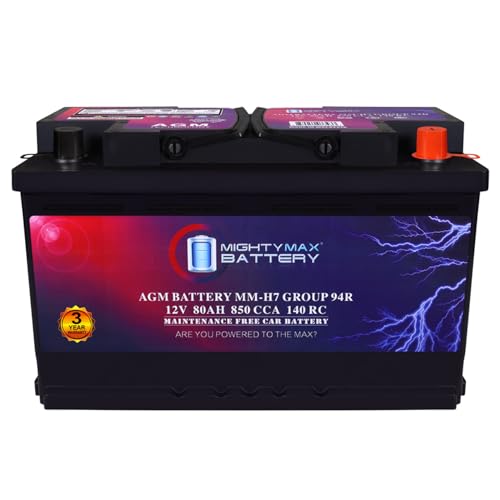
- ✓ Strong starting power
- ✓ Spill-proof AGM design
- ✓ Rugged, vibration-resistant
- ✕ Not including wiring harness
- ✕ Slightly heavier than some rivals
| Battery Type | 12V AGM |
| Capacity | 80 Ah |
| Cold Cranking Amps (CCA) | 850 CCA |
| Reserve Capacity | 140 minutes |
| Dimensions (L x W x H) | 12.50 x 6.88 x 7.48 inches |
| Terminal Orientation | Positive terminal on the right, negative on the left |
You’re reaching into your trunk on a cold, drizzly morning, and the 2005 LR3 needs a patient start. You pop the Mighty Max MM-H7 into place, notice the snug fit and the clear right/left polarity label, and give the key a twist.
The engine rumbles to life with a confident, steady roar, barely hinting at the season’s chill.
With 850 CCA and 80Ah behind it, this battery feels like a safety net you can rely on. The rapid starting power is immediate, and the deep discharge recovery keeps the lights and radio steady while you idle and warm up the cabin.
It’s a reassuring difference you can feel after a year of marginal starts from other brands.
The AGM design means no spills, which eases your mind if you install it in a tight engine bay or a location with a slight tilt. It’s sealed, so you don’t have to worry about leaks when the roads get rough or you hit a pothole stretch on a weekend road trip.
Mounting flexibility helps too—you’ve got options in the LR3’s crowded engine compartment, and the included mounting screws make the swap quick. The build feels solid, with rugged construction that handles vibration and temperature swings without flinching.
In day-to-day driving, the Reserve Capacity shines when you’re brimming with accessories: heated seats, a GPS, and a few miles of highway. It’s reassuring to know the battery can handle longer sessions without a heavy drain, and the ISO-certified manufacturing adds a layer of trust you don’t always get with off-brand batteries.
At $179.99, you’re paying for reliability, not gimmicks. If you want a durable, replacement option that starts strong from cold mornings and handles a multi-use SUV life, this one’s worth a look.
What Factors Should You Consider When Choosing the Best Battery for a 2005 LR3?
When choosing the best battery for a 2005 LR3, several factors should be considered to ensure optimal performance and longevity.
- Battery Type: The 2005 LR3 typically requires an AGM (Absorbent Glass Mat) or lead-acid battery. AGM batteries are known for their durability and deep-cycle capabilities, making them ideal for vehicles with high electrical demands.
- Cold Cranking Amps (CCA): CCA is a crucial specification, particularly in colder climates, as it indicates the battery’s ability to start the engine in low temperatures. For the LR3, a battery with a CCA rating of at least 800 is recommended to ensure reliable starts.
- Reserve Capacity (RC): This metric measures how long the battery can run on its own power without the engine running, which is essential for vehicles that may need to power accessories. A higher reserve capacity provides peace of mind in case of alternator failure or extended use of electronics.
- Size and Fit: The physical dimensions of the battery must match the battery tray in the LR3. Most batteries are classified by group size, and for the 2005 LR3, a Group 34 or 78 battery is often suitable, allowing for a secure fit and proper terminal orientation.
- Brand and Warranty: Consider reputable brands known for their reliability and performance in harsh conditions. A solid warranty can also provide additional assurance, typically ranging from 3 to 5 years, indicating the manufacturer’s confidence in their product.
- Price: While it can be tempting to choose the cheapest option, investing in a quality battery can save money in the long term through better performance and longevity. Compare prices across different retailers to find the best balance between cost and quality.
How Does Battery Size and Specification Impact Compatibility?
The size and specifications of a battery significantly affect its compatibility and performance in vehicles like the 2005 LR3.
- Group Size: The group size of a battery indicates its dimensions and terminal configuration, which is crucial for ensuring a proper fit in the vehicle’s battery compartment.
- Cold Cranking Amps (CCA): CCA measures a battery’s ability to start an engine in cold conditions, making it essential for reliable performance, especially in colder climates.
- Reserve Capacity (RC): RC indicates how long a battery can supply power to the vehicle’s electrical systems without the engine running, which is important for maintaining functionality during short trips or in emergencies.
- Voltage: The standard voltage for most automotive batteries is 12 volts; using a battery with the correct voltage is necessary to ensure compatibility with the vehicle’s electrical system.
- Type of Battery: Different types of batteries, such as lead-acid, AGM, or lithium-ion, have distinct characteristics that can affect performance, lifespan, and maintenance requirements.
Group Size: The group size classification ensures that the battery fits securely in the designated space of the LR3 without any modification. A battery that is too large may not fit, while one that is too small could lead to movement and potential damage during operation.
Cold Cranking Amps (CCA): Batteries with higher CCA ratings are capable of providing more power to start the vehicle in low-temperature environments. For a 2005 LR3, selecting a battery with an appropriate CCA rating ensures the engine turns over easily, even during harsh weather conditions.
Reserve Capacity (RC): A battery with a high reserve capacity is beneficial for the LR3, particularly for those who may use accessories or electronics while the engine is off. This feature allows for continued operation of lights, radios, and other systems without the risk of depleting the battery too quickly.
Voltage: A 12-volt battery is standard for the 2005 LR3, and using a battery with the correct voltage is critical to prevent damage to the electrical systems. A battery with a different voltage can lead to poor performance or even electrical failures.
Type of Battery: The choice of battery type impacts maintenance and longevity; for example, AGM batteries are sealed and require less maintenance compared to traditional lead-acid batteries. Understanding the specific needs of the LR3 can help in selecting a battery type that maximizes performance and minimizes future issues.
In What Ways Can Weather Conditions Influence Battery Efficiency?
Weather conditions can significantly influence battery efficiency in various ways, particularly for vehicles like the 2005 LR3.
- Temperature: Extreme temperatures can either deplete a battery’s charge or hinder its ability to receive a full charge. In cold weather, chemical reactions within the battery slow down, reducing its capacity and cranking power, while hot weather can cause overheating and increased self-discharge rates.
- Humidity: High humidity can lead to moisture buildup around battery terminals, which can cause corrosion and reduce connectivity. Conversely, very dry conditions can lead to evaporation of battery fluid in lead-acid batteries, negatively impacting performance and longevity.
- Altitude: At higher altitudes, the lower atmospheric pressure can affect battery performance due to reduced oxygen levels, which can influence the chemical reactions within the battery. This can lead to decreased efficiency and a potential reduction in the battery’s lifespan.
- Vibration and Shock: Weather conditions that lead to rough roads or off-road driving can subject batteries to increased vibration and shock, which can damage internal components. This is particularly relevant for the LR3, which is often used in varying terrains where battery stability is crucial.
- Charging Conditions: The efficiency of charging systems can also be affected by temperature and humidity. For example, charging a battery in extremely hot or cold conditions can lead to insufficient charging or overcharging, both of which can impair the battery’s overall performance.
Why is Brand Reputation Important When Selecting a Battery for Your LR3?
Brand reputation is critical when selecting a battery for your LR3 because it often correlates with product reliability, quality, and performance, which are essential for vehicles that require dependable power sources.
According to a study published in the Journal of Brand Management, consumers tend to favor brands with a strong reputation because they perceive these brands as offering higher quality and better customer service (Aaker, 1991). A well-regarded battery brand is likely to have invested significantly in research and development, resulting in products that meet the specific demands of vehicles like the 2005 LR3.
The underlying mechanism behind this importance lies in the relationship between brand reputation and consumer trust. A reputable brand has established itself through consistent performance and positive customer experiences, leading to higher trust among consumers. This trust can translate into a willingness to pay a premium for a battery that is deemed reliable, which is crucial for the LR3’s performance, especially in harsh driving conditions where battery failure can lead to significant inconvenience and safety risks. Additionally, brands with strong reputations often provide better warranties and customer support, which can save vehicle owners time and money in the long run.
What Are the Top Batteries Recommended for a 2005 LR3?
The best batteries for a 2005 LR3 are crucial for optimal performance and reliability.
- Optima Red Top 34/78: This battery is known for its high cranking power and rapid recharge capabilities, making it particularly suitable for demanding vehicles like the LR3.
- Exide Edge FP-AGM24DP: An absorbed glass mat (AGM) battery, the Exide Edge offers excellent deep cycling capabilities and is resistant to vibration, which is beneficial for off-road driving.
- DieHard Platinum AGM Group 34: With a robust design and a maintenance-free operation, this AGM battery provides reliable power and longevity, ideal for both urban and rugged terrains.
- ACDelco Professional AGM 94R: This battery features a high reserve capacity and cold cranking amps, ensuring dependable starts in cold weather, which is essential for the LR3’s varied driving conditions.
- NorthStar NSB-AGM34: Known for its exceptional performance and lifespan, this AGM battery provides strong starting power and can handle the electrical demands of modern vehicles.
The Optima Red Top 34/78 is a popular choice due to its spiral cell design, which enhances resistance to vibrations and provides consistent energy output. Its ability to recharge quickly makes it suitable for drivers who require reliable performance, especially in extreme conditions.
The Exide Edge FP-AGM24DP is designed with an innovative AGM technology that allows it to withstand deep discharges and recharge efficiently. Its durability and resistance to wear make it a great option for those who often venture off-road.
The DieHard Platinum AGM Group 34 is a top contender for its long life and high performance, featuring advanced AGM technology that minimizes water loss and ensures maintenance-free operation. This battery is particularly advantageous for those who rely on their vehicle for both everyday use and adventurous outings.
The ACDelco Professional AGM 94R excels in cold weather performance, providing high cranking amps that make starting easier in low temperatures. Its robust construction and reserve capacity ensure that the LR3 will have the power it needs in any driving condition.
Finally, the NorthStar NSB-AGM34 is praised for its high-quality manufacturing and ability to deliver powerful bursts of energy. Its longevity and reliability make it ideal for Land Rover enthusiasts who seek uncompromised performance from their vehicle’s battery.
How Do Professional Recommendations Compare Among Different Battery Brands?
| Brand | Recommendation | Key Features | Price Range | Warranty Period | Model Recommendations |
|---|---|---|---|---|---|
| Optima | Highly recommended for LR3 | Durable, maintenance-free, high reserve capacity | $250 – $300 | 3 years | Optima Yellow Top |
| Interstate | Strong performance rating | Reliable, good warranty, high cranking power | $200 – $250 | 3 – 5 years | Interstate MT-47 |
| DieHard | Trusted brand with positive reviews | Long lifespan, excellent cold cranking amps | $180 – $220 | 3 years | DieHard Platinum |
| ACDelco | Recommended for OEM fit | Good value, designed for optimal performance | $150 – $200 | 2 – 3 years | ACDelco Advantage |
What Insights Do User Reviews Provide About These Batteries?
User reviews provide valuable insights into the performance, reliability, and suitability of batteries for the 2005 LR3.
- Performance Ratings: Many users highlight how well a battery performs under various conditions, such as extreme temperatures and heavy usage. These ratings help potential buyers determine whether a battery can maintain consistent voltage and power output over time.
- Longevity Feedback: Reviews often include comments on how long a battery lasts before needing replacement. Users sharing their experiences can provide a clearer picture of which batteries tend to outlast others, helping consumers make informed decisions based on durability.
- Installation Ease: Some user reviews discuss the ease or difficulty of installing a particular battery in the 2005 LR3. This information can be crucial for DIY enthusiasts or those who prefer professional installation, as it affects the overall convenience of using the product.
- Brand Comparisons: Users frequently compare different brands within their reviews, sharing insights about their experiences with specific brands. This can help buyers identify which brands have a better reputation for quality, reliability, and support.
- Price vs. Value: Many reviews address whether the price of a battery correlates with its performance and longevity. This feedback can help potential buyers assess if a more expensive battery is worth the investment based on user experiences.
- Customer Service Experiences: Reviews often include information about the manufacturer’s customer service, including responsiveness and warranty claims. Positive or negative experiences with customer support can influence a buyer’s decision about which battery to choose.
What Is the Typical Price Range for Batteries Compatible with a 2005 LR3?
The typical price range for batteries compatible with a 2005 LR3 generally falls between $100 and $250, depending on the type and brand of the battery selected.
According to various automotive parts retailers like AutoZone and Advance Auto Parts, the cost of batteries can vary based on factors such as battery technology (lead-acid vs. AGM), brand reputation, and warranty length. For instance, Optima batteries, known for their durability and performance, can be priced at the higher end of this range, while more standard options from brands like DieHard or Duralast are often found at the lower end.
Key aspects that influence the battery price include its specifications, such as cold cranking amps (CCA) and reserve capacity (RC). The 2005 LR3 typically requires a battery that provides a minimum of 800 CCA to ensure reliable starting in various weather conditions. AGM (Absorbent Glass Mat) batteries, which are often recommended for higher-end vehicles like the LR3, generally offer better performance and longevity, which can justify their higher price point. Additionally, the battery’s physical size and terminal configuration must match the vehicle’s requirements, as incorrect specifications can lead to installation issues.
This price range impacts vehicle maintenance budgets, especially for owners of luxury SUVs like the LR3. A reliable battery is essential not only for starting the engine but also for powering electrical systems, which are increasingly complex in modern vehicles. Investing in a quality battery can lead to fewer breakdowns, improved vehicle performance, and longer intervals between replacements, ultimately providing peace of mind and potentially saving costs on roadside assistance and repairs.
For battery selection, best practices include checking the vehicle’s owner manual for specifications, comparing warranties, and reading reviews to assess performance over time. Additionally, purchasing from reputable retailers and ensuring proper installation can enhance the battery’s lifespan and effectiveness. Regular maintenance checks, including testing the battery’s charge and cleaning terminals, can also help in maximizing the investment.
How Can You Determine the Best Value for Your Investment in a Battery?
Cold Cranking Amps (CCA): CCA measures a battery’s ability to start an engine in cold temperatures, making it a critical factor for reliability, especially in colder climates. A higher CCA rating means the battery will provide more power to start the vehicle when the temperatures drop, ensuring you won’t be left stranded.
Reserve Capacity (RC): Reserve capacity indicates how long a battery can power the vehicle’s electrical systems in case of an alternator failure. A higher reserve capacity means the battery can sustain the vehicle’s electronics longer, providing peace of mind during unexpected situations.
Warranty Period: A battery’s warranty period is often a good indicator of its expected lifespan and reliability. Manufacturers that offer longer warranties typically have confidence in their product’s durability, making this an important consideration when choosing a battery.
Brand Reputation: Selecting a battery from a well-known and trusted manufacturer can often lead to better performance and support. Brands with positive reviews and a history of reliability may provide more assurance that you’re making a sound investment.
Price to Performance Ratio: This ratio considers not just the purchase price but also the reliability, lifespan, and features of the battery. Finding a battery that strikes a balance between cost and performance ensures that you get the best value for your investment while avoiding potential future costs associated with subpar batteries.
What Battery Maintenance Tips Can Help Extend Your 2005 LR3 Battery Life?
To extend the life of your 2005 LR3 battery, consider the following maintenance tips:
- Regular Inspection: Check the battery for any signs of corrosion, leaks, or damage at least once a month.
- Clean Battery Terminals: Keep the battery terminals clean and free from corrosion to ensure proper electrical connections.
- Proper Charging: Ensure the battery is charged appropriately, avoiding overcharging or deep discharges, which can shorten its lifespan.
- Temperature Management: Park your vehicle in a temperature-controlled environment whenever possible to prevent battery degradation.
- Limit Short Trips: Try to avoid short trips that do not allow the battery to fully recharge between uses.
- Use a Battery Maintainer: If the vehicle is not driven for extended periods, use a battery maintainer to keep the battery at an optimal charge level.
Regularly inspecting your battery can help identify potential issues early. Look for corrosion around the terminals or any unusual bulging or leakage from the battery casing, which could indicate a failing battery.
Cleaning the battery terminals is crucial for maintaining good electrical contact. Use a mixture of baking soda and water to clean the terminals, then rinse with clean water and dry thoroughly to prevent future corrosion.
Proper charging practices are essential to extend battery life. Avoid leaving the battery on a charger for too long, and ensure that it is fully charged after use, as both overcharging and complete discharges can significantly reduce battery capacity.
Temperature plays a critical role in battery health. Extreme heat can cause battery fluid to evaporate, while extreme cold can reduce the battery’s effectiveness. Parking in a garage or shaded area can help mitigate these effects.
Limiting short trips is important because the battery may not have sufficient time to recharge fully between uses. Frequent short trips can lead to a situation where the battery is consistently undercharged, leading to premature aging.
Using a battery maintainer is especially beneficial if the vehicle is not used regularly. This device can keep the battery in a charged state without the risk of overcharging, ensuring it is ready to go when you need it.
What Routine Checks Are Essential for Optimal Battery Health?
Routine checks for optimal battery health include:
- Visual Inspection: Regularly checking the battery for signs of corrosion, leaks, or physical damage is essential. Corrosion can often be seen around the terminals and can impede electrical connections, while leaks may indicate a battery that is failing and needs replacement.
- Terminal Condition: Ensuring that battery terminals are clean and securely connected is vital for performance. Loose or corroded connections can lead to poor electrical flow, which can result in starting issues or reduced power output.
- Voltage Check: Using a multimeter to check the battery voltage can help determine if it is holding a proper charge. A fully charged battery should read around 12.6 volts; anything below 12.4 volts may indicate a need for charging or replacement.
- Load Testing: Performing a load test can assess the battery’s ability to maintain voltage under load. This test simulates the battery’s performance when starting the vehicle, helping to identify if it can sustain the necessary power without dropping voltage significantly.
- Fluid Levels (for non-sealed batteries): Checking the electrolyte fluid levels in non-sealed lead-acid batteries is important. If the levels are low, topping them off with distilled water can help maintain battery health and prevent sulfation, which can shorten battery life.
- Battery Age: Keeping track of the battery’s age is crucial since most batteries last about 3-5 years. If a battery is nearing the end of its lifespan, it may be wise to consider replacement before it fails, especially in critical situations like starting your vehicle.
- Charging System Check: Ensuring that the vehicle’s charging system is functioning properly is key to maintaining battery health. A malfunctioning alternator can lead to undercharging or overcharging, both of which can damage the battery over time.
How Can You Maintain Battery Terminals and Connections Effectively?
Maintaining battery terminals and connections effectively is crucial for optimal vehicle performance.
- Regular Cleaning: Keeping battery terminals free from corrosion is essential for good conductivity. Use a mixture of baking soda and water to scrub away any buildup, ensuring connections are clean and secure.
- Check Tightness: Loose connections can cause electrical issues and reduce the battery’s lifespan. Periodically check that the terminal bolts are tight, using a wrench to secure them if necessary, to prevent any power loss.
- Apply Anti-Corrosion Grease: A thin layer of anti-corrosion grease can protect terminals from oxidation. This barrier helps minimize the buildup of corrosion, which can impede electrical flow and make battery maintenance easier.
- Inspect Cables for Damage: Regularly examine the battery cables for any signs of wear or fraying. Damaged cables can lead to poor electrical contact and may need to be replaced to ensure reliable battery operation.
- Test Battery Voltage: Using a multimeter, check the battery voltage periodically to ensure it is within the optimal range. Low voltage readings may indicate a failing battery or issues with the charging system that need addressing.
What Are the Key Signs Indicating a Failing Battery in a 2005 LR3?
Key signs indicating a failing battery in a 2005 LR3 include:
- Slow Engine Crank: If the engine cranks slowly or takes longer than usual to start, it may indicate that the battery is losing its charge.
- Dashboard Warning Lights: The appearance of warning lights related to the battery or charging system on the dashboard can signal a battery issue.
- Corrosion on Battery Terminals: Visible corrosion or buildup on the battery terminals can lead to poor connectivity and indicate battery deterioration.
- Electrical Issues: Problems with electrical components, such as dimming headlights or malfunctioning power windows, can be signs of battery failure.
- Age of the Battery: If the battery is older than three to five years, it is more likely to fail, and symptoms may become apparent as it nears the end of its lifespan.
Slow engine crank is often the first noticeable issue when a battery is failing, as it indicates that the battery is unable to provide sufficient power to start the engine efficiently. If you find yourself needing to turn the key multiple times or hear a sluggish sound, it’s a strong indicator that the battery may need replacement.
Dashboard warning lights are designed to alert the driver of potential issues, and if any lights related to the battery or charging system illuminate, it’s essential to investigate further. These warnings can point to both battery failure and problems with the alternator, so checking the battery is a good first step.
Corrosion on battery terminals, often appearing as a white or greenish crust, can impede the flow of electricity and indicate that the battery is nearing the end of its life. Regular cleaning of the terminals can help maintain a good connection, but excessive corrosion may require a battery replacement.
Electrical issues such as dim headlights or intermittent problems with power accessories can indicate that the battery is not supplying enough power. These symptoms may worsen when more electrical components are used, highlighting the battery’s inability to hold a charge.
The age of the battery is a critical factor in determining its reliability. Batteries typically last between three to five years, and after this time, the risk of failure increases significantly. If your battery is approaching or has surpassed this age, it is wise to monitor for any signs of failure closely.
How Can You Recognize When It’s Time to Replace Your Battery?
Recognizing when it’s time to replace your battery can prevent unexpected breakdowns and ensure your vehicle runs smoothly.
- Slow Engine Crank: If your engine cranks slowly or takes longer than usual to start, it may indicate that your battery is losing its charge capacity and needs replacement.
- Corroded Connectors: Visible corrosion on battery terminals or connectors can affect the battery’s performance, leading to poor electrical connections and the need for a new battery.
- Check Engine Light: If the check engine light is illuminated along with other dashboard warning lights, it could point to battery issues, signaling that it might be time for a replacement.
- Age of the Battery: Most car batteries have a lifespan of 3 to 5 years; if your battery is nearing this age, it’s wise to test its condition or consider replacing it preemptively.
- Swollen Battery Case: A swollen or bloated battery case can indicate overheating or internal damage, suggesting that the battery is failing and should be replaced immediately.
Slow engine crank occurs when the battery struggles to provide sufficient power to the starter motor, often due to age or cold weather. If you notice your vehicle taking longer than usual to start, especially in colder climates, it’s a clear sign that the battery may need replacing.
Corrosion on battery terminals is typically a white, ashy substance that can impede the electrical connection between the battery and the vehicle. If you see this buildup, it can lead to starting problems and is often a precursor to battery failure, indicating that a replacement is necessary.
The check engine light can indicate various issues, including battery or charging system problems. If this light is accompanied by other electrical issues, it’s best to have the battery tested to determine if it needs replacing.
Considering the age of your battery is crucial; many batteries fail without warning after a typical lifespan. Keeping track of when your battery was last replaced can help you stay proactive about maintenance and avoid unexpected failures.
A swollen battery case is often caused by excessive heat or overcharging, which can damage the internal components. If you notice that the battery appears misshapen or swollen, it’s vital to replace it promptly to prevent leaks or safety hazards.
Related Post: