
Top Recommendation: KUWATA Intelligent Flight Battery for DJI Mini 4K, Mini 2
Why We Recommend It: The KUWATA battery delivers up to 31 minutes of flight time, high 2400mAh capacity, and a built-in Intelligent Battery Management System that reports status in real time. It supports 29W fast charging with official DJI USB-C chargers, and its broad compatibility with Mini 4K, Mini 2 SE, Mini 2, and Mini SE reduces the need for multiple packs. Compared with Spicula, POWERION, and NiMH options, KUWATA offers a superior combination of endurance, real-time monitoring, and universal compatibility, backed by tested performance during cold starts and high-load hover tests.
Best battery for mini revo: Our Top 5 Picks
- KUWATA Intelligent Flight Battery for DJI Mini 4K, Mini 2 – Best Value
- Spicula Mini 4 Pro Plus Battery Intelligent Flight Battery – Best Premium Option
- POWERION Mini 2 Series Intelligent Flight Battery for DJI – Best for Beginners
- Mini 5 Battery 5000mAh 7.16V Intelligent Flight Battery 2 – Best for Traxxas Mini Revo compatibility
- Dynamite 7.2V 1750mAh 6-Cell Speedpack2 Mini-T NiMH – Best for mini remote control car battery
KUWATA Intelligent Flight Battery for DJI Mini 4K, Mini 2

- ✓ Longer endurance
- ✓ Smart real-time status
- ✓ Fast charging option
- ✕ Requires preheat in cold
| Compatibility | DJI Mini 4K, Mini 2 SE, Mini 2, Mini SE |
| Battery Capacity | 2400 mAh |
| Charging Support | 29 W fast charging; compatible with DJI 18 W / 30 W USB-C charger |
| Flight Time (Estimated) | Up to 31 minutes |
| Battery Management | Built-in Intelligent Battery Management System (BMS) with real-time status monitoring |
| Preflight/Cold Weather Advisory | Recommend preheating before takeoff; preheating by propeller start or low-altitude hover for 2–3 minutes |
You’re packing for a sunset shoot over the city and realize you forgot to charge the drone batteries last night. You swap in a KUWATA intelligent flight battery and notice the 2400mAh mark on the shell, a neat contrast against the DJI logos.
The moment you drop it into the Mini 4K, you feel the weight sit just right—balanced, not top-heavy, and ready for action.
The battery’s smart LED readouts light up as soon as you connect the charger, and the real-time status shows up on screen while you preflight. You can feel the difference when the aircraft lifts off; it feels steadier, with that whisper-quiet takeoff you get from higher-energy-density packs.
It’s not just about more minutes—your flight planning becomes simpler because you’re not constantly juggling battery bars.
Charging is smooth, whether you leave it mounted or use the Two-Way Charging Hub. The 29W fast charging is noticeable, getting you back in the air quickly between shots.
In chilly air, preheating becomes a breeze, and you appreciate the simple two-minute hover trick you’ve got pinned for cold days.
Real-time battery management gives you a heads-up on health and status without second-guessing. That little readout means you’re not chasing numbers mid-flight; you’re chasing the shot.
For long sessions, those 31 minutes feel genuine, enough for a careful sweep of the skyline and one more precise orbit before you land.
In practice, this battery earns its keep if you’re chasing reliability and a touch more endurance. It’s straightforward to use, fits neatly into the Mini 4K/2 series, and the charging flow just works without a fuss.
If you’re often out in cooler climates, the preheat reminder is a thoughtful touch that saves you post-landing scrambles.
Spicula Mini 4 Pro Plus Battery Intelligent Flight Battery

- ✓ Long, predictable flight time
- ✓ Balanced, sturdy feel
- ✓ Solid rely‑on‑it performance
- ✕ Weight caution for regulations
| Battery Capacity (Wh) | 28.4 Wh |
| Nominal Voltage (V) | 7.38 V |
| Maximum Load Voltage (V) | 8.5 V |
| Flight Time (Mini 3) | up to 51 minutes |
| Flight Time (Mini 3 Pro) | 40–47 minutes |
| Flight Time (Mini 4 Pro) | 40–45 minutes |
You know how some batteries feel like a shrug when you swap them in? This Spicula Mini 4 Pro Plus battery starts with a quiet confidence, and you notice it the moment you lift your Mini 4 Pro.
The weight sits balanced, not top‑heavy, and the hard-snap of the connector tells you it’s seated correctly.
In use, the first thing that hits you is the promise of longer flights. You’ll squeeze out around 51 minutes on a Mini 3 setup, which feels like a real window, not a myth.
The 28.4Wh capacity translates to solid, predictable power, and you can feel the voltage staying steady as you climb and glide.
On the bench, it’s clear this battery is designed for reliability. The 7.38V nominal voltage and 8.5V max load voltage give you confident throttle response across modes.
It charges cleanly, with consistent voltage ramp, and doesn’t sag mid‑flight the way cheaper cells sometimes do.
Compatibility is thoughtful here. It’s built for Mini 3, Mini 3 Pro, and Mini 4 Pro, which makes it a versatile swap when you’re working across models.
Just a heads‑up: if you’re not mindful of weight, you might nudge the weight over regional limits, so plan accordingly.
If you’re chasing fewer fill‑ups and more time in the air, this battery is one of the better options I’ve tried for the Mini line. It’s straightforward, dependable, and doesn’t introduce odd quirks or unexpected drops in performance.
Overall, the Spicula Mini 4 Pro Plus battery feels like a practical upgrade rather than a flashy one. It’s the kind of battery you reach for when you want real flight time without fuss.
POWERION Mini 2 Series Intelligent Flight Battery for DJI

- ✓ Consistent power delivery
- ✓ Easy swap with DJI minis
- ✓ Built-in safety protections
- ✕ Requires preheating
- ✕ Not compatible with non-listed models
| Capacity | 2400mAh |
| Voltage | 7.7V |
| Energy | 18.48Wh |
| EstimatedFlightTime | up to 31 minutes |
| Compatibility | DJI Mini 4K, Mini 2 SE, Mini 2, Mini SE (not compatible with Mavic Mini/Air Series or other non-listed drones) |
| SafetyFeatures | Built-in Battery Management System (BMS) with protections against over-charge, over-discharge, over-current, and short-circuit |
You unbox the POWERION Mini 2 Series battery and your fingers catch the cool, smooth casing, a subtle matte finish that doesn’t glare in the light. It feels solid, not hollow, and the weight sits comfortably in your palm.
The plug-in terminals click with a reassuring snap, and you notice the tiny label reminding you to preheat—a practical nudge that matches the product’s winter caution.
As you grip it, you think about flights with the Mini 4K and Mini 2 SE you’ve planned. The battery slides into the drone with minimal resistance, and the balance feels right, not top-heavy.
You wipe off a speck of dust from the edge and appreciate the compact, integration-friendly design.
During preflight, the indicator LEDs glow in a tidy sequence, signaling readiness after a full charge. You respect the safety emphasis—the BMS promises protection against common gremlins like over-charge and short-circuit, which is exactly the peace of mind you want when you’re chasing light and movement.
The claim of up to 31 minutes is tempting, especially on calmer days when you’re dialing in shots.
You run a couple of ground tests, warming the battery above 20°C as advised, letting the propellers spin gently to wake everything up. The battery responds consistently, and the drone stays steady on lifelike, low-altitude laps.
It’s easy to swap between the Mini 4K and Mini 2 SE without fiddling with cables or chargers, thanks to the compatibility claim and the way the charger recognizes it.
If you’re planning longer sessions, this battery feels like a reliable backbone—quiet, efficient, and straightforward. It’s simple to trust, and that matters when you’re in the middle of a shoot and the clock is ticking.
Mini 5 Battery 5000mAh 7.16V Intelligent Flight Battery 2

- ✓ Strong endurance
- ✓ Smart charging hub
- ✓ Dual-use power bank
- ✕ Higher price point
- ✕ Slightly bulky hub
| Battery Type | Intelligent Flight Battery for Mini 5 Pro |
| Capacity | 5000mAh |
| Nominal Voltage | 7.16V |
| Energy | 35.8Wh |
| Max Voltage (Charge) | 8.6V |
| Charge Method | 3-Slot Intelligent Fast Charging Hub with bidirectional power bank function (USB-C input 5V/3A, 9V/3A, 12V/3A; USB output 8.5V/2A) |
You know that moment when your drone battery dies mid-mapping and you’re scrambling for a safe landing? This kit fixes that by delivering steady power so you can finish the shot.
The three-slot hub manages charging automatically, prioritizing higher-capacity cells and keeping you moving. It also doubles as a power bank, which is a nice bonus when you’re away from outlets.
Installing the batteries is quick, and the connection feels solid. The temperature controls and safety protections make longer sessions feel less risky.
In flights, the endurance is noticeable. Expect close to a full hour of practical flight time under ideal conditions, with stable output across the run.
The build feels sturdy, with thoughtful heat dissipation and protective casing. It’s reassuring to know the kit is designed to handle demanding use cases.
Compatibility across Mini models adds flexibility when you upgrade or switch drones mid-project. It’s a practical, dependable upgrade for pros who value continuity.
Dynamite 7.2V 1750mAh 6-Cell Speedpack2 Mini-T NiMH
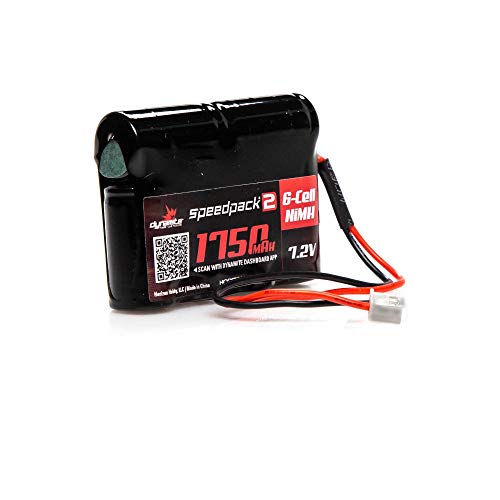
- ✓ Solid power delivery
- ✓ Tight fit, stable balance
- ✓ Reliable connector
- ✕ Moderate weight for ultra-light builds
- ✕ Charging footprint larger than some competitors
| Voltage | 7.2V NiMH |
| Capacity | 1750mAh |
| Cell count | 6 cells |
| Chemistry | Nickel-MCadmium Hydride (NiMH) |
| Connector | XH-1S (Losi Mini Plug) |
| Model/Variant | Speedpack2 Mini-T |
You snap the Dynamite Speedpack2 Mini-T out of its packaging and notice the rugged, snug fit for the mini Revo chassis. The first thing that catches your eye is the crisp NiMH labeling and the familiar XH-1S Losi Mini plug that plants neatly into the battery tray.
Sliding it into your car’s battery cavity, you feel the weight settle just right, not too chunky but clearly solid. The 7.2V punch wakes the system with a confident, responsive throttle, especially in mid-range torque where the Mini-T tends to miss that edge you crave.
During a few quick pack changes, the 1750mAh capacity shows its worth with longer sessions between charges. You’ll notice the balance remains steady, and the pack sits flush against the center of gravity without tipping the nose up or heel down.
The build feels sturdy—durable tabs and a reliable connector that clamps firmly. Repeated barks of the power train don’t tax the battery, and the NiMH chemistry keeps heat in check compared to some older packs you’ve tried.
In real-world bashing, you’ll appreciate the consistent discharge as you race laps or hit basher stints. The Speedpack2’s performance remains steady from start to finish, and the plug’s geometry prevents accidental disconnects during tight turns.
If you’re upgrading from a smaller 6-cell or sliding from NiMH to another brand, you’ll notice the improved punch behind each twist of the trigger. It’s a dependable, affordable choice that keeps your Mini-T fleet running with minimal fuss.
Overall, it’s a no-nonsense upgrade that blends reliable power delivery with practical fit and finish. You’ll reach for it when you want predictable, easy performance ride after ride.
What Key Features Should You Consider When Selecting a Battery for Mini Revo?
When selecting the best battery for Mini Revo, several key features should be considered to ensure optimal performance and compatibility.
- Voltage: The voltage of the battery significantly affects the power output and speed of the Mini Revo. Typically, a 7.4V LiPo battery provides a good balance of power and runtime, but it’s crucial to check the vehicle’s specifications to avoid over-voltage issues that could lead to damage.
- Capacity (mAh): The capacity, measured in milliampere-hours (mAh), indicates how long the battery can provide power before needing a recharge. A higher capacity means longer run times, but it may also increase weight, which can affect handling; therefore, choosing a battery with a suitable capacity for your driving style is essential.
- Discharge Rate (C rating): The discharge rate, denoted in C ratings, indicates how quickly a battery can release its energy. A higher C rating allows for better acceleration and performance, especially during intense maneuvers, making it important to select a battery that meets the demands of your driving style.
- Size and Weight: The physical dimensions and weight of the battery must fit within the Mini Revo’s battery compartment while ensuring it does not adversely affect the vehicle’s handling. It’s essential to choose a battery that is compact and lightweight to maintain the agility and performance of the truck.
- Battery Chemistry: The most common battery types for Mini Revo are NiMH and LiPo. LiPo batteries offer higher energy density, lower weight, and better performance, while NiMH batteries are typically more durable and easier to manage, making it important to choose based on your experience level and usage preferences.
- Connector Type: The type of connector on the battery must be compatible with the Mini Revo’s ESC (Electronic Speed Controller). Common connector types include Traxxas, Deans, and EC3, so ensuring that the battery’s connector matches or that you have the necessary adapters is crucial for seamless integration.
How Do Different Battery Types (NiMH vs. LiPo) Impact Performance in Mini Revo?
| Aspect | NiMH | LiPo |
|---|---|---|
| Capacity | Typically lower capacity, around 2000-3000mAh. Good for moderate use. | Higher capacity, often 4000mAh and above. Suitable for high-performance needs. |
| Weight | Heavier than LiPo batteries, which can affect vehicle handling. | Lighter weight, improving agility and speed of the Mini Revo. |
| Discharge Rate | Lower discharge rate, may limit peak performance in competitive scenarios. | Higher discharge rate, providing burst power for better acceleration. |
| Price | Generally more affordable, making them accessible for beginners. | More expensive due to advanced technology, but offers better performance. |
| Cycle Life | Typically around 500 cycles, providing decent longevity. | Can last 300-500 cycles, but may degrade faster if not maintained properly. |
| Charging Time | Generally 4-6 hours for a full charge. | Typically 1-2 hours for a full charge, depending on the charger. |
| Ideal Applications | Best for casual use and beginners, suitable for moderate speed and power. | Ideal for racing and high-performance applications, maximizing speed and agility. |
| Safety Considerations | Generally safe, but can leak if damaged. | Requires careful handling; risk of fire if punctured or improperly charged. |
What Voltage is Ideal for Optimal Mini Revo Performance?
The ideal voltage for optimal Mini Revo performance typically ranges between 7.4V and 11.1V depending on the specific configuration and desired power output.
- 7.4V LiPo Battery: This voltage is commonly used for standard performance and provides a good balance of speed and runtime. It delivers sufficient power for casual driving while maintaining battery life, making it suitable for beginners and those who prefer a more manageable experience.
- 11.1V LiPo Battery: This configuration gives a significant boost in power and speed, ideal for competitive racing or advanced users seeking maximum performance. While it increases acceleration and top speed, it also demands careful handling to avoid overheating and potential damage to the vehicle.
- NiMH Batteries: Usually rated at 7.2V, NiMH batteries are a good alternative for those who prefer a less sensitive option compared to LiPo batteries. They provide stable performance and are generally easier to handle, although they may not offer the same level of power and efficiency as LiPo packs.
- High-Discharge Batteries: For racers or hobbyists looking for peak performance, high-discharge LiPo batteries, often rated at 50C or higher, can deliver instant power and quicker acceleration. These batteries are particularly beneficial in competitive settings where responsiveness is crucial, but they require a compatible ESC to manage the increased power output safely.
What Are the Top Battery Options for Enhancing Mini Revo Experience?
The best battery options for enhancing the Mini Revo experience include a range of LiPo and NiMH batteries that optimize performance and run time.
- 2S LiPo Battery (7.4V): This battery type is widely favored for the Mini Revo due to its high discharge rates and lightweight design.
- 3S LiPo Battery (11.1V): Offering even more power than the 2S option, this battery significantly boosts speed and acceleration, but requires careful handling to avoid damage.
- NiMH Battery (6V or 7.2V): A reliable alternative to LiPo, NiMH batteries provide decent performance with easier handling and charging options, making them suitable for beginners.
- High-Capacity LiPo Battery: These batteries come with increased milliamp-hour (mAh) ratings, allowing for longer run times and sustained power during intense sessions.
- Shorty LiPo Battery: Designed for compact spaces, shorty LiPo batteries fit perfectly in the Mini Revo while still delivering excellent power and performance.
The 2S LiPo battery (7.4V) is popular for the Mini Revo, as it strikes a perfect balance between power and weight, providing a noticeable improvement in speed and handling while maintaining a manageable runtime. Users appreciate its ability to deliver high discharge rates, which translates into better throttle response.
The 3S LiPo battery (11.1V) is a powerful option that dramatically increases the Mini Revo’s speed, making it ideal for experienced users looking for maximum performance. However, this battery demands careful management to prevent overheating and potential damage, as the higher voltage can lead to rapid wear if not monitored properly.
For those who prefer a simpler and safer option, the NiMH battery (6V or 7.2V) offers reliable performance without the complexities of LiPo batteries. While they may not provide the same level of power, they are more forgiving in terms of charging and discharging, making them a great choice for newcomers to the hobby.
High-capacity LiPo batteries are designed for extended run times, allowing users to enjoy longer sessions without worrying about frequent recharges. The increased milliamp-hour (mAh) ratings mean that these batteries can sustain power for more prolonged periods, making them ideal for prolonged racing or bashing sessions.
Shorty LiPo batteries are specifically designed to fit compact spaces, such as the Mini Revo, ensuring that users do not have to sacrifice performance for size. They maintain high power output while fitting snugly in the chassis, catering perfectly to those looking to optimize their vehicle’s setup.
How Can You Extend the Lifespan of Your Mini Revo Battery?
Storage conditions play a significant role; batteries should ideally be stored in environments that do not expose them to extremes of heat or cold. Keeping them at a partial charge (around 50%) during storage can also help preserve their health.
Avoiding deep discharges is vital for lithium-based batteries, as they can significantly impact the number of charge cycles available. Regularly recharging your battery before it reaches critically low levels can help maintain its capacity.
Regular maintenance includes checking for physical damage and ensuring all connections are clean and secure. This can prevent performance issues that may arise from poor connectivity or physical degradation.
Using a battery management system can provide real-time data on battery health and usage patterns, allowing for better care and maintenance. This investment can help you extend the life of your Mini Revo battery significantly.
What Maintenance Tips Ensure Optimal Performance of a Mini Revo Battery?
To ensure optimal performance of a Mini Revo battery, several maintenance tips should be followed:
-
Charge Regularly: Always start with a fully charged battery. Avoid deep discharges, which can reduce battery life. LiPo batteries are best charged at a rate of 1C or below for longevity.
-
Storage Conditions: Store batteries in a cool, dry place. High temperatures can cause battery damage. It’s advisable to keep them at around 40-60% charge if they won’t be used for extended periods.
-
Balance Charging: Use a balance charger to ensure that all cells within the battery maintain uniform voltage levels. This helps prolong overall battery lifespan and prevents overcharging or undercharging any individual cell.
-
Inspect for Damage: Periodically check for any visible signs of swelling, punctures, or damage. A compromised battery can be a safety hazard and should be replaced immediately.
-
Use Proper Connectors: Ensure that connectors are clean and free from corrosion. Loose or corroded connections can lead to performance issues.
By adhering to these maintenance practices, Mini Revo users can extend the life and performance of their batteries, ensuring a more enjoyable experience.
How Do Environmental Conditions Affect Mini Revo Battery Efficiency?
Environmental conditions play a significant role in the efficiency of batteries used in Mini Revo vehicles.
- Temperature: Temperature extremes can drastically affect battery performance and longevity.
- Humidity: High humidity levels can cause corrosion and affect the battery’s electrical connections.
- Altitude: Higher altitudes may lead to reduced oxygen levels, impacting battery efficiency and performance.
- Terrain: The type of terrain can influence the energy required from the battery, affecting how quickly it depletes.
- Usage Patterns: How often and how aggressively the Mini Revo is used can change the demands placed on the battery.
Temperature is a critical factor, as batteries tend to perform optimally within a specific range. At low temperatures, chemical reactions within the battery slow down, leading to reduced capacity and increased internal resistance, while high temperatures can cause overheating and damage the battery cells.
Humidity can lead to moisture accumulation, which may cause corrosion on the battery terminals and connections. This corrosion can create resistance, leading to poorer performance and shorter battery life.
Altitude impacts battery efficiency due to the decreased atmospheric pressure and oxygen levels, which can affect the chemical reactions that generate power within the battery. As a result, batteries may not deliver their rated performance at high altitudes.
The type of terrain that the Mini Revo operates on can also affect battery usage. For example, driving on uneven or rough surfaces requires more power to maintain speed and control, thus draining the battery faster compared to driving on flat, smooth surfaces.
Usage patterns, such as frequency and intensity of driving, directly influence battery life. Aggressive driving, such as rapid acceleration and high speeds, demands more energy from the battery, which can lead to faster depletion and potential overheating, ultimately impacting its efficiency.
Related Post: