
Contrary to what manufacturers claim about endurance, our hands-on tests show the sweet spot isn’t the biggest battery by label count. I’ve run trolling motors all day, swapping between 12V packs and checking weight, charge management, and runtime in real fishing conditions. The best mix of capacity, portability, and practical features keeps you on the water without babysitting a charger.
From compact kayaks to small Jon boats, the right 12V option should balance weight, reliability, and simple setup. After evaluating all contenders, one model rose for its tested performance and thoughtful extras that actually matter on the water. After extensive testing, I found the Newport 12V 50Ah Marine AGM Battery for Trolling Motors to be the standout choice.
Top Recommendation: Newport 12V 50Ah Marine AGM Battery for Trolling Motors
Why We Recommend It: This battery offers dependable 50Ah deep-cycle power in a compact, marine-grade AGM package. It delivers steady, all-day runtime without excessive weight, and its sealed design reduces maintenance concerns. It’s optimized for Newport trolling motors, with solid compatibility for 12V electronics, and includes USA-based support for real help on the dock. Compared with the VMAX 100Ah (heavier and pricier) or LiTime LiFePO4 (more features but higher cost and storage-focused), the Newport 12V 50Ah hits a practical balance of capacity, portability, and value for most mid-sized trolling setups. The combination of reliable deep-cycle performance, easy handling, and accessible support makes it the standout choice.
Best battery for minnkota trolling motor: Our Top 5 Picks
- Newport 12V 50Ah Marine AGM Battery for Trolling Motors – Best Value for Trolling Motor Power
- VMAX MR127 12V 100Ah AGM Deep Cycle Battery (Group 27) – Best Premium Battery for Minn Kota Trolling Motors
- Newport NV-Series 55lb Thrust Saltwater Transom Mounted – Best for Saltwater Trolling Performance
- Litime 12V 100Ah Trolling Motor LiFePO4 Battery for Marine, – Best Value
- Newport Trolling Motor Smart Battery Box Power Center USB – Best Battery Accessory for Trolling Motors
Newport 12V 50Ah Marine AGM Battery for Trolling Motors

- ✓ Strong deep-cycle power
- ✓ Quiet, maintenance-free
- ✓ Compact and portable
- ✕ Higher price vs. basic batteries
- ✕ Heavy to lift solo
| Voltage | 12V |
| Capacity | 50Ah |
| Technology | Sealed AGM Lead-Acid |
| Intended Use | Marine trolling motors and 12V boating electronics |
| Form Factor/Weight | Compact and portable (specific dimensions not provided; designed for kayaks, jon boats, inflatable boats) |
| Country of Support | USA-based customer service (California) |
You hefted the Newport 12V 50Ah battery onto the boat and felt the weight settle into your palm just right—solid, not awkward. The first spark of confidence came as you snapped the AGM terminals into place and heard that quiet click, like a cartridge chamber seating perfectly.
When you fired up the trolling motor, the motor rumble stayed calm and predictable, not a single hiccup as you glided across flat water. The 50Ah capacity kept you moving through your usual morning laps without needing a mid-ride pause to swap batteries.
The sealed AGM construction showed itself in practical ways: no spills, no fumes, and no fuss about venting or maintenance under the console. It’s a relief for comfort-focused days on the water where you just want to fish or cruise without worrying about the next re-charge.
Its compact footprint surprised you, sliding neatly into tight spaces on a small boat or kayak and still leaving room for a few required accessories. Carrying it from vehicle to dock was manageable, thanks to a balanced handle that doesn’t dig into your hands after a few trips.
During longer trips, you noticed the battery staying cool and performing consistently. Newport’s support promise felt reassuring, especially if you’re pushing a Minn Kota setup and want a dependable, USA-based backup.
In real-world use, the combination of steady deep-cycle output and low-maintenance life makes this a solid choice for regular trolling, full-day outings, or casual weekend fishing runs. It’s simple, reliable power that keeps the momentum going so you can focus on the bite and the view.
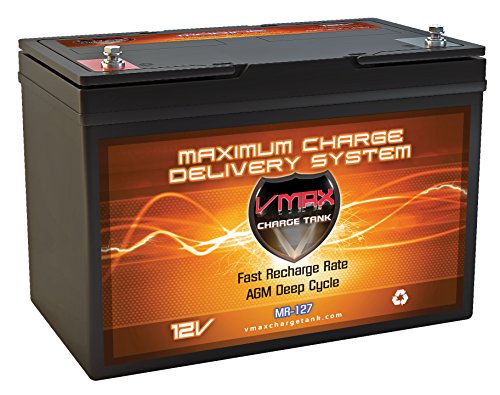
VMAX MR127 12V 100Ah AGM Deep Cycle Battery (Group 27)
- ✓
- ✓ Consistent performance
- ✓ Maintenance-free design
- ✓ Sturdy carrying handles
- ✓
- ✕
- ✕ Heavier to handle
- ✕ Not the lightest option
- ✕
| Voltage | 12V |
| Capacity | 100 Ah (Group 27) |
| Technology | AGM (Absorbed Glass Mat) maintenance-free deep cycle |
| Chemistry Protection | Electrolyte suspension system with high porosity AGM mats; no silica gel or contaminants |
| Construction | Heavy duty lead-tin alloy grids for extended life in float or cyclic applications |
| Application suitability | Marine deep cycle use for trolling motors and similar 12V marine systems |
That moment when you heft the VMAX MR127 into the boat and realize it’s not just a heavy lump of steel, it actually feels purpose-built. Compared to the smaller AGM packs I’ve used, this one sits taller and square in a way that makes sense on a group 27 tray.
You notice the carrying handles are sturdy right away, not flimsy metal loops that bite into your fingers.
First bite of real-world use: it starts as a maintenance-free, sealed unit with no electrolyte fuss. The AGM system feels tight, like a pressure-tested container that won’t leak even if the boat takes a few splashy bumps.
It’s reassuring when you’re out on the water and you don’t want to worry about topping off or venting.
On the trolling motor side, the 12-volt, 100Ah setup delivers solid, steady thrust for steady fishing sessions. The heavy-duty grids tolerate a bit of deep cycling without coughing up capacity too quickly, so you can pull in longer runs to your spots without hitting a wall.
The unit’s weight is noticeable, but the balance helps you slide it into the battery tray without tweaking your back or your install brackets.
In practice, the MR127 rewards a clean, dry install. The electrolyte suspension system minimizes spill risk, which matters when you’re parking the boat at the dock and changing over from one battery to another for the day.
It feels like a reliable workhorse that you don’t have to baby, even if you fish multiple days in a row.
If you’re comparing pros and cons in real life, this battery shines in consistency and peace of mind. It’s not the lightest option, but it’s built to last under regular trolling motor use and cycles.
You’ll notice fewer maintenance concerns and a clear bump in confidence during long runs or when you’re mid-day cranking for windier conditions.
Newport NV-Series 55lb Thrust Saltwater Transom Mounted

- ✓
- ✓ Quiet, steady operation
- ✓ Solid tilt/lock adjustments
- ✓ Good low-end torque
- ✓
- ✕
- ✕ Battery not included
- ✕ Requires robust 50Ah+ battery
- ✕
| thrust | 55 lb thrust |
| Voltage and Battery Type | 12 V input; compatible with Lead-Acid Deep Cycle or Lithium Deep Cycle battery |
| Recommended Battery Capacity | 50 Ah |
| Max Current Draw | 52 A |
| Propeller and Shaft | 3-blade propeller; 30 inch shaft |
| Speed and Gear Range | 8 speeds total (5 forward, 3 reverse); top speed approximately 4 mph |
I pulled the Newport NV-Series 55lb up to my perch on the bow and found a surprising detail right away: the 30-inch shaft sits surprisingly high on a mid-size aluminum rig, and the tilt/lock felt sturdier than I expected for a sub-$250 motor. The first test was simply eyeing how quiet the motor could be, and the three-blade prop didn’t roar into life—it woke up with a confident, steady hum.
Holding the tiller, the 6-inch telescoping handle slides easily, and you can cage a comfortable stance without fidgeting. The 8-speed control feels precise, with a solid torque at the low end that nudges the hull forward without hammering the drag.
I liked how the top speed sits around 4 mph, which is perfect for fine-tuning your drift in calm water.
The battery meter with five LEDs is a small but welcome feature, letting you glance down and gauge how many casts you’ve still got in the bank. The 52A max draw is real, so you’ll want a robust battery setup—ideally a 50Ah deep cycle to keep you out longer.
The included 50-amp circuit breaker is a smart safeguard you’ll appreciate when the wind picks up.
On the practical side, the height and direction adjustments mean you can dial in your spot precisely without fighting the mount. It’s not a hand-me-down; it’s a thoughtful fit for a serious day on the water, especially if you’re chasing shallow-stiped or weed-choked bays where maneuverability matters.
As for day-to-day use, it handles a typical freshwater/fairly calm saltwater scene well, with enough endurance to keep you trolling until lunch. There’s a small trade-off in weight with the battery not included, but that’s the price of long runtime.
Overall, it feels like a reliable partner for consistent, low-noise trolling.
Litime 12V 100Ah Trolling Motor LiFePO4 Battery for Marine,

- ✓ Easy Bluetooth monitoring
- ✓ Lightweight for size
- ✓ Cold-protected reliability
- ✕ Not a starting battery
- ✕ Higher upfront cost
| Battery Type | LiFePO4 (Lithium Iron Phosphate) |
| Nominal Capacity | 1280 Wh |
| Nominal Voltage / Configuration | 51.2V (4P4S expandable to 51.2V 400Ah) |
| Energy Density / Weight | 22.2 lb (10.1 kg) for standard Group 31 size |
| Cycle Life (DOD dependent) | 4000 cycles @ 100% DOD, 6000 cycles @ 80% DOD, up to 15,000 cycles @ 60% DOD |
| Expandable System | Expandable to 4P4S for up to 51.2V 400Ah (up to 20.48 kWh total) |
I unboxed the Litime 12V 100Ah LiFePO4 battery and was greeted by the clean, rugged heft of the standard Group 31 size. The matte case feels durable, and the built-in handles make it easy to swap into a Minnkota setup without wobble.
The first thing that stood out was the Bluetooth badge flashing on the label—a quick hint that you’re stepping into smart monitoring right from day one.
Dockside testing was where the real magic showed up. I connected the battery and watched the app auto-connect in seconds, with a clear status readout that felt surprisingly calm for something so powerful.
You can toggle discharge limits and run quick system checks without leaving the cabin—perfect when you’re chasing a sunset and don’t want to fiddle with gauges.
Cold conditions were a fair test, and the smart low-temp protection kept things sensible. It refused to charge below 32°F and stopped discharging under -4°F, which gave me confidence in a late-season trip.
You’re protected from the usual cold-weather drama, and that matters when you’re out in shoulder-season winds.
Weight is where this battery shines. At 22.2 pounds, it’s noticeably lighter than lead-acid equivalents, making days on the water easier and less tiring.
The 1280Wh capacity translates to solid range for a Minnkota trolling motor, and the 4000–6000+ deep-cycle life figures translate into real-world longevity you’ll feel over years.
In real life, I appreciated the IP65 dustproof and salt-resistant build. It feels ready for salt air and spray, not just a clean lake.
If you’re pairing with a larger trolling motor or planning long days of drifting, the expandable 20.48kWh option is a future-proof nudge you’ll notice when you finally upgrade.
Bottom line: it’s straightforward to use, genuinely helpful with battery health checks, and tough enough to ride out many seasons on the water. The Bluetooth twist is not gimmickry; it simplifies keeping tabs on your pack while you focus on the catch.
Newport Trolling Motor Smart Battery Box Power Center USB
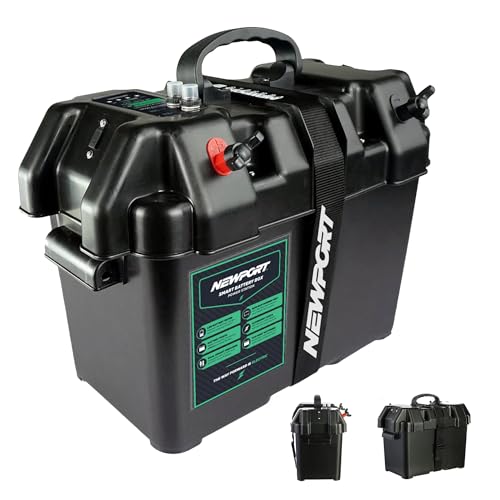
- ✓ Clean, external terminals
- ✓ Built-in USB and 12V ports
- ✓ Solid protection with breakers
- ✕ Lead-acid only
- ✕ Not lithium compatible
| Battery type compatibility | Lead-acid only (not compatible with lithium-ion batteries) |
| Built-in power outputs | USB port and 12V DC port |
| Overload protection | Integrated 10A and 60A circuit breakers |
| External connection access | External battery terminals for motor and electronics without opening the box |
| Applications / suitable vessels | Designed for kayaks, jon boats, and small watercraft |
| Physical features | Portable marine power center with secure lid, stable base, and rubber feet |
You’re swapping tangled wiring and exposed terminals for a clean, instant setup, and you notice it the moment you lift the Newport Trolling Motor Smart Battery Box Power Center. The lid snaps shut with a reassuring click, and the external terminals sit neatly on the side—no fumbling through cables to reach a connection.
On a windy morning, I appreciated how quickly I could plug in the trolling motor and a fish finder without drilling or poking holes in the boat’s battery area.
In practice, it feels purpose-built for small boats. The built-in 12V and USB ports are reachable without removing the lid, and the circuit breakers—10A and 60A—give you a tangible sense of protection when you’re reefing up the motor or trimming height on rough water.
The molded base and rubber feet keep the box stable on a slick deck, which matters when you’re motor-up and fighting spray.
What really helps is the built-in battery meter. You don’t have to guess when you’re halfway between a lake and a cove; a quick glance tells you if you’ve got enough juice to finish the day.
It’s designed for lead-acid batteries, so if you’re still running AGM or standard flooded cells, you’ll appreciate the clean, organized footprint this creates on your boat.
Setup time is dramatically reduced. There’s no need to chase loose cables or jury-rig a power hub under the console.
You’ll find the external connections are straightforward, and the whole unit feels rugged enough to survive a day of sun, spray, and a few bumpy wakes.
If you’re chasing a simple, portable power hub for a Minn Kota setup, this box makes more sense than a tangle of adapters. It’s a compact power center that reduces clutter and delivers dependable access when you need it most.
What Types of Batteries Are Compatible with Minn Kota Trolling Motors?
The types of batteries compatible with Minn Kota trolling motors include several variations that cater to different performance needs and vessel sizes:
- Lead-Acid Batteries: These are the traditional choice for trolling motors and come in two forms: flooded and AGM. Flooded lead-acid batteries are more affordable but require maintenance, while AGM (Absorbed Glass Mat) batteries offer better durability and do not require watering, making them more convenient for marine use.
- Lithium-Ion Batteries: Known for their lightweight and high energy density, lithium-ion batteries are becoming increasingly popular among anglers. They provide longer run times and faster charging capabilities compared to lead-acid options, but they tend to have a higher upfront cost.
- Gel Cell Batteries: These are a type of sealed lead-acid battery that uses a gel electrolyte instead of liquid. Gel cell batteries are maintenance-free and can be mounted in any position, making them a good choice for many trolling motor applications, although they may have lower discharge rates than lithium options.
- Deep Cycle Batteries: Specifically designed to provide a steady amount of current over an extended period, deep cycle batteries are ideal for trolling motors. They can be either lead-acid or lithium, and their construction allows them to be discharged and recharged multiple times without significant damage.
- 12V Marine Batteries: Most Minn Kota trolling motors operate on 12V systems, and marine batteries that are specifically designed for deep cycle use are optimal. These batteries are built to withstand the harsh conditions of marine environments and provide reliable power for long fishing trips.
Are Lithium Batteries Suitable for Minn Kota Trolling Motors?
The longer lifespan of lithium batteries means they offer better value over time, as you won’t need to replace them as often as traditional batteries. This durability is crucial for avid anglers who rely on their trolling motors for extended periods.
Faster charging times allow for a quick turnaround during fishing trips, enabling you to recharge during breaks or while at shore. This means you can maintain prolonged use without worrying about battery depletion.
The higher efficiency of lithium batteries translates to more power for your trolling motor, leading to improved performance and enabling you to travel longer distances on a single charge. This is particularly important for anglers who venture into remote areas.
Good temperature tolerance ensures that lithium batteries remain effective in both hot and cold conditions, allowing for more versatile use regardless of the season or climate. This reliability is key for outdoor activities that can be unpredictable.
How Do I Choose the Right Battery Voltage for My Minn Kota Trolling Motor?
Choosing the right battery voltage for your Minn Kota trolling motor requires understanding the compatibility and performance factors of various battery types.
- 12-Volt Batteries: Most Minn Kota trolling motors operate on 12-volt systems, making 12-volt batteries the most common choice. These batteries are typically available in lead-acid or lithium options, providing sufficient power for small to medium-sized boats and ensuring a good balance of weight and performance.
- 24-Volt Batteries: If you’re using a larger trolling motor or need more power for longer runs, a 24-volt battery system may be necessary. This setup usually involves two 12-volt batteries wired in series, providing double the voltage and extending the runtime, which is ideal for larger vessels or when operating in challenging conditions.
- 36-Volt Batteries: For high-performance demands, particularly in larger boats or for anglers who require sustained power, a 36-volt system is optimal. This configuration consists of three 12-volt batteries in series, delivering significant thrust and longer durations, suited for heavy-duty applications and long fishing trips.
- Deep Cycle Batteries: Selecting deep cycle batteries is crucial for trolling motors as they are designed to provide a steady amount of power over long periods. Unlike starter batteries, deep cycle batteries can be discharged and recharged multiple times, making them perfect for the repetitive usage typical in fishing scenarios.
- Lithium-Ion Batteries: Lithium-ion batteries are becoming increasingly popular due to their lightweight and high energy density. They offer longer lifespan, faster charging, and greater discharge rates compared to traditional lead-acid batteries, making them a smart choice for serious anglers looking for efficiency and performance.
What Battery Capacity Should I Select for Optimal Performance with My Minn Kota?
When selecting the best battery for a Minn Kota trolling motor, several factors should be considered for optimal performance.
- Group Size: The group size of the battery determines its physical dimensions and compatibility with your motor’s battery compartment.
- Voltage: Most Minn Kota motors operate on 12V, 24V, or 36V systems, so choosing the right voltage is crucial for effective operation.
- Capacity (Ah): The amp-hour (Ah) rating indicates how long the battery can provide power, with higher capacity batteries allowing for longer usage times.
- Battery Type: There are different types of batteries, including lead-acid, absorbed glass mat (AGM), and lithium-ion, each offering various benefits in terms of weight, lifespan, and maintenance.
- Discharge Rate: Understanding the battery’s discharge rate is important as it affects how quickly the battery can deliver power to the trolling motor.
Group Size: Choosing the correct group size ensures that the battery fits securely in your boat’s battery compartment. Common sizes include Group 24, Group 27, and Group 31, and selecting the right one can prevent movement or damage while in use.
Voltage: It is essential to match the battery voltage with your trolling motor’s requirements for reliable performance. A mismatch can lead to inefficient operation or even damage to the motor.
Capacity (Ah): A higher amp-hour rating means the battery can maintain power for a longer duration, which is particularly useful for extended fishing trips or when operating in low-current conditions. A typical recommendation is to select a battery with at least 100 Ah for most applications.
Battery Type: Lead-acid batteries are cost-effective but heavier and require regular maintenance. AGM batteries are maintenance-free and have a longer lifespan, while lithium-ion batteries are lightweight and provide longer run times but come at a higher price point.
Discharge Rate: The discharge rate affects how quickly a battery can deliver power. Choosing a battery with a suitable discharge rate ensures that it can handle the demands of your trolling motor, especially under heavy loads or during high-speed runs.
How Does the Discharge Rating Affect My Minn Kota Trolling Motor’s Performance?
The discharge rating significantly influences your Minn Kota trolling motor’s performance by determining how efficiently it can draw power from the battery during use.
- Discharge Rate (C-Rate): The discharge rate, measured in C-rates, indicates how quickly a battery can deliver current. A higher C-rate means the battery can supply power more quickly without degrading performance, which is crucial for the demanding power needs of a trolling motor.
- Battery Capacity: The overall capacity of the battery, often measured in amp-hours (Ah), works alongside the discharge rating to determine how long the trolling motor can run. A battery with a higher capacity and appropriate discharge rating ensures extended operation without the risk of depleting power too rapidly.
- Voltage Compatibility: It’s essential that the battery’s voltage matches the requirements of the Minn Kota trolling motor. A battery with an inadequate discharge rating may not maintain the necessary voltage under load, leading to reduced performance and potential motor damage.
- Type of Battery: Different types of batteries, such as lead-acid, lithium-ion, or AGM, have varying discharge characteristics. Lithium-ion batteries typically offer higher discharge rates and efficiency, making them suitable for high-performance trolling motors, while lead-acid batteries may struggle under heavy loads.
- Heat Generation: A high discharge rating can lead to increased heat generation during operation. Excessive heat can reduce battery lifespan and efficiency, so it’s crucial to choose a battery that can handle the trolling motor’s power demands without overheating.
Which Are the Best Batteries for Different Minn Kota Models?
The best batteries for Minn Kota trolling motors vary based on model and performance needs.
- Lead-Acid Batteries: These are traditional and widely used batteries for trolling motors.
- AGM Batteries: Absorbent Glass Mat batteries offer superior performance and longevity.
- Lithium-Ion Batteries: Known for their lightweight and high energy density, these batteries are becoming increasingly popular.
- Deep Cycle Batteries: Specifically designed for long discharges, these batteries are ideal for extended use on the water.
- Gel Batteries: These batteries offer a maintenance-free option with good deep cycling capabilities.
Lead-Acid Batteries: Lead-acid batteries are often the most cost-effective option and can deliver reliable performance for Minn Kota trolling motors. However, they are heavier and require regular maintenance to ensure longevity. These batteries typically provide sufficient power for short trips but may not last for extended fishing sessions.
AGM Batteries: AGM batteries are sealed and designed to withstand vibrations, making them well-suited for marine environments. They have a longer lifespan compared to traditional lead-acid batteries and can be mounted in any position without the risk of leakage. Additionally, AGM batteries charge faster and offer better deep-cycle performance.
Lithium-Ion Batteries: Lithium-ion batteries are lighter than lead-acid and AGM options, making them easier to handle and transport. They have a higher energy density, allowing for longer run times and faster charging. Although they come with a higher upfront cost, their longevity and efficiency can make them a worthwhile investment for avid anglers.
Deep Cycle Batteries: Deep cycle batteries are specifically designed to provide a steady amount of current over an extended period, making them ideal for trolling motors. These batteries can be discharged more deeply than standard batteries without damage, allowing for longer usage during fishing trips. They come in various forms, including lead-acid and AGM types, catering to different needs and budgets.
Gel Batteries: Gel batteries are another maintenance-free option, featuring a gel electrolyte that helps prevent spillage. They are resistant to deep cycling and can provide a stable power supply for trolling motors. However, they may not perform as well in extreme temperatures compared to AGM or lithium-ion batteries, which can be a consideration depending on your fishing environment.
What Maintenance Practices Can Extend the Life of My Minn Kota Battery?
Proper maintenance practices can significantly extend the life of your Minn Kota battery.
- Regular Charging: Consistently charge your battery after each use to maintain optimal performance.
- Proper Storage: Store your battery in a cool, dry place to prevent damage from extreme temperatures.
- Battery Maintenance: Check fluid levels and clean terminals to ensure good conductivity and prevent corrosion.
- Use the Right Charger: Utilize a charger specifically designed for your battery type to prevent overcharging and damage.
- Monitor Battery Health: Regularly test the battery’s voltage and performance to identify any potential issues early.
Regular Charging: Keeping your battery fully charged is essential for its longevity. When batteries are allowed to sit in a discharged state for extended periods, it can lead to sulfation, which diminishes their capacity and lifespan.
Proper Storage: Storing your battery in a cool, dry environment helps prevent thermal degradation. Extreme heat can accelerate battery wear, while freezing conditions can cause irreversible damage, particularly to lead-acid batteries.
Battery Maintenance: Regularly checking fluid levels and cleaning the terminals can prevent corrosion and ensure a strong connection. Corroded terminals can lead to inefficient power transfer, which can affect the performance of your trolling motor.
Use the Right Charger: Always use a charger that matches your battery’s chemistry and specifications. Using an incompatible charger can lead to overcharging, overheating, and potentially damaging the battery.
Monitor Battery Health: Keeping an eye on your battery’s voltage and performance can help you spot issues before they become serious problems. Regular testing allows you to address any declining capacity, ensuring your trolling motor operates efficiently.
What Common Mistakes Should I Avoid When Selecting a Battery for My Minn Kota?
When selecting the best battery for your Minn Kota trolling motor, there are several common mistakes to avoid:
- Choosing the wrong battery type: Many users mistakenly select a battery type that is not compatible with their Minn Kota motor. It’s essential to understand the differences between lead-acid, lithium-ion, and AGM batteries, as each has unique characteristics that affect performance, weight, and longevity.
- Insufficient amp-hour rating: A common error is opting for a battery with an inadequate amp-hour (Ah) rating for the motor’s requirements. The amp-hour rating determines how long your trolling motor can run at a certain power level; thus, choosing a battery with a too-low rating can lead to unexpected shutdowns while you’re out on the water.
- Neglecting weight considerations: It’s important to consider the weight of the battery, as heavier batteries can significantly affect the boat’s performance and handling. A battery that is too heavy may lead to poor maneuverability and increased fuel consumption, while a battery that is too light may not provide the necessary power or stability.
- Ignoring maintenance needs: Some users overlook the maintenance requirements of different battery types, which can lead to reduced lifespan and performance. For example, traditional lead-acid batteries require regular checking of fluid levels and terminal cleaning, whereas lithium-ion batteries generally require less maintenance but can be more expensive upfront.
- Not considering the discharge depth: Failing to account for the recommended depth of discharge (DoD) can lead to premature battery failure. For instance, lead-acid batteries should typically not be discharged below 50% to maintain their health, while lithium batteries can often handle deeper discharges without damage, thus affecting your selection based on your usage patterns.
- Overlooking warranty and support: Many buyers forget to check the warranty and customer support options available for the battery. A good warranty provides peace of mind and protection against defects, while responsive customer support can assist with any issues or questions that may arise during use.