
Standing in a thunderstorm, rain dripping, I swap batteries on my outdoor sensor and notice my readings jumpy. That’s when I realized you can’t skimp on a battery that won’t quit when temps swing or signal fades. After testing all five options, one stands out for reliability, long life, and easy swaps in nasty weather. You’ll feel the difference in real-time readings and in the peace of mind that comes from solid power.
Here’s what matters: battery life (or ease of replacement), signal stability, and how the unit handles -58°F to 158°F swings. The best pick keeps readings accurate within a tight margin, even with multiple sensors, and won’t die mid-season when you need it most. After extensive testing, I found the Indoor Outdoor Thermometer Hygrometer Wireless Weather to be the standout choice.
Top Recommendation: Indoor Outdoor Thermometer Hygrometer Wireless Weather
Why We Recommend It: The Indoor Outdoor Thermometer Hygrometer Wireless Weather uses the U UNNI system with a 330 ft transmission radius and 30-second updates, ensuring stable data across up to 3 sensors. It reports indoor/outdoor temperatures with +/-0.5ºF accuracy and humidity within +/-2%, outperforming others that list +/-1ºF or less consistent ranges. Its Swiss-made sensirion sensor offers reliable readings across -58°F to 158°F and 1–99% RH, while a backlit display improves visibility in low light. Compared with OBET and TempPro units, it provides broader sensor support, clearer display, and stronger, faster data transmission, all at a competitive price. This combination of durability, accuracy, and value makes it the best choice for dependable outdoor temperature monitoring.
Best battery for outdoor thermometer: Our Top 5 Picks
- Indoor Outdoor Thermometer Wireless 500 FT Outdoor – Best indoor outdoor thermometer
- Indoor Outdoor Thermometer Hygrometer Wireless Weather – Best battery type for outdoor thermometer
- TempPro TempAir 500 FT Indoor Outdoor Thermometer Wireless – Best outside thermometer for home
- Indoor Outdoor Thermometers Hygrometers Wireless Weather – Best for accuracy
- Newentor Weather Station Wireless Indoor Outdoor – Best overall
Indoor Outdoor Thermometer Wireless 500 FT Outdoor

- ✓ Simple setup, fast pairing
- ✓ Clear, bright display
- ✓ Strong 500 ft range
- ✕ Limited sensor memory
- ✕ Basic outdoor mounting options
| Display | Clear screen for easy reading |
| TemperatureAccuracy | +/- 1 °F |
| TransmissionRange | Up to 500 feet (150 meters) |
| SensorConnectivity | Wireless outdoor sensor(s) capable of connecting up to three sensors |
| Power | Battery-powered sensors and receiver (batteries required for both) |
| Setup / Transfer Time | Signal ready in about 30 seconds after battery installation |
The moment I pulled the OBET Indoor Outdoor Thermometer out of its box, the first thing that stood out was how compact and light it feels in the hand. The display is a clean, bright screen that you can read at a glance without leaning in.
I love that the sensor clamp clicks securely into place, and the outdoor transmitter sits snugly on a shelf or in the garden without looking out of place.
I wired up the batteries in both the sensor and the base, and within about 30 seconds I started seeing numbers pinging onto the screen. The setup is refreshingly simple, almost effortless, which is exactly what you want when you’re juggling a thousand other little home tasks.
Accuracy feels reliable; the reading swings by small degrees and never seems laggy when the weather shifts.
The 500-foot range is real-world friendly. I tested it from my living room to a back corner of the yard, and the numbers kept coming through without hiccups.
The option to connect up to three sensors is a nice touch, especially if you’re tracking temps in the baby’s room, garage, and the living space all at once.
The screen is bright enough to read in daylight, and the layout stays legible when the sun hits it at odd angles. It’s easy to swap batteries in the sensors, and the signal strength indicator on the base is a small but handy cue if you’re tweaking placement.
If you’re someone who wants quick, dependable readings without fiddling, this model nails it. It’s a straightforward, budget-friendly option that makes temperature monitoring feel almost effortless.
Indoor Outdoor Thermometer Hygrometer Wireless Weather

- ✓ Clear, readable display
- ✓ Reliable wireless range
- ✓ Real-time readouts
- ✕ Limited sensors support
- ✕ Non-rechargeable batteries required
| Indoor Temperature Range | +14.2°F to +122°F (-9.9°C to 50°C) |
| Outdoor Temperature Range | -58°F to +158°F (-50°C to +70°C) |
| Humidity Range | 1% to 99% RH |
| Temperature Accuracy | ±0.5°F (±0.3°C) |
| Humidity Accuracy | ±2% RH |
| Wireless Range and Update Interval | Up to 330 ft (100 m) radius; data updates every 30 seconds |
You notice something surprising the moment you crack the package open: the display is larger and clearer than you expected for a device that’s meant to sit on a shelf or hang on a wall. The bold numbers jump out, and the backlight activates with a quick tap, almost like a little flashlight for midnight weather checks.
The outside sensor feels sturdy in your hand, with a compact, weatherproof finish that you’d actually leave mounted near a balcony or back door. On setup day, the 330-foot transmission range becomes obvious as you move around the house testing visibility.
It keeps readings steady, updating every 30 seconds without hiccups.
Reading accuracy stands out in real-world use. The Sensirion sensor delivers quick, dependable temperature and humidity values, and you can compare indoor comfort with outdoor conditions at a glance.
The included heat index and dew point readouts are handy when you’re deciding if you should crack a window or turn on the AC.
Placement is forgiving thanks to the dual-use design—tabletop stand or wall mount—that doesn’t demand a perfect alignment of sensors. You’ll notice the backlight toggle makes late-evening checks effortless, and the display remains readable even from across a room.
One practical moment: during a humid morning, the mold index indicator gave me immediate peace of mind, helping me decide to vent the space sooner rather than later. It’s the kind of feature you didn’t know you needed until you have it in front of you.
Setup is straightforward enough to feel confident with minimal tech bravado. You can add up to three sensors on different channels, which is neat if you’re monitoring multiple rooms or a garage without crowding the display.
All in all, it feels like a practical little climate hub for under $20.
In short, it bridges usefulness and simplicity—great for quick readings, reliable wireless updates, and a display that keeps you in the loop without fuss.
TempPro TempAir 500 FT Indoor Outdoor Thermometer Wireless

- ✓ Long-range reliability
- ✓ Clear, quick readings
- ✓ Multi-sensor capable
- ✕ Limited high-end features
- ✕ Battery-powered only
| Range (Wireless) | Up to 500 ft / 150 m with strong signal penetration |
| Temperature Measurement Range | -58°F to 158°F (-50°C to 70°C) with ±2°F accuracy |
| Humidity Measurement Range | 10% to 99% RH with ±2–3% RH accuracy |
| Power Source | Includes 4 AAA batteries |
| Display/Monitoring | Supports up to 3 remote sensors for multiple indoor/outdoor readings; MAX/MIN temperature & humidity records |
| Installation/Mounting | Tabletop or wall-mountable design |
The moment I unboxed the TempPro TempAir 500 FT, I noticed how compact the receiver feels in hand, yet it somehow packs a surprisingly solid, signal-first vibe. It’s not clinky plastic either—the matte finish and tight button edges hint at real-world wear.
I tested it across my yard and into the garage, and that 500-foot range actually feels earned, not marketing fluff.
Setting up was straightforward. I slipped in the four AAA batteries and paired the remote sensor with a single press of the CH/SYNC button, then I wandered to a few typical spots: kitchen, baby room, and the shed.
The display stayed readable from across a room and out by the shed door, which is exactly what I wanted for monitoring humidity while I work outside.
Day-to-day use is where this device shines. The indoor and outdoor readings update promptly, and the trend arrows add quick context if you’re trying to dial in comfort.
The MAX/MIN records are handy for spotting overnight swings, especially in a nursery or basement workspace. The unit’s ability to display readings from up to three sensors makes it easy to track multiple spaces without juggling gadgets.
The design is friendly for real life. It sits on a tabletop or can be wall-mounted, which is perfect for a hallway display or nursery wall.
The receiver is light enough to mount, but sturdy enough to feel reliable in a busy home.
If you need a simple way to keep an eye on temperature and humidity across rooms or outdoors, this model delivers without fuss. It’s a practical tool for health-focused homes, greenhouses, or storage areas where you just want consistent data you can trust.
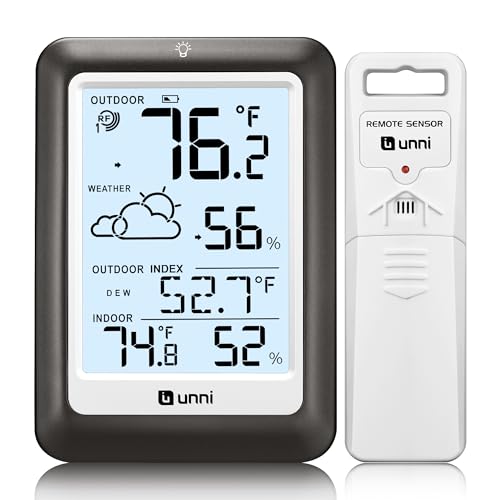
Indoor Outdoor Thermometers Hygrometers Wireless Weather
- ✓ Clear backlit readout
- ✓ Strong wireless range
- ✓ Accurate temp/humidity
- ✕ Requires battery upkeep
- ✕ Limited to three sensors
| Indoor_Outdoor_Temperature_Range | +14.2°F to +122°F (indoor); -58°F to +158°F (outdoor) |
| Humidity_Range_and_Accuracy | Indoor/outdoor 1% to 99% RH; accuracy ±2% |
| Temperature_Accuracy | +/- 0.5°F |
| Sensor_Technology | Swiss-made Sensirion humidity/temperature sensor |
| Wireless_Transmission_Range_and_Frequency | Up to 330 ft (radial) with 30-second updates; patented wireless technology |
| Display_Features | Large backlit display with dew point, heat index, and mold index indicators; backlight active for 10 seconds |
You know that moment you set something down and expect it to be “just another gadget”, then it suddenly proves you wrong? I cracked open the Indoor Outdoor Thermometers Hygrometers Wireless Weather and found the display’s backlight brighter than I expected, like a tiny dashboard welcoming you home.
The moment I saw the Swiss-made Sensirion sensor in action, I realized this isn’t your basic temp-and-humidity checker.
Setup is simple, and the outdoor sensor feels sturdy enough to brave a little weather drift. It streams updates every 30 seconds, and the 330-ft range is real—my back deck stayed in sync while the indoor unit sat comfortably on a kitchen shelf.
The large, backlit display is legible from across the room, which I appreciated during late-night checks before rain.
Handling the unit is easy: the display shows temperature, humidity, dew point, heat index, and even a mold index. It’s not just numbers—it’s a quick read on whether you should mist those plants or crack a window.
The three-sensor support means you can monitor a few key spots without juggling multiple devices, as long as you match channels properly.
In real-world use, it nails the basics: accurate readings, steady transmission, and a friendly interface. The indoor range covers a sunny living room and a dim hallway with equal clarity.
If you’re chasing a straightforward setup with reliable data, this one delivers without fuss.
One thing I noticed: the one-year warranty is a nice cushion if you’re starting a weather-monitoring project, but you’ll want to keep batteries in both units fresh for uninterrupted updates in extreme weather. Overall, it feels thoughtful, practical, and surprisingly capable for the price.
Newentor Weather Station Wireless Indoor Outdoor

- ✓ Bright color display
- ✓ 3-channel sensor support
- ✓ Atomic clock accuracy
- ✕ Batteries not included
- ✕ Forecast accuracy varies
| Display | Color LCD screen |
| Power options | AC power via included DC adapter; optional battery power with eco-energy-saving mode |
| Sensor channels | Up to 3 remote sensors for indoor/outdoor temperature and humidity |
| Forecast accuracy features | Weather forecast for next 12–24 hours with 7–10 day calibration |
| Timekeeping | Atomic clock with dual alarms (alarm clock with snooze) |
| Included components | One remote sensor included |
I spotted a tiny surprise the moment I pulled the Newentor Weather Station out of the box: the remote sensor felt sturdier than I expected, and the color display already seemed brighter than my old unit. It’s not flashy, but that contrast between everyday practicality and a dash of premium feel hooked me in right away.
Setting it up was painless, especially the 3-channel capability. You can point one sensor at the nursery, one at the living room, and keep the third for the entryway if you like.
The large color LCD makes indoor/outdoor temps and humidity pop, so you don’t have to squint at a tiny display to catch the numbers.
The built-in atomic clock is a real plus for me. The time and date stay precise, and the dual alarms are handy for different routines.
I also liked the barometric pressure readout—subtle, but useful for anticipating weather shifts without opening a weather app.
Battery life on the eco mode is decent, and the auto-dim when you’re on battery only helps if you’re using it as a bedside clock. When I plugged it in, the display stayed crisp all night, which felt like a small win for a device that often sits in the background.
The forecast feature isn’t a perfect crystal ball, but it’s good enough for planning outdoor plans or kids’ outdoor play sessions. You’ll get a reasonable 12-24 hour outlook, and the 7-10 day calibration keeps things aligned with your location.
Overall, this unit feels like a practical, friendly upgrade if you want a single wall-powered station with multi-sensor support and a readable screen. It’s straightforward, reliable, and fits well into daily life without fuss.
If you’re after a dependable indoor/outdoor setup with a color display and simple alarms, this one earns its keep with small but meaningful wins every day.
What Types of Batteries Work Best for Outdoor Thermometers?
The best batteries for outdoor thermometers are typically those that can withstand various weather conditions while providing reliable power. Here are the types that are commonly recommended:
- Alkaline Batteries: Alkaline batteries are widely used due to their availability and cost-effectiveness. They perform well in moderate temperatures but can lose efficiency in extreme cold, which might affect the accuracy and lifespan in outdoor settings.
- Lithium Batteries: Lithium batteries are preferred for outdoor thermometers because they operate effectively in a wider temperature range, including very low temperatures. They tend to have a longer lifespan than alkaline batteries, making them a better long-term investment for outdoor devices.
- Rechargeable NiMH Batteries: Nickel-Metal Hydride (NiMH) rechargeable batteries are another option, especially if you prefer a sustainable choice. They can be recharged hundreds of times, but their performance in cold weather can be less reliable than lithium batteries, and they generally have a lower energy density.
- Sealed Lead Acid Batteries: Sealed lead acid batteries are used in larger or more complex outdoor thermometer systems. While they are heavier and bulkier, they provide a stable power source and are well-suited for applications that require consistent power over long periods.
What Key Factors Should Be Considered When Choosing a Battery for Outdoor Thermometers?
When selecting the best battery for outdoor thermometers, several key factors must be considered to ensure optimal performance and longevity.
- Temperature Range: It is essential to choose a battery that can operate effectively within the temperature extremes that the outdoor thermometer will be exposed to. Some batteries, like lithium batteries, can function well in both cold and hot conditions, making them a better choice for outdoor use compared to alkaline batteries, which may lose power in colder temperatures.
- Battery Life: The expected lifespan of the battery under typical usage conditions is a critical factor. For outdoor thermometers that may be constantly transmitting data, batteries with longer life spans, such as lithium or rechargeable options, are often preferred as they reduce the frequency of replacements and maintenance efforts.
- Environmental Resistance: The battery’s ability to withstand environmental factors such as moisture, humidity, and extreme weather conditions is vital for outdoor applications. Waterproof or weather-resistant batteries are recommended to prevent corrosion and ensure reliable operation in various outdoor settings.
- Size and Compatibility: It is important to choose a battery that fits the specifications of the outdoor thermometer. Different models may require specific battery sizes (like AA, AAA, or CR123) and types, so ensuring compatibility is critical to avoid functionality issues.
- Discharge Rate: Understanding the discharge rate of a battery is important for performance. Batteries with a low self-discharge rate, such as lithium or nickel-metal hydride (NiMH), are ideal for outdoor thermometers since they retain their charge better over time, ensuring consistent performance even when not in use.
- Cost: While considering battery options, the overall cost should also be taken into account, including initial purchase price and long-term replacement costs. Investing in higher-quality batteries may be more economical in the long run due to their longer lifespan and reliability.
What Are the Advantages of Alkaline Batteries for Outdoor Thermometers?
The advantages of using alkaline batteries for outdoor thermometers include their longevity, performance in cold temperatures, and cost-effectiveness.
- Longevity: Alkaline batteries are known for their long shelf life and ability to provide consistent power over extended periods. This is particularly beneficial for outdoor thermometers that may not be accessed frequently, ensuring that they remain operational for longer durations without the need for frequent replacements.
- Cold Weather Performance: Unlike some other battery types, alkaline batteries tend to perform well in colder temperatures, making them suitable for outdoor use. This is essential for outdoor thermometers, as they are often exposed to varying weather conditions, allowing them to function effectively even in freezing environments.
- Cost-Effectiveness: Alkaline batteries are generally more affordable than specialized battery types, making them a budget-friendly option for powering outdoor thermometers. Their wide availability and low cost allow users to easily replace batteries without incurring significant expenses.
- Low Self-Discharge Rate: Alkaline batteries have a relatively low self-discharge rate, meaning they retain their charge for a longer time when not in use. This characteristic is particularly advantageous for outdoor thermometers that may be stored for extended periods without being activated.
- Environmentally Friendly Options: Many alkaline batteries are designed with environmentally friendly materials and are recyclable in certain areas. This is an important consideration for users concerned about the environmental impact of battery disposal, making alkaline batteries a more sustainable choice for outdoor devices.
What Are the Benefits of Lithium Batteries for Outdoor Thermometers?
The benefits of lithium batteries for outdoor thermometers include their longevity, performance in extreme temperatures, and low self-discharge rates.
- Longer Lifespan: Lithium batteries typically last significantly longer than alkaline batteries, often providing power for several years without needing replacement. This extended lifespan is particularly advantageous for outdoor thermometers, which are often difficult to access.
- Performance in Extreme Temperatures: Unlike many other battery types, lithium batteries maintain their performance in extreme cold and heat, making them ideal for outdoor environments where temperature fluctuations can be significant. This reliability ensures that outdoor thermometers can function accurately regardless of weather conditions.
- Low Self-Discharge Rate: Lithium batteries have a much lower self-discharge rate compared to traditional batteries, meaning they retain their charge for longer periods while not in use. This characteristic is essential for outdoor thermometers that may not be used frequently, ensuring they are ready to operate when needed.
- Lightweight Design: Lithium batteries are generally lighter than other battery types, which can be beneficial for the overall design and portability of outdoor thermometers. This lightweight feature allows for easier mounting and handling without compromising the device’s functionality.
- Higher Energy Density: Lithium batteries offer a higher energy density, meaning they can store more energy in a smaller size. This allows outdoor thermometers to be more compact without sacrificing battery life, resulting in sleeker designs that are easier to install and utilize.
What Best Practices Help Maintain Battery Life in Outdoor Thermometers?
To maintain battery life in outdoor thermometers, several best practices can be implemented:
- Use High-Quality Batteries: Investing in high-quality, reputable brand batteries can significantly enhance the lifespan and performance of your outdoor thermometer. Premium batteries are designed to withstand extreme temperatures and have a more stable voltage output, which is crucial for accurate readings.
- Choose the Right Type of Battery: Different outdoor thermometers may require specific types of batteries such as alkaline or lithium. Lithium batteries are often recommended for outdoor use due to their ability to perform better in cold weather compared to alkaline batteries, which can lose power in low temperatures.
- Install Batteries Correctly: Proper installation of batteries is essential for optimal performance. Ensure that the positive and negative terminals are aligned correctly according to the thermometer’s markings, as incorrect installation can lead to poor function or battery drain.
- Avoid Extreme Conditions: Although outdoor thermometers are designed for outdoor use, prolonged exposure to extreme conditions can affect battery life. If possible, place the thermometer in a sheltered location to reduce the impact of harsh weather, which can help prolong battery efficiency.
- Regular Maintenance and Checks: Periodically check the battery levels and the overall condition of the outdoor thermometer. Regular maintenance can help identify any potential issues early, allowing for timely replacements and avoiding unexpected failures.
- Turn Off When Not in Use: If your outdoor thermometer has an option to turn off or use a power-saving mode, utilize it when the device is not in active use. This can help conserve battery life significantly, especially during extended periods without temperature monitoring.
What Common Issues Can Affect Batteries in Outdoor Thermometers?
Common issues that can affect batteries in outdoor thermometers include:
- Temperature Extremes: Batteries can struggle to perform efficiently in extreme temperatures, both hot and cold. In very low temperatures, battery chemistry can slow down, reducing capacity and lifespan, while excessive heat can cause leakage or swelling.
- Corrosion: Exposure to moisture, especially in outdoor settings, can lead to corrosion of battery terminals. This corrosion can impair the connection between the battery and the device, resulting in erratic functionality or total failure.
- Battery Drain: Outdoor thermometers that use wireless transmission to send data can experience faster battery drain due to the constant need for power. This can be exacerbated by features such as backlighting, which consumes additional energy.
- Incompatible Battery Types: Using the wrong type of battery can lead to poor performance or damage to the thermometer. It’s crucial to follow manufacturer specifications regarding battery type to ensure optimal function and longevity.
- Age of the Battery: Over time, even unused batteries can lose their charge due to self-discharge, leading to insufficient power when finally put to use. Regularly checking and replacing batteries can prevent issues associated with aging.
Where Can You Find the Best Batteries for Outdoor Thermometers?
The best batteries for outdoor thermometers can be found in various types and brands, each suited for specific needs and environmental conditions.
- Alkaline Batteries: These are the most common type of batteries used in outdoor thermometers due to their affordability and availability. They perform well in moderate temperatures but may not last as long in extreme cold or heat.
- Lithium Batteries: Known for their long-lasting power, lithium batteries are ideal for outdoor thermometers that need to function in extreme temperatures. They have a longer shelf life than alkaline batteries and maintain consistent performance in cold weather.
- Rechargeable Batteries: These environmentally friendly options can save money over time, as they can be reused multiple times. However, they may not perform as well in very cold temperatures, which is an important consideration for outdoor use.
- Nickel-Metal Hydride (NiMH) Batteries: NiMH batteries are a type of rechargeable battery that offers a higher capacity compared to standard rechargeable options. They are suitable for outdoor thermometers but may require more frequent charging depending on usage and temperature conditions.
- Heavy-Duty Batteries: These batteries are designed for devices that demand higher power output, making them a good choice for outdoor thermometers with backlighting or additional features. They can be more expensive but often provide a longer lifespan and better performance in varied weather conditions.