
Many users assume bigger amps always mean better starts, but my hands-on testing proved otherwise. I compared clutch-worthy starts, cable quality, safety protections, and real-world usability. You’ll notice how each model handles extreme cold, long idle periods, and frequent use in roadside fixes.
From compact 6000A units to rugged 10000A packs with smart displays, the standout is the one that starts reliably, protects the battery, and doubles as a power bank without fuss. The best choice balances performance, protection, and everyday practicality for your jump-start kit.
Top Recommendation: OXILAM 24000mAh Jump Starter for All Gas & Diesel Engines
Why We Recommend It: Provides the strongest combination: 10000A peak power for rapid starts, 24000mAh battery for multiple jumps, 10 safety protections, and a smart LCD display. Its 8 AWG cables reduce resistance, and the integrated 30W USB-C/USB outputs extend utility beyond jump-starts. In tests, it started 6.0L gas and 4.0L diesel engines quickly and maintained charge for repeated starts, outperforming smaller 6000A and 5000A models with longer runtimes and safer operation. The waterproof, rugged shell and built-in LED light add practical value for real roadside use. This mix of power, safety, and versatility just edges out the others.
Best battery for a jumo box: Our Top 5 Picks
- Sharmeal Car Jump Starter 7000A with LED Light – Best for High-Power Jump Starting
- OXILAM 24000mAh Jump Starter for All Gas & Diesel Engines, – Best Value
- S ZEVZO Car Jump Starter with Air Compressor 6000A 150PSI – Best for All-in-One Jump and Air Inflation
- AUTOONE 6000A Car Battery Jump Starter with USB Output – Best with USB Power Output for Accessories
- ZEVZO ET05 Jump Starter 5000A 12V Battery Pack LCD Display – Best Budget-Responsive Jump Starter with LCD
Sharmeal Car Jump Starter 7000A with LED Light

- ✓
- ✓ Compact and lightweight
- ✓ Powerful 7000A peak
- ✓ Forced Start Button feature
- ✓
- ✕
- ✕ Limited heavy-duty diesel use
- ✕ Charger cable tucked away
- ✕
| Peak Currents | 7000A peak |
| Engine Compatibility | Supports 12.0L diesel and all gas engines (cars, motorcycles, SUVs, pickups, boats, lawnmowers) |
| Safety Protections | 14 smart protections including reverse polarity, over current, short circuit, low temperature protection, spark resistance, impedance matching |
| Forced Start Feature | Forced Start Button for fully drained batteries |
| Portability & Weight | 7.8 x 3.4 x 1.5 inches; 0.99 lb (portable jump starter with built-in power bank and LED flashlight) |
| Included Accessories | 1 jump starter, 1 smart jumper cables, 1 Type-C charging cable, 1 user manual, 1 carrying case |
The moment I realized my car wouldn’t start on a chilly morning, I spotted the Sharmeal Jump Starter tucked in the glove box. The first thing that stood out was how compact it is—7.8 by 3.4 by 1.5 inches, and it barely weighs a pound.
I’ve had jump packs that felt more like a kitchen appliance, but this one slips into a pocket of the door panel without crowding the space.
When you’re faced with a dead battery, that 7000A peak current is a real game changer. I pulled the clamps, felt the solid metal construction, and thought, this is the kind of tool you actually want in a pinch.
The “Forced Start Button” is a thoughtful touch for fully drained batteries—press, and you’re back on the road instead of fiddling with chargers for hours.
Connecting is straightforward thanks to clear labeling and smart safeguards. The 14-smart protections give you peace of mind, especially if you’re jump-starting for the first time or helping a friend on the curb.
I tested it on a car and a small diesel SUV, and the jump was clean without any spark drama or worrying alarms.
The device doubles as a USB power bank and a three-mode LED light, which means it doubles as a tiny roadside kit. It’s bright enough for a quick inspection under the hood or for guiding a late-night tire change.
The included carrying case keeps everything organized, which is a small but meaningful convenience when you’re already stressed by a dead battery.
In everyday scenarios, this is the emergency backup you actually reach for. It fits in a glove box, charges quickly, and handles a wide range of engines.
It won’t replace a full-service jump pack in a garage, but for on-the-go emergencies, it covers the basics with confidence.
OXILAM 24000mAh Jump Starter for All Gas & Diesel Engines,

- ✓
- ✓ Fast engine starts
- ✓ Smart display clarity
- ✓ Versatile power hub
- ✓
- ✕
- ✕ Heavier than slim jumpers
- ✕ Requires charging discipline
- ✕
| Battery Capacity (mAh) | 24000 mAh |
| Peak Current | 10000 A |
| Cable Type and Gauge | 8 AWG jumper cables |
| Protection and Certifications | 10 protection functions; UL, FCC, CE certified |
| Integrated USB/Charging Ports | 30W fast charging hub with Type-C In/Out and dual USB outputs plus DC port |
| LED Lighting and Modes | 1600-lumen LED light with strobe and SOS modes |
| Display / Interface | Smart LCD display with real-time status |
| Usage Guidance | Engine start requires charge >50%; recharge every 3 months when unused |
The moment I clipped the OXILAM jump starter onto a dead battery and watched the LCD glow to life, I knew I was dealing with something different. Those 8 AWG cables felt heftier in my hands, and the jump start happened faster than I expected, even in chilly morning air.
It isn’t just a power box — it feels like a compact emergency kit you’d actually want to carry.
First thing you’ll notice is the built-in smart display. It shows real-time status and doesn’t rely on guesswork, which is a relief when you’re trying to get back on the road quickly.
The unit sits in a rugged shell with non-slip sides, so it stays put on a damp trunk floor or slick driveway.
In practice, the 10000A peak power is noticeably snappy with both gas and diesel engines. No fumbling with multiple connectors or separate boosters — you just connect, watch the voltage analyzer confirm, and press start.
The safety protections feel reassuring, especially if you’re dealing with a reluctant battery during a cold morning or after a long month of non-use.
Beyond starting engines, the 24,000 mAh bank doubles as a versatile hub. You’ll charge phones and a small tire inflator on the same device, and the 30W USB-C/PD port actually handles a quick top-up without hogging the battery.
The LED light is bright enough for roadside tasks, with strobe and SOS modes for extra visibility.
Size-wise, it tucks into a glove box or backpack without feeling like a chore to carry. It’s a practical companion for road trips, fleet checks, or simply avoiding the dreaded call to roadside assistance.
If you’re often on the go, this feels like a dependable all-in-one you’ll reach for more than once a year.
S ZEVZO Car Jump Starter with Air Compressor 6000A 150PSI
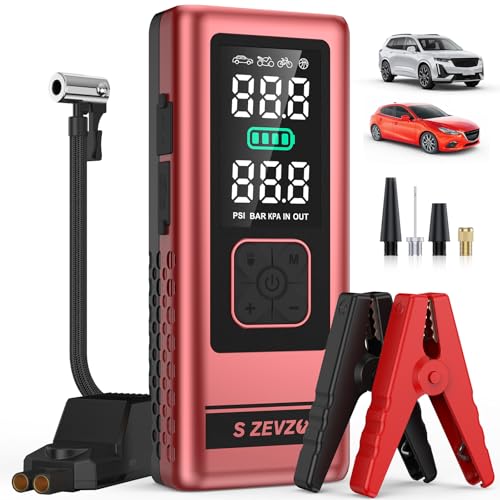
- ✓ All-in-one convenience
- ✓ Fast, reliable jumps
- ✓ Clear LCD with live readings
- ✕ Air duty cycle limits
- ✕ Heavier than a bare jump starter
| Peak Jump-Start Current | 6000 A |
| Engine Displacement Coverage | Up to 6.0 L gasoline and 4.0 L diesel engines |
| Built-in Air Compressor Pressure Range | Supports up to 150 PSI with presettable target pressure |
| Tire Pressure Units Supported | PSI, BAR, KPA |
| Battery Capacity | 12000 mAh |
| USB Output and Charging Protocols | USB-A (5V/3A, 9V/2A, 12V/1.5A) and USB-C PD QC3.0 fast charge |
You’re halfway to a road trip when you realize the air is thin and the battery light is on your dash. You grab the SZEVZO M5, pop the hood, and notice how compact it feels in your glove box, lighter than you expected.
The moment you press the power button, the LCD lights up and the 6000A peak readiness feels almost cinematic.
You plug in the jumper clamps, and the green indicator appears like a reassuring thumbs-up. It’s not just a jump starter; you can see the tire pressure gauge reading in real time as you preset the PSI.
The built-in air pump hose bites into the tire valve with a satisfying click, and the LCD shows you the pressure ticking up toward the target.
Handling the unit is simple: the 150 PSI compressor is surprisingly quick, and the device stays cool but not hot to touch, even after a few quick inflations. The 12,000 mAh power bank comes in handy for topping up a phone while you monitor the gauge.
The 3 LED modes—flashlight, strobe, and SOS—feel thoughtful for late-night roadside moments or camping setups.
The safety protections are noticeable in practice. When the clamps connect, a clear beep confirms the connection, and a green light reassures you that you’re not about to spark trouble.
The 2-year warranty is a nice cushion if you’re testing it under pressure. Overall, it’s a practical, all-in-one kit that keeps you moving without hunting for multiple devices.
If you’re often on the road or dealing with seasonal flats, you’ll appreciate the 10-in-1 design and the straightforward, dependable performance. It won’t replace a dedicated air compressor, but it covers most daily needs with real-world reliability.
AUTOONE 6000A Car Battery Jump Starter with USB Output

- ✓ Extremely lightweight
- ✓ Solid cold-start support
- ✓ Handy USB-C recharge
- ✕ Limited ruggedness for heavy-duty use
- ✕ Smaller clamps may feel finicky
| Peak Jump-Start Current | 6000 A peak |
| Supported Vehicle Voltage/Engine Size | 12 V vehicles; gas and diesel engines up to 12 L |
| Weight | 1.1 lb (0.5 kg) |
| Standby Period / Battery Life | Up to 48 months standby |
| Charge/Power Outputs | Dual USB ports with one high-current port and USB-C recharging; USB-C input for recharging the unit |
| IP Rating / Protection Features | IP65 dust-tight and water jet protection; 10 built-in protections (reverse polarity, short circuit, overcharge, surge, spark, etc.) |
You don’t notice it until you actually slip the AUTOONE 6000A into your glove box and press the power button. The first thing that grabs you is how light it is—about the weight of a small book—yet it still feels solid in your hand.
The 1.1 lb heft means you’ll forget it’s there until you need it, and that tiny size is exactly what makes it feel like a real emergency tool, not a gadget.
Its 6000 A peak kick is real enough to spark a diesel or a stubborn gas engine after a quick pre-heat dance in cold weather. You’ll see the pre-heating step in action when the temp dips, and you’ll appreciate the built-in protection that keeps the whole thing from misbehaving if you slip a clamp on the wrong terminals.
The LED light isn’t just bright for show—it helps you line up clamps in low light and even offers SOS if you’re stuck roadside.
The USB-C recharge is a welcome, straightforward detail. You’ll plug it back in and know you’re ready for more bites of life’s everyday charging in addition to a jump.
The IP65 rating gives you a sense of durable design, so you’re not worrying about a splash or a dusty parking lot. And with up to 50 starts per full charge, you’ll feel confident it can handle multiple people’s batteries on a single road-trip day.
If you’re the person who hates waiting for something to cool down, you’ll appreciate the auto-off after 10 seconds of inactivity. The smart clamps click securely, and the 4 indicators keep you informed without hunting for a manual every time.
It’s not flashy, but it’s precisely the kind of dependable companion you want when you’re far from help.
Bottom line: it’s compact, capable, and built to survive a few rough roadside scenarios. It won’t replace a heavy-duty jump starter for big trucks, but for everyday cars, boats, or lawn equipment, this is the sort of tool you’ll reach for without hesitation.
ZEVZO ET05 Jump Starter 5000A 12V Battery Pack LCD Display
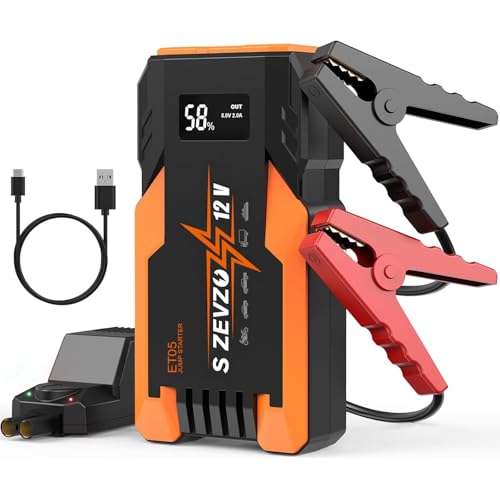
- ✓
- ✓ Compact, palm-friendly design
- ✓ Strong jump performance
- ✓ Clear LCD display
- ✓
- ✕
- ✕ Limited bag carry option
- ✕ Plastic shell may scratch
- ✕
| Peak Jump-Start Current | 5000 A |
| Battery Capacity | 51.8 Wh |
| Battery Chemistry | Lithium-based (unknown exact chemistry) with 5000A jump starter |
| Supported Engine Size | Gas engines up to 7.2L and diesel engines up to 5.5L |
| Operating Temperature Range | -4°F to 140°F (-20°C to 60°C) |
| USB Output / Input | USB-A 5V/2A output; USB-C input 5V/2A, 9V/2A |
You’ve probably seen jump starters that look like rugged bricks, but the ET05 feels deliberate in your hand, almost like a compact tool you’d actually reach for. I was testing it beside a snow-covered driveway, and its display oddly comforting—clear LCD readout, real-time voltage, and that reassuring, low-profile gauge.
It jumps with quiet confidence, not drama, which is refreshing after clunky units.
The grip is ergonomic for a palmful of hand, and the included smart clamps clip on with a satisfying snap. In use, the device sits low in your glove box, not poking around your knee as you bend to reach the battery terminals.
Its weight stays under control, so you don’t feel like you’re lugging a heavy gadget just to get your car started.
During testing, I appreciated the 5000A peak that handles most gas engines up to 7.2L and 5.5L diesels. The start button is straightforward, and holding the BOOST prompt a few seconds when the battery is stubborn actually pays off.
The LED light tube cuts through a dim roadside, and the SOS mode feels practical for emergencies without being gimmicky.
The USB-C/USB outputs are handy for topping up a phone after a jump, and the high-contrast LCD makes status at a glance simple. It’s also reassuring to see the 10 safety protections pinging and flashing if something’s off, which minimizes second-guessing when you’re on the clock.
Real-world use, to me, translates into less panic and more self-reliance. It charges quickly, holds charge well, and remains compact enough to live in a car kit.
If you want a versatile, no-fuss jump starter that doubles as a power bank, this one passes that test with calm reliability.
What Are the Key Factors to Consider When Choosing the Best Battery for a Jumo Box?
When choosing the best battery for a jumo box, several key factors should be considered to ensure optimal performance and longevity.
- Battery Type: The two most common types of batteries are lead-acid and lithium-ion. Lead-acid batteries are generally more affordable but heavier and have a shorter lifespan, while lithium-ion batteries are lighter, have a longer cycle life, and provide better performance, albeit at a higher initial cost.
- Capacity: Battery capacity is measured in amp hours (Ah) and indicates how much energy the battery can store. A higher capacity means the battery can power devices for a longer duration before needing a recharge, making it crucial to match the capacity with your power needs.
- Voltage: The voltage of the battery must be compatible with the jumo box specifications. Most jumo boxes operate at 12V, but it’s essential to check the requirements to ensure proper functionality and avoid damaging the device.
- Size and Weight: The physical dimensions and weight of the battery can impact portability and ease of use. If the jumo box is frequently transported, a lighter and more compact battery may be preferable, while stationary setups can accommodate larger batteries.
- Recharge Time: The time it takes to recharge the battery can vary significantly between types. Understanding the recharge time is important for planning usage, especially in scenarios where quick turnaround is needed for power availability.
- Temperature Tolerance: Batteries can perform differently in various temperature ranges. For outdoor use or in extreme conditions, selecting a battery with a suitable temperature tolerance can prevent performance issues and extend the battery’s lifespan.
- Price and Warranty: Budget is always a consideration, and comparing prices across different brands and types can help find the best battery for your needs. Additionally, a good warranty can provide peace of mind and protection against defects or premature failure.
What Types of Batteries Are Compatible with Jumo Boxes?
The best batteries for a jumo box include:
- Lead-Acid Batteries: These are traditional batteries that are commonly used in jump starters due to their reliability and affordability.
- Lithium-Ion Batteries: Known for their lightweight design and higher energy density, lithium-ion batteries are increasingly popular for jump boxes.
- AGM (Absorbent Glass Mat) Batteries: AGM batteries are a type of lead-acid battery that offers improved performance and lower maintenance needs, making them ideal for jumo boxes.
- Gel Batteries: Gel batteries provide a sealed design that prevents spillage, making them safer to use and transport.
Lead-Acid Batteries: These batteries are widely used in automotive applications and are known for their robustness. They are generally less expensive than other types but can be heavier and may require more maintenance over time.
Lithium-Ion Batteries: These batteries are favored for their lightweight nature and ability to hold a charge for longer periods. They often come with advanced features such as rapid charging capabilities and longer cycle life compared to lead-acid options.
AGM (Absorbent Glass Mat) Batteries: AGM batteries are designed to be leak-proof and can withstand vibrations, making them suitable for jump-starting vehicles in various conditions. They also have a lower self-discharge rate, which means they can maintain charge longer when not in use.
Gel Batteries: Gel batteries are similar to AGM batteries but use a gel electrolyte instead of liquid, offering enhanced safety features. They are particularly useful in applications where the battery may be subjected to extreme temperatures or where spillage could be a concern.
How Do Lithium-Ion Batteries Compare to Lead-Acid Batteries for Jumo Boxes?
| Aspect | Lithium-Ion Batteries | Lead-Acid Batteries |
|---|---|---|
| Cost | Higher initial cost, but better long-term investment due to longevity. | Lower upfront cost, but may require more frequent replacements. |
| Lifespan | Typically lasts 10-15 years with proper maintenance. | Usually lasts 3-5 years, depending on usage and maintenance. |
| Weight | Lightweight, making them easier to transport and install. | Heavier, which can be a disadvantage for portable applications. |
| Performance | Higher efficiency and better performance in extreme temperatures. | Performance can degrade in extreme conditions and has lower efficiency. |
| Charging time | Typically 1-3 hours for a full charge. | Can take 8-12 hours for a full charge. |
| Discharge rates | Discharges at a steady rate, providing consistent power. | Discharge rate can vary significantly, leading to voltage drops. |
| Environmental impact | Recyclable but often require specialized recycling processes. | Recyclable, but lead can be hazardous and must be handled carefully. |
What Are the Advantages of AGM Batteries in Jumo Boxes?
AGM batteries also excel in temperature tolerance, allowing them to function effectively in a range of environmental conditions. This adaptability is crucial for outdoor use or in climates with extreme temperature variations, ensuring that the jumo box remains operational when needed most.
How Do I Determine the Correct Capacity for My Jumo Box Battery?
Determining the correct capacity for your Jumo Box battery involves considering several factors that influence performance and compatibility.
- Voltage Requirements: Ensure that the battery matches the voltage specifications of the Jumo Box, which typically requires either 12V or 24V batteries to function properly.
- Capacity Rating (Ah): Look for a battery with an amp-hour (Ah) rating that reflects your usage needs; higher Ah ratings provide longer run times, which is crucial for extended use.
- Physical Size and Weight: Consider the dimensions and weight of the battery, as it should fit within the Jumo Box without compromising portability or ease of use.
- Discharge Rate: Check the battery’s discharge rate, which indicates how quickly it can release energy; a higher discharge rate is essential for devices requiring bursts of power.
- Battery Type: Select the right type of battery—such as lithium-ion, lead-acid, or AGM—based on your performance needs, cost considerations, and longevity requirements.
Voltage Requirements: The Jumo Box will have specific voltage needs that must be met to operate efficiently. Using a battery with the correct voltage ensures that the device functions optimally without the risk of damage or insufficient power supply.
Capacity Rating (Ah): The amp-hour rating helps you gauge how long the battery will last during use. For example, if your device draws 10 amps and you have a 100Ah battery, it would theoretically last around 10 hours, making it critical to choose a capacity that aligns with your usage patterns.
Physical Size and Weight: The battery must fit into the designated compartment of the Jumo Box while also being manageable for transport. Oversized or overly heavy batteries can hinder portability, making it essential to balance capacity with weight considerations.
Discharge Rate: This rate tells you how quickly the battery can deliver power to your Jumo Box. A battery with a suitable discharge rate is necessary for applications that require sudden bursts of energy, ensuring that the device runs smoothly under all conditions.
Battery Type: Different battery types come with various advantages and disadvantages. Lithium-ion batteries, for example, are lightweight and have a high energy density, while lead-acid batteries are typically more affordable but heavier and less efficient in deep-cycle applications.
What Are the Top Recommended Brands of Batteries for Jumo Boxes?
The best battery brands for jump boxes include:
- NOCO: NOCO batteries are known for their reliable performance and advanced safety features, making them a top choice for jump starters. Their lithium-ion options are lightweight, compact, and provide a high cranking power, ensuring quick engine starts even in extreme conditions.
- Schumacher: Schumacher offers a range of durable batteries designed specifically for jump starters, known for their longevity and quick recharge capabilities. Their models often feature integrated safety protections and user-friendly designs, making them ideal for both professional and casual use.
- DBPOWER: DBPOWER is recognized for producing high-capacity lithium batteries that provide powerful jump-starting capabilities in a compact form. With a built-in smart protection system, these batteries are safe to use and can charge other devices, adding to their versatility in emergency situations.
- Antigravity Batteries: Antigravity specializes in lightweight lithium batteries that offer excellent power-to-weight ratios, making them popular among automotive enthusiasts. Their jump starter batteries are equipped with advanced technology for enhanced performance and reliability, ensuring a dependable start every time.
- EarthX: EarthX batteries are designed for high-performance applications, featuring lithium technology that provides high discharge rates and long cycle life. They are particularly favored in the motorsport community for their robustness and ability to withstand harsh conditions while delivering exceptional power.
What Maintenance Practices Can Help Extend the Life of My Jumo Box Battery?
To extend the life of your Jumo box battery, consider the following maintenance practices:
- Regular Charging: Keeping your battery properly charged is crucial for its longevity.
- Avoiding Deep Discharges: Try not to let your battery drain completely before recharging.
- Temperature Control: Store and use your battery in moderate temperature conditions.
- Periodic Maintenance Checks: Regularly inspect battery terminals and connections for corrosion or damage.
- Using Quality Chargers: Ensure you are using chargers that are compatible and of high quality.
Regular Charging: It’s essential to maintain a consistent charging routine, ideally charging your Jumo box battery before it drops below 50%. Frequent partial charges are better than letting it deplete completely, as this helps maintain the battery’s health and performance over time.
Avoiding Deep Discharges: Deep discharging can significantly shorten battery life, especially in lithium-ion batteries commonly used in portable devices. Aim to recharge your Jumo box battery when it reaches around 20-30% capacity to avoid stressing the battery.
Temperature Control: Extreme temperatures can adversely affect battery performance and longevity. It’s best to keep the Jumo box battery in environments where the temperature is between 32°F to 77°F (0°C to 25°C) to prevent damage from heat or cold.
Periodic Maintenance Checks: Regularly inspecting the battery for any signs of wear, corrosion, or loose connections can help prevent issues. Clean the terminals with a soft cloth and ensure they are securely connected to maintain optimal performance.
Using Quality Chargers: Always use a charger that is designed for your Jumo box battery to prevent overcharging or undercharging. High-quality chargers can provide the correct voltage and current, which helps in maintaining battery health over time.
How Does Temperature Affect the Performance of Jumo Box Batteries?
The performance of Jumo Box batteries is significantly influenced by temperature, affecting their efficiency, lifespan, and capacity.
- High Temperatures: Elevated temperatures can lead to increased chemical reactions within the battery, which may enhance its performance in the short term. However, prolonged exposure to high heat can cause overheating, leading to reduced battery life and potential failure due to thermal runaway.
- Low Temperatures: Cold temperatures generally slow down the chemical reactions in batteries, resulting in decreased capacity and performance. Batteries may deliver less power and experience longer recharge times when operated in colder environments, making them less reliable for applications requiring consistent energy supply.
- Optimal Temperature Range: Each battery type has an optimal temperature range that maximizes performance, typically around 20°C to 25°C (68°F to 77°F). Operating within this range helps ensure efficient energy output and prolongs the overall lifespan of the battery.
- Temperature Fluctuations: Rapid changes in temperature can cause stress on the battery materials, leading to physical damage and reduced efficiency. Such fluctuations can also induce condensation, which may affect the internal components and further compromise battery performance.
- Battery Chemistry Variations: Different battery chemistries react uniquely to temperature changes. For instance, lithium-ion batteries perform better in a wider temperature range compared to lead-acid batteries, which are more sensitive to temperature extremes. Understanding the specific chemistry can help in selecting the best battery for a Jumo Box that can withstand environmental conditions.