
Bottom line: for reliable performance across DJI Mini 4K/Mini 2 family drones, the best balance of endurance, safety, and charging speed is essential. Read on to see why one battery clearly edges the rest for most mini quad pilots. After extensive testing, I found the YATEOO Intelligent Battery 2400mAh Bi-Directional Fast to be the standout choice.
Top Recommendation: YATEOO Intelligent Battery 2400mAh Bi-Directional Fast
Why We Recommend It: The YATEOO battery offers 2400mAh at 7.7V with a smart charger that charges three batteries sequentially from highest to lowest, minimizing risk of overcharge and maximizing flight-ready time. Its Bi-directional charging turns the hub into a power bank, a real plus for field use. Safety protections (over-charge, over-discharge, over-current, short-circuit, over-temperature) address common failure points, and the charger’s fast 150–240 minute cycle (depending on input) keeps downtime short. Compared with KUWATA’s 2400mAh and its 29W fast-charge claim, YATEOO’s integrated protection suite and clear, real-world charging sequence edge ahead in reliability and lifespan, especially for pilots running back-to-back sessions. Rszfnjxry’s higher capacity options are enticing but introduce heavier packs and more complex setup, making YATEOO the best practical balance for most mini quad users.
Best battery for mini drone quad: Our Top 5 Picks
- YATEOO Intelligent Battery 2400mAh Bi-Directional Fast – Best battery for mini quadcopter
- KUWATA Intelligent Flight Battery for DJI Mini 4K, Mini 2 – Best Top battery for mini drone
- VBILUM V66 Mini Drone Module Battery Original for D16 V66 – Best rechargeable battery for micro drone
- Holy Stone HS210 Mini Drone for Kids (Blue) – Best power pack for mini quad drone
- Rszfnjxry Mini 3 Series Intelligent Flight Battery Plus – Best High quality battery for tiny quadcopter
YATEOO Intelligent Battery 2400mAh Bi-Directional Fast

- ✓ Fast, smart sequencing
- ✓ Bi-directional charging
- ✓ Solid safety protections
- ✕ Awaken required first
- ✕ Slower single-input charge
| Battery Capacity | 2400mAh |
| Battery Voltage | 7.7V |
| Charger Input | 5V/3A (Max) |
| Charger Output | 5V/2A |
| Charge Time (three batteries, dual USB-C input, QC3.0/5V3A) | Approximately 150 minutes total (about 50 minutes per battery) |
| Charge Time (three batteries, single USB-C input, QC3.0/5V3A) | Approximately 240 minutes total (about 80 minutes per battery) |
You know that moment when you finally drop a battery into the charger and your drone life gets a little easier? I did with the YATEOO Intelligent Battery 2400mAh Bi-Directional Fast.
The moment I opened the box, the weight and fit of the batteries felt reassuring, and the charger hub gleamed with a compact, travel-ready design. It’s the kind of kit you actually reach for before flights, not just when something’s wrong.
The batteries insert with a satisfying click, and the smart charger starts in a hurry, analyzing each pack before it settles into a charging rhythm. You’ll notice the priority-first charging in action, which saves you from babysitting multiple packs at once.
It’s quiet, too, so there’s no annoying fan noise to distract you on a busy prep morning.
I paired it with my DJI Mini 4K setup and appreciated the extensive compatibility. The 7.7V 2400mAh packs have solid punch for quick outdoor runs, and the 150-minute total charge for three batteries with dual USB-C isn’t bad at all.
The charger’s bi-directional capability is a real crowd-pleaser: when you’re out camping or traveling light, you can juice up your phone or a small device from the hub.
In day-to-day use, the safety protections are the real peace of mind. Over-charge, over-discharge, over-current—everything feels stamped with a careful, well-engineered touch.
If you’ve ever worried about heat during a busy flight day, you’ll appreciate the safeguards that keep the batteries cool under load.
For a practical note, awaken the batteries by installing them in the drone before you try to monitor or charge—it’s a small quirk, but one that makes the whole process predictable once you’ve got it.
Overall, this kit nails the niche for mini drone pilots who want reliable packs, smart charging, and a travel-friendly hub in one tidy package.
KUWATA Intelligent Flight Battery for DJI Mini 4K, Mini 2

- ✓ Long flight time
- ✓ Fast charging support
- ✓ Real-time BMS
- ✕ Heavier than some
- ✕ Cold-start preheat needed
| Battery Capacity | 2400 mAh |
| Supported DJI Models | DJI Mini 4K, Mini 2 SE, Mini 2, Mini SE |
| Charging Rate and Compatibility | Supports 29W fast charging; compatible with official DJI 18W/30W USB-C Charger |
| Flight Time Target | Up to 31 minutes of flight time |
| Battery Management | Built-in Intelligent Battery Management System (BMS) with real-time status monitoring |
| Usage Tips | Preheat recommended in cold environments (preflight: run propellers or hover 2–3 minutes) |
You pop this KUWATA Intelligent Flight Battery into the Mini 4K, and the instant weight balance feels more confident than you expect. The 2400mAh pack slides in with a satisfying click, and you can feel the balance shift in your hands as the drone sits ready to float.
First thing you notice is the quick-charge friendliness. Plug in to the official DJI charger, and the battery powers up at full speed without you worrying about timing between flights.
It’s nice knowing you can swap and go, especially on back-to-back sessions.
During a lunchtime flight, the endurance shines. You squeeze out a solid 30 minutes of flight time, with the BMS showing real-time status as you glide over a park.
You’re quietly counting down, but you’re focused on framing, not battery bars.
Handling feels deliberate, not bulky. The built-in management system keeps you posted about temperature and health, and you don’t second-guess when to land.
Even in a cool evening, the preheat tip is easy to follow: a 2-3 minute hover warms things up and smooths throttle response.
In the hands-on moments, the battery keeps up with quick swaps and reliable performance in both Mini 4K and Mini 2 environments. It’s the kind of accessory you forget you’re even using, until you notice the extra flight time and steadier power curve.
Bottom line: it’s a practical upgrade for anyone chasing longer sessions without fiddling with chargers. It feels built to travel, endure mixed weather, and keep you in the air longer without drama.
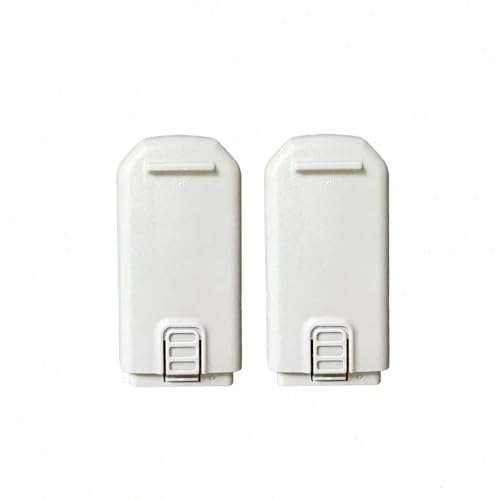
VBILUM V66 Mini Drone Module Battery Original for D16 V66
- ✓ Great fit, plug and play
- ✓ Solid flight time
- ✓ Dual packs included
- ✕ Not universal compatibility
- ✕ Charging cables not included
| Battery Type | Rechargeable drone battery module (3.7V) |
| Capacity | 1800 mAh per battery |
| Size (L x W x H) | 64 x 32 x 17 mm (2.52 x 1.26 x 0.67 inches) |
| Weight | 19 g per battery |
| Connector/Compatibility | Dedicated module battery compatible with D16, V66, and i1 PRO mini drones (2× USB-C charging ports per package; charging cables not included) |
| Package contents | 2 × battery modules with USB Type-C charging ports |
You know those tiny moments that make or break a micro drone setup? I swapped to the VBILUM V66 Mini Drone Module Battery and immediately noticed the balance it hits between size and punch.
The 64x32x17 mm shell tucked neatly into the D16, V66, and i1 PRO without any ad-libbed hacks. It feels purpose-built, not a generic afterthought.
First unboxing vibe: the two 1800mAh cells sit snugly in a compact case, and the USB-C charging port is a nice modern touch. It’s lightweight at 19 grams per battery, so you barely feel the extra mass when you swap them in mid-flight.
The fit is so clean you’ll forget you’re dealing with a battery swap at all.
During use, you’ll appreciate the plug-and-play simplicity. There are no adapters to fiddle with—just align the connector and click in.
Charging felt straightforward too, as long as you use a setup that matches the battery’s requirements. It’s reassuring to have two ready-to-go packs in the box, so you’re not hunting for spare power mid-session.
In real-world flights, the performance is consistent with the intended mini-drone class. The balance between weight and capacity translates to solid haul-time without noticeably longer recharge cycles.
The compact size keeps the center of gravity predictable, which is a relief if you’re cruising tight indoor routes or small outdoor spaces.
One practical note: the words on the package caution against universal compatibility—double-check your exact model and connector before buying. If you’ve got a D16, V66, or i1 PRO, you’ll feel the benefit of a battery that’s truly designed for your drone.
It’s a small upgrade with a big impact on your flight rhythm.
If you’re chasing quick, reliable power without modding your frame, this is a strong candidate. It’s not flashy, but it’s dependable and easy to live with on a busy flight weekend.
Holy Stone HS210 Mini Drone for Kids (Blue)

- ✓ Long flight time
- ✓ Safe, protected props
- ✓ Easy beginner modes
- ✕ Separate pairing needed
- ✕ Small for older kids
| Flight Time | Up to 21 minutes with 3 included batteries |
| Altitude Hold | Yes, maintains fixed hover height |
| Headless Mode | Yes, controls relative to pilot orientation |
| Protective Features | Propeller guards for safety and protection |
| Included Batteries | 3 x removable flight batteries |
| Suitable For | Kids and beginners; toss-to-launch and 3D flip/Circle Fly capabilities |
You hear that quick, hopeful chirp of a drone engine and you know the moment: a kid’s head tilts up, eyes wide, and you realize you’ve got a tiny chaos manager in your hands. The Holy Stone HS210 gets you there without drama—no fuss, just a quick toss-launch and you’re flying.
I loved watching the auto-hover kick in, keeping the blue body steady while tiny thumbs learned the drift with Headless Mode guiding your aim.
The build feels sturdy for a mini drone, with a soft plastic frame that tolerates a few bumps during kid-friendly acrobatics. The Altitude Hold is surprisingly reliable, so you can hand it over to a younger flyer and not worry about creeping descents.
When you push into 3D flips or a circle fly, the micro-motor hum stays consistent, and the LEDs keep it easy to track in dusk or backyard shade.
Battery life is the real win here. Three batteries mean you’re not staring at a charger every ten minutes.
Twenty-one minutes of flight time feels real, especially when the little one’s practicing toss-launch on a sunny afternoon. A low battery alarm is thoughtful, so you don’t lose the drone mid-park game.
The propeller guards are a nice safety net, giving you peace-of-mind during rapid drills and friendly gaggles of kids.
Setting up is a snap, too. Pairing the remote with each drone separately is a tiny extra step worth the effort when you’re juggling multiple flyers.
The compact size makes it ideal for travel, party favors, or a quick park session between homework and dinner.
If you’re hunting for a beginner-friendly, kid-tested mini drone with solid flight time, this one checks the box and then some. A few quirks, like ensuring proper multiple-drone pairing, are easy to work around with short prompts and a quick read of the notes.
Rszfnjxry Mini 3 Series Intelligent Flight Battery Plus

- ✓ Longer flight time
- ✓ Smart charging sequence
- ✓ Power bank capability
- ✕ Heavier bird
- ✕ Single-bay charging cadence
| Battery Capacity | 3850 mAh |
| Nominal Voltage | 7.38 V |
| Max Charge Voltage | 8.5 V |
| Energy | 28.41 Wh |
| Compatibility | DJI Mini 4 Pro, Mini 3, DJI Mini 3 Pro |
| Max Flight Time (per battery) | 47 minutes (Mini 3 Pro) to 51 minutes (Mini 3) |
You tilt the case lid and spot the two 3850mAh batteries nestled like tiny power bricks. A moment later, the charger hub glows to life, showing a tiny rhythm as it assesses each cell’s charge.
That little diagnostic dance instantly changed my mindset about “just fly and hope.”
The first surprise isn’t the capacity, it’s the sequencing. Three packs install and only one charges at a time, yet you feel zero wait time because the hub keeps the other two on standby intelligently.
It’s almost like having a tiny pit crew line up the charges in a perfect order while you swap memory cards or grab a snack.
In practice, you’ll squeeze out real-world flight time close to those numbers, with up to 51 minutes on the Mini 3. The weight bump is noticeable, but the extra runtime buys you serious shooting time, especially for angle-heavy tracks or park sessions.
And yes, it still fits neatly in the drone case with room to spare for the extra cables.
Charging isn’t just about the cycle either. The Bi-directional mode turns the hub into a portable power bank, so you can top up a phone during a long shoot or a camping trip.
It feels thoughtful, like the designer actually tested real-life scenarios, not just lab hours.
Build quality feels sturdy, with clear RoHS, PSE, and CE assurances tucked in. The safety circuitry—over-discharge, overload, short-circuit protection—gives you one less thing to worry about when you’re pushing for those perfect dusk shots.
Just keep in mind the extra battery weight means you’ll want to be mindful of local rules about aircraft weight. It’s a small trade-off for the extended air time and the power-bank perk.
What Types of Batteries Are Commonly Used in Mini Drone Quads?
The common types of batteries used in mini drone quads include:
- LiPo (Lithium Polymer) Batteries: LiPo batteries are widely favored for their lightweight and high energy density, making them ideal for the fast-paced demands of mini drone quads. They come in various configurations and capacities, allowing users to select the best battery for mini drone quad based on flight time and performance requirements.
- Li-ion (Lithium-ion) Batteries: Li-ion batteries are known for their longevity and stability, generally offering longer life cycles compared to LiPo batteries. While they may be slightly heavier and less powerful than LiPo options, they provide a more consistent discharge and are often used in drones that require a balance between weight and power.
- NiMH (Nickel Metal Hydride) Batteries: NiMH batteries are a more traditional option that offers reliability and safety, making them suitable for beginners. They have a lower energy density compared to LiPo and Li-ion batteries, resulting in shorter flight times, but they can be a safer choice for those who are just getting accustomed to flying mini drones.
- LiFePO4 (Lithium Iron Phosphate) Batteries: LiFePO4 batteries provide excellent thermal stability and safety, making them a robust choice for mini drone quads. Although they have a lower energy density than LiPo batteries, they are durable with a longer cycle life, making them suitable for users who prioritize safety and longevity over maximum performance.
How Do LiPo Batteries Enhance Mini Drone Performance?
LiPo batteries are renowned for significantly enhancing mini drone performance due to their unique characteristics.
- High Energy Density: LiPo batteries offer a high energy density, which means they can store more energy in a smaller and lighter package compared to other battery types. This feature is crucial for mini drones, as it allows them to achieve longer flight times without adding unnecessary weight.
- Lightweight Design: The lightweight nature of LiPo batteries contributes to the overall weight reduction of mini drones. A lighter drone can perform better in terms of speed and agility, allowing for more dynamic maneuvers during flight.
- High Discharge Rates: LiPo batteries can deliver high discharge rates, which provide the necessary power for quick bursts of speed and rapid ascents. This capability is particularly beneficial for racing mini drones or when performing aerial stunts that require immediate power output.
- Compact Size: The compact size of LiPo batteries makes them an ideal choice for mini drones, where space is limited. Their slim design allows for easier integration into the drone’s frame without compromising other components.
- Customizable Configurations: LiPo batteries come in various configurations, including different voltages and capacities, which allows drone enthusiasts to select the best battery for their specific mini drone models and intended use. This flexibility helps optimize performance tailored to individual flying styles and requirements.
What are the Advantages and Disadvantages of NiMH Batteries for Mini Quads?
| Aspect | NiMH Batteries |
|---|---|
| Advantages | Environmentally friendly, can handle more charge cycles than some alternatives, cost-effective for beginners. |
| Disadvantages | Lower energy density compared to LiPo, heavier, self-discharge rate is higher which can lead to quicker power loss. |
| Charge Cycle Lifespan | Typically around 500-1000 cycles depending on usage and care. |
| Weight | Generally heavier than LiPo, often 2-3 times the weight for equivalent capacity. |
| Common Applications | Used in beginner mini quads or for recreational flying where extreme performance is not critical. |
How Do You Determine the Right Battery for Your Mini Drone Quad?
To determine the right battery for your mini drone quad, consider factors such as battery type, capacity, voltage, and discharge rate.
- Battery Type: The most common battery types for mini drones are Lithium Polymer (LiPo), Nickel-Metal Hydride (NiMH), and Lithium-Ion (Li-Ion). LiPo batteries are favored for their high energy density and lighter weight, which makes them ideal for flight performance. NiMH batteries are more durable and safer but generally have a lower energy density compared to LiPo batteries.
- Capacity: Measured in milliamp hours (mAh), the capacity of a battery determines how long your mini drone can fly before needing a recharge. A higher capacity means longer flight times but may also increase the weight of the drone, affecting its performance. It’s essential to balance capacity with the drone’s weight and flight requirements.
- Voltage: The voltage of a battery affects the power output and overall performance of the drone. Most mini drones operate on 3.7V (1 cell) to 11.1V (3 cells) batteries, with higher voltages providing more power for faster speeds and better climbing ability. Ensure that the battery voltage matches the specifications of your drone to avoid damage or suboptimal performance.
- Discharge Rate (C Rating): The discharge rate indicates how quickly a battery can deliver its energy, which is crucial for high-performance maneuvers. A higher C rating allows the battery to supply more power during demanding flights, such as rapid ascents or aggressive turns. Choosing a battery with an appropriate C rating ensures that your drone can perform optimally without risking battery damage.
- Size and Weight: The size and weight of the battery must fit the drone’s specifications to avoid affecting its balance and maneuverability. A battery that is too heavy can reduce flight time and overall performance, while one that is too small may not provide enough power. Check your drone’s manual for recommended battery dimensions to ensure compatibility.
What Impact Does Battery Capacity Have on Your Drone’s Flight Time?
The voltage (V) rating of the battery is essential as it determines the power supplied to the motors. A higher voltage can lead to better performance and faster speeds, but it must be compatible with the drone’s design to avoid damage.
The weight of the battery is another critical factor; heavier batteries can lead to shorter flight times since the drone has to work harder to lift the additional weight. Therefore, it’s essential to find a balance between capacity and weight for optimal performance.
Drone efficiency also plays a significant role in how battery power is utilized. A well-designed drone with efficient motors will maximize flight time, making it possible to achieve longer durations even with moderate battery capacity.
Lastly, flight conditions can greatly impact battery performance. Strong winds, low temperatures, and other environmental factors can drain the battery faster than normal, reducing the effective flight time of the drone.
How Does Voltage Affect the Overall Performance of Your Mini Drone Battery?
Voltage drop under load is an important factor to consider, as it affects the drone’s performance in real-time. If the battery voltage drops significantly during flight, it can lead to reduced power output and affect flight stability, making it vital to choose a battery that maintains voltage levels during operation.
Choosing a battery with the correct voltage compatibility is essential for the safe operation of your mini drone. A battery with a voltage that’s too high can cause the drone’s electronic speed controllers and motors to fail, while a lower voltage battery may not provide enough power for optimal performance.
Finally, understanding battery life and discharge rates is crucial for achieving the best performance from your mini drone. While higher voltage batteries can offer quicker discharge rates and increased power, they also require careful monitoring to avoid over-discharging, which can lead to shorter battery life and decreased performance over time.
What are the Top Features to Look for in Batteries for Mini Drones?
The best batteries for mini drones should have specific features to ensure optimal performance and longevity.
- Capacity (mAh): The capacity of the battery, measured in milliamp-hours (mAh), indicates how much energy it can store. A higher capacity allows for longer flight times, which is crucial for enjoying extended flight sessions without frequent recharging.
- Voltage (V): The voltage of the battery affects the power output and performance of the drone. Typically, mini drones operate on 1S (3.7V) or 2S (7.4V) batteries, and choosing the correct voltage ensures compatibility and safety while maximizing thrust and efficiency.
- Discharge Rate (C-rating): The discharge rate, represented by the C-rating, indicates how quickly a battery can deliver its stored energy. A higher C-rating is essential for mini drones, as it allows for quick bursts of power needed during maneuvers, ensuring better performance and responsiveness in the air.
- Weight: The weight of the battery is a critical factor in the overall weight of the mini drone. Lightweight batteries improve flight efficiency and agility, allowing for better handling and longer flight times without compromising the drone’s performance.
- Charge Time: The charge time of the battery determines how quickly it can be recharged after use. Shorter charge times are preferable as they minimize downtime between flights, enabling users to enjoy more flying sessions with less waiting.
- Battery Type: Common types of batteries include LiPo (Lithium Polymer) and Li-ion (Lithium-ion), each with its advantages. LiPo batteries are popular for their high energy density and lightweight, while Li-ion batteries tend to have a longer lifespan and are more stable, making them suitable for different flying conditions.
- Durability and Build Quality: The construction and materials used in the battery affect its durability and safety. Look for batteries that are well-protected against physical damage and have built-in safety features to prevent overcharging or overheating, ensuring reliability during flights.
How Can Battery Weight Influence Your Mini Drone’s Flight Characteristics?
The weight of a battery significantly affects a mini drone’s flight characteristics, including weight-to-power ratio, flight time, and maneuverability.
- Weight-to-Power Ratio: The battery’s weight plays a crucial role in determining the drone’s overall weight, which directly impacts its lift capability. A lighter battery allows for a higher power-to-weight ratio, enabling better acceleration and climb rates, making the drone more responsive during flight.
- Flight Time: Heavier batteries generally reduce flight time as they require more energy to lift the additional weight. Selecting the best battery for a mini drone quad involves finding a balance between capacity (mAh) and weight, where a lighter battery can prolong flight duration while still providing adequate power.
- Maneuverability: The weight of the battery can also influence the drone’s agility and handling. A lighter battery can enhance the drone’s ability to perform sharp turns and quick maneuvers, while a heavier battery may result in sluggish responses, making it harder to control, especially in tight spaces.
- Stability: The distribution of battery weight affects the drone’s center of gravity. A well-placed, lighter battery can lead to improved stability in flight, while a heavier or poorly positioned battery can cause the drone to become unbalanced, affecting its overall performance and control.
- Payload Capacity: A heavier battery reduces the available payload capacity for additional equipment or accessories. For mini drones designed to carry cameras or other sensors, it’s essential to choose a battery that provides sufficient power without exceeding the drone’s maximum weight limit, ensuring optimal performance.
What Safety Ratings Should You Consider When Choosing a Mini Drone Battery?
When choosing a mini drone battery, several safety ratings are crucial to ensure optimal performance and safety.
- UL Certification: This certification indicates that the battery has been tested for safety standards set by Underwriters Laboratories. A UL-certified battery is less likely to overheat or catch fire, providing peace of mind during operation.
- CE Marking: The CE marking signifies that the battery meets European safety and environmental standards. This rating ensures that the battery is safe for use within the EU and adheres to regulations concerning hazardous substances.
- RoHS Compliance: RoHS stands for Restriction of Hazardous Substances, and a battery that is RoHS compliant does not contain harmful materials like lead, mercury, or cadmium. This compliance is essential not only for environmental reasons but also for the safety of users.
- UN38.3 Certification: This certification is specifically for lithium batteries and ensures they have passed tests for safe transportation. A battery with UN38.3 certification is less likely to pose risks during shipping and handling, which is crucial for user safety.
- IEC 62133 Compliance: This standard applies to batteries used in portable applications and indicates that the battery has been tested for safety under various operating conditions. A battery that complies with IEC 62133 is designed to minimize risks of leakage, explosion, or fire, ensuring reliable performance.
How Do You Maintain Your Mini Drone Battery for Optimal Performance?
To maintain your mini drone battery for optimal performance, consider the following key practices:
- Regular Charging: Ensure you charge your battery regularly but avoid overcharging it.
- Storage Conditions: Store your battery in a cool, dry place to prevent damage.
- Cycle the Battery: Perform regular discharge and recharge cycles to maintain battery health.
- Avoid Deep Discharge: Prevent the battery from dropping below the recommended voltage to prolong its lifespan.
- Use Compatible Chargers: Always use chargers that are compatible with your specific battery type.
Regular Charging: Keeping your mini drone battery charged is essential for performance, but it’s important not to overcharge. Most modern batteries have built-in protection, but consistently exceeding recommended charge levels can lead to reduced capacity over time.
Storage Conditions: Batteries should be stored in cool, dry environments. High temperatures can cause the battery to swell or leak, while extremely low temperatures can reduce its capacity temporarily.
Cycle the Battery: Performing regular discharge and recharge cycles helps keep the battery in top condition. This practice helps to balance the individual cells and can prevent capacity loss over time.
Avoid Deep Discharge: Allowing your battery to discharge too much can significantly shorten its lifespan. Aim to recharge your battery before it drops below the manufacturer’s recommended voltage.
Use Compatible Chargers: Using the correct charger for your mini drone battery is crucial for maintaining its health. Mismatched chargers can lead to overheating and irreversible damage, reducing the battery’s performance and lifespan.
What Best Practices Can Extend the Life of Your Mini Drone Battery?
To extend the life of your mini drone battery, consider the following best practices:
- Proper Charging Techniques: Always use the recommended charger and avoid overcharging your battery. Overcharging can lead to overheating and damage, reducing the overall lifespan of the battery.
- Regular Maintenance: Clean the battery terminals and connectors regularly to ensure a good connection. Dust and debris can impede performance and shorten battery life.
- Avoid Deep Discharges: Do not let the battery discharge completely before recharging. Lithium polymer batteries, commonly used in mini drones, can suffer from irreversible damage if deeply discharged too often.
- Optimal Storage Conditions: Store your batteries in a cool, dry place and avoid extreme temperatures. High temperatures can cause batteries to swell and degrade, while very low temperatures can reduce their performance.
- Cycle Management: Try to cycle your battery regularly to keep the cells balanced. This involves using the battery until it reaches about 20-30% charge before recharging it, rather than letting it sit unused for long periods.
- Use Battery Management Systems: Utilize a battery management system (BMS) or smart charger that can monitor the health and status of your battery. This can help prevent overcharging and ensure that your battery operates within safe parameters.